

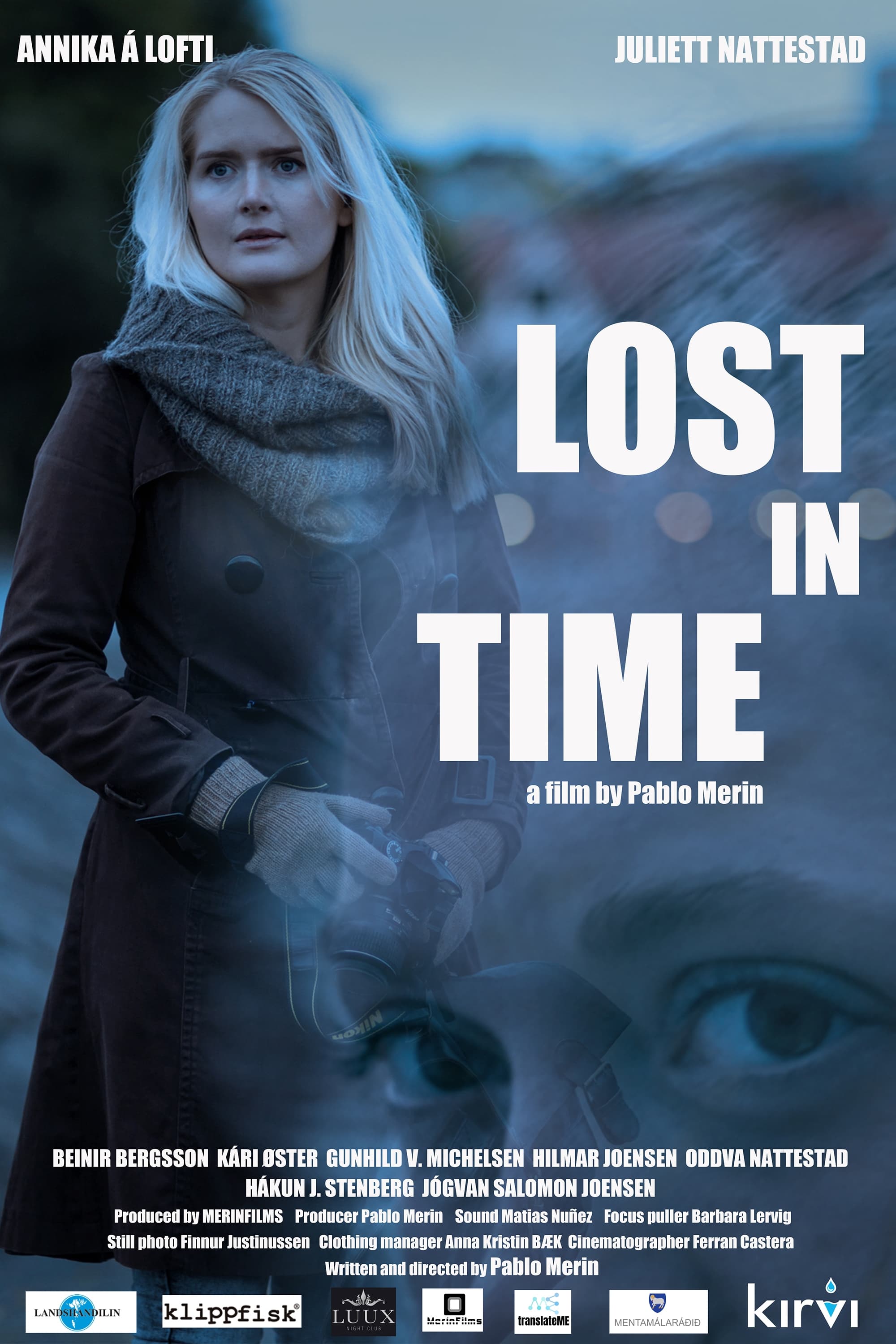
Lost in Time in the Faroe Islands
Thriller · Drama · Mystery
Overview
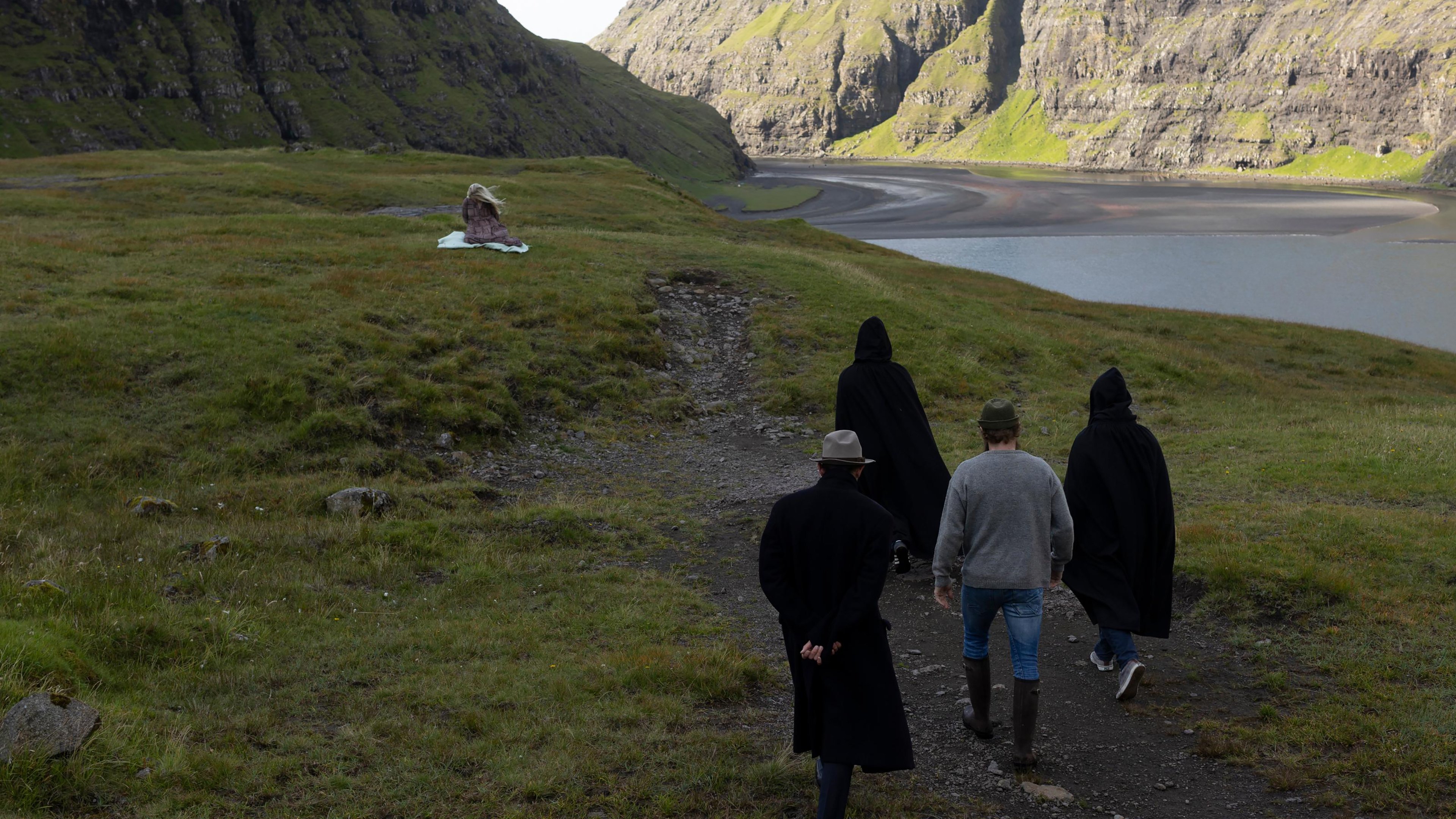
Agnes Peterson is a student of journalism. Maria Guttesen suddenly disappeared in 1966 when she was 20 years old. 50 years later, Agnes will undertake an investigation to fulfill her grandfather's dream; to find his sister Maria, dead or alive, and solve the mystery of her disappearance. Jákup Jacobsen, a famous writer in Europe, was one of the main suspects, but evidence was never found against him. His latest published book talks about kidnappings of women. Agnes will move between reality and fiction to solve the case.
Top Cast

Annika Álofti
Agnes Petersen
Juliett Nattestad
María Dalh (teenager)
Beinir Bergsson
Kári Øster
Peater Dalh
Gunhild V. Michelsen
Hilmar Joensen
Jákup Jacobsen
Oddva Nattestad
Hákun Stenberg
Jákup Jacobsen (teenager)
Jógvan Salomon Joensen
Dagfinn Samuel Hojgaard
Niclas (45 year old)
Karina Ingadóttir Sivertsen
Anika (Maria's schoolmate teenager)
Lucia Goveroa Sødergren
Rannva Maria's schoolmate (teenager)


Annika Álofti
Annika Álofti
Agnes Petersen
Annika Álofti
Agnes Petersen
Juliett Nattestad
Juliett Nattestad
María Dalh (teenager)
Juliett Nattestad
María Dalh (teenager)
Beinir Bergsson
Beinir Bergsson
Beinir Bergsson
Kári Øster
Kári Øster
Peater Dalh
Kári Øster
Peater Dalh
Gunhild V. Michelsen
Gunhild V. Michelsen
Gunhild V. Michelsen
Hilmar Joensen
Hilmar Joensen
Jákup Jacobsen
Hilmar Joensen
Jákup Jacobsen
Oddva Nattestad
Oddva Nattestad
Oddva Nattestad
Hákun Stenberg
Hákun Stenberg
Jákup Jacobsen (teenager)
Hákun Stenberg
Jákup Jacobsen (teenager)
Jógvan Salomon Joensen
Jógvan Salomon Joensen
Jógvan Salomon Joensen
Dagfinn Samuel Hojgaard
Dagfinn Samuel Hojgaard
Niclas (45 year old)
Dagfinn Samuel Hojgaard
Niclas (45 year old)
Similar Movies
Águst Guðmundsson directed this Icelandic period drama, adapted from the short story We Must Dance by William Heinesen, and set on an island in 1913. Pétur (Gunnar Helgason) narrates, recalling the days when mainlanders arrived for a wedding. Flirtatious Sirsa (Pálína Jónsdottir) marries Harald (Dofri Hermannsson), son of a wealthy landowner on the island. Offshore, a ship is sinking, so the men form a rescue party, returning with the captain, the engineer, and several sailors. With a storm gathering, the engineer dies. The clergyman requests an end to the festivities as a mark of respect. Sirsa protests, but her new husband brings the celebration to a halt. The group then fragments into different activities, drunken or otherwise, and the sensual Sirsa directs her attention toward the handsome Ívar (Baldur Trausti Hreinsson). The film's score features traditional folk music.
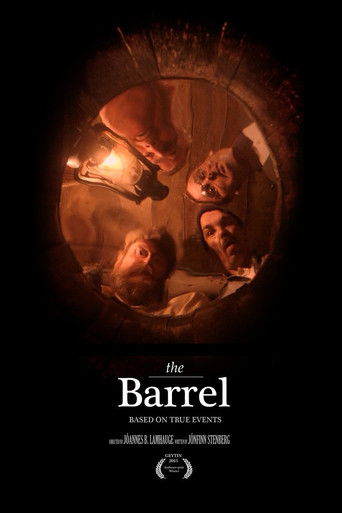
In a small Faroese village, four men find a sealed liquor barrel washed ashore at low tide. They hustle the heavy barrel into a basement, away from the prying eyes. Soon, however, the sneaking suspicion arises that instead of liquor, the mysterious barrel might in fact contain something else. Tensions run high as the host, Símun, eventually has to handle both the negotiations down in the basement, as well as his distrustful wife upstairs.
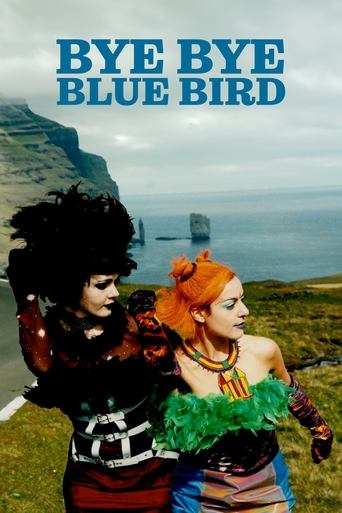
Two friends, Rannvá and Barba, return to Faroe Islands after seven years abroad. The girls arouse both curiosity and outrage with their bizarre city appearance and emancipated behaviour. They embark on a road trip with one of the locals, Rúni, who - as it turns out - also carries a dark secret. The trio goes on a journey not just through the beautiful landscape of the Faroes but into the land of the past.
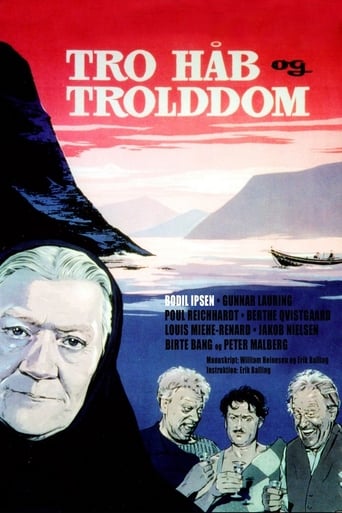
In the northern part of the Atlantic Ocean on the island of Troldø lives a single farming family. The grandmother Gunhild is the only woman on the island and her son Enok is unable to find a wife. Gunhild's advanced age causes her to worry for the future of the family. So she initiates a plan to get Enok married, a plan that is put into action when the young Eva becomes stranded on the island. But the community must be shaken by several dramatic events before Gunhild can breathe a sigh of relief.
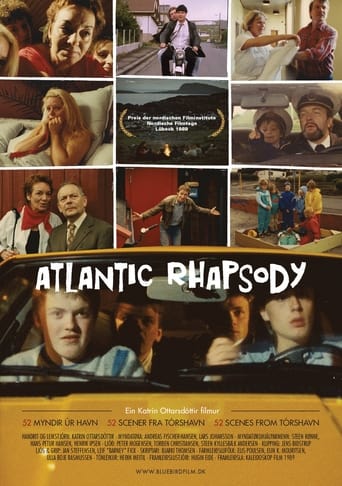
Presents a day in the life of a few inhabitants of Tórshavn in the Faroe Islands: A father and his daughter are having breakfast when the fire-brigade drive by. A woman and her child are looking at the fire and meet a married couple. The couple say hello to a man who is going out with his boat... and so on.
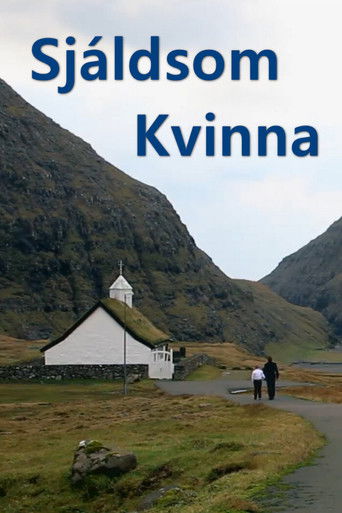
Seals were believed to be former human beings who voluntarily sought death in the ocean. Once a year, on the Thirteenth night, they were allowed to come on land, strip off their skins and amuse themselves as human beings, dancing and enjoying themselves. This short film explores the legend of Kópakonan, literally meaning “the Seal Woman”, one of the best-known folktales in the Faroe Islands.
The film depicts life in the Faroe Islands in the 1960s. It's a small society that has maintained its connection to the past, with old customs and ways of life, despite significant developments in trade and industry. Here, fishing remains one of the fundamental pillars of the Faroese economy. The film follows five men, crew members on the same trawler, from the moment they leave their homes in five different places in the Faroe Islands until they meet in the capital, Tórshavn, after long and difficult journeys to set sail on the trawler.
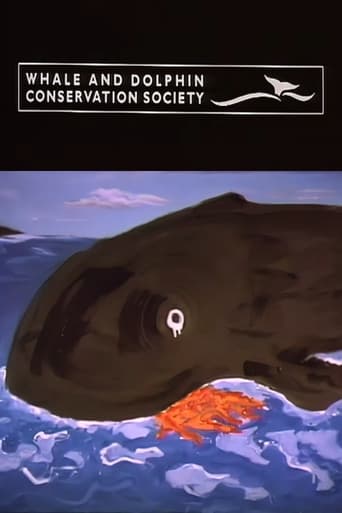
Featuring the voiceover of Sir Anthony Hopkins, this public information film from the Whale and Dolphin Conservation Society starts out rather innocently with beautiful hand-painted animation. It describes how once a year a large group of pilot whales swim to a small group of islands known as the Faroe Islands.

We’re travelling from luxury kitchen to luxury kitchen with Agnes, from Bergisch Gladbach via Barcelona to the Faroe Islands. The cook’s luggage always includes her backpack containing various knives, cleavers and tweezers. The camera watches over the inquisitive young woman’s shoulder as delicacies are being prepared. Our mouths water. At the same time, we get insights into the different ways of running a restaurant. It’s about team spirit and equality at the stove.
Pilot whales are one of the least known of all small whales, and in spite of their name they are one of the largest species of dolphins. Pity the Pilot Whales takes us on an ocean journey, revealing many facets of pilot whale lore that few knew anything about. Why do these highly-intelligent marine mammals strand by the hundreds in certain regions of their known habitat? How do they communicate with one another? How do they find food in the deep dark ocean realm. This film is also a window on how two modern island nations treat these animals, and a statement on humanity and ethics.