


Baijin Long
Romance
Overview
A wealthy man's son, who has a sinecure as a hotel owner, poses as a bellhop to win the affections of a woman guest with whom he has fallen madly in love, but who seeks a common man who is earning his own way. This first Cantonese-language talkie was based on a successful 1930 stage musical written by and starring Xue JueXian (Sit KokSin), the plot of which was in turn inspired by a 1929 silent Hollywood romance called "The Grand Duchess And The Waiter" which Xue admired. The film was produced not in Shanghai, by the Tianyi studio, headed by the eldest of the Shaw Brothers, Shao Zuiweng (RunJe Shaw), and was so successful in the Cantonese-speaking parts of China that Shaw moved the Tianyi company to British-administered, Cantonese-speaking Hong Kong to make more Cantonese films in the face of the right-wing Chinese Nationalist government's ban on Cantonese language in favor of Mandarin. A sequel to Baijin Long was made in 1937, and the film itself was remade in 1947.
Top Cast


Sit Kok-Sin
Sit Kok-Sin
Bok GumBing
Sit Kok-Sin
Bok GumBing
Tong Suet-hing
Tong Suet-hing
Jong Yun Leong
Tong Suet-hing
Jong Yun Leong
Nai Pon Fee
Nai Pon Fee
Bok's father
Nai Pon Fee
Bok's father
Neong Yuk Moy
Neong Yuk Moy
Jen Joon-Wah
Neong Yuk Moy
Jen Joon-Wah
Similar Movies

Narrated excerpts from Chen Shi-Zheng’s acclaimed stage production of Tang Xianzu’s The Peony Pavilion, filmed in Paris after its Lincoln Center presentation. This two-hour document condenses the epic kunqu love story of Du Liniang and Liu Mengmei through opera, dance, acrobatics, puppetry, martial arts and Robert Powell’s narration, preserving the atmosphere of a much longer theatrical event.
Jack Darling of the North West Mounted Police is ordered to track down and arrest murderer Alec Young, whose girl, Dancing Pete, performs in the Nugget dance hall. En route to Nugget, Jack meets Hope Ross, who is caring for her sister's baby. Although the two fall in love, the outlook for a happy romance appears hopeless, because he believes that she is a married mother, and she thinks that he is an outlaw.
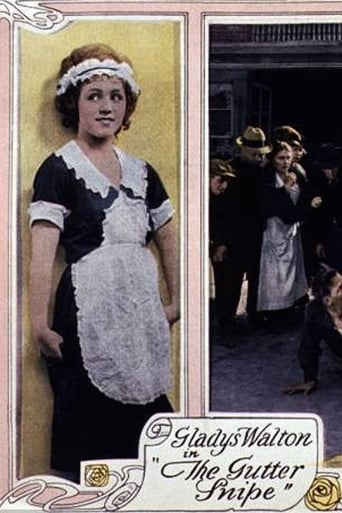
Mazie, a shop-girl of New York City's Little Ireland, goes to the aid of a young man in formal attire involved in a street fight. Though badly beaten, he bears a strong resemblance to Lord Lytton, the hero of a magazine story Mazie is reading in installments. Although he is, in reality, a soda clerk, Mazie permits his attentions, and together they read the "Sloppy Stories" yarn about English nobility.
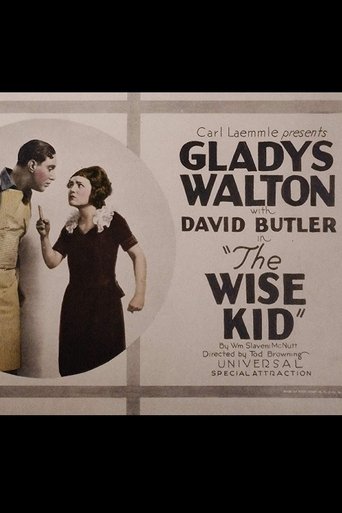
Rosie Cooper is a cashier in a cheap restaurant and among those she favors is ... Smith, the bakery boy. Rose is a 'wise kid' all right, but it takes her some time to see through a shiny young thin model gent... The girl entertains his advances because he means romance to her. But he proves his shallow character and Rosie is glad to turn to Jimmy, the bakery youth.

When her father, an indigent artist, dies, Sylvia Lacey goes to live with her Aunt Martha and her uncle, Judge Trent, in New England, where she is unwanted and humiliated. Though she and John Dunham, her uncle's young law partner, fall in love, she believes he intends to marry the daughter of a wealthy neighbor.

Press agent Jack Bartling persuades a local Suffragette leader, Mrs. Eubanks, whose husband is a Senator and soap manufacturer, to hire him for publicity. He falls for her daughter Nell and through various schemes and a bit of subterfuge Jack convinces both parents he’s the right guy for their daughter.

Marty Reid, the star quarterback at Sanford College, is constantly singled out by the opposition for punishment, and he swears to his pal, Honey Smith, and to Coach Wilson that he will quit the game forever. Ed Kirby, who dislikes Reid, calls him yellow, and Wilson gets Patricia Carlyle, the college vamp, to induce Reid to play. At a sorority dance, where only football players can cut in, Kirby persecutes Reid by dancing with Pat, and as a result Reid does apply to play in the game.