

Glasgow, Love and Apartheid
Documentary
Overview
In the year of Nelson Mandela’s centenary, Glasgow, Love and Apartheid is the story of one family’s fight against apartheid from Scotland and South Africa. Director, Dhivya Kate Chetty, follows her parents – a mixed, and once ‘illegal’, couple – on a trip back to South Africa where the family stories begin to unfold – protests, an uncle in jail, an ANC arms cache, a doctor on the run and a surprise connection with Mandela in hiding.
Top Cast

Dhivya-Kate Chetty
Dhivya-Kate Chetty
Herself
Dhivya-Kate Chetty
Herself
Similar Movies
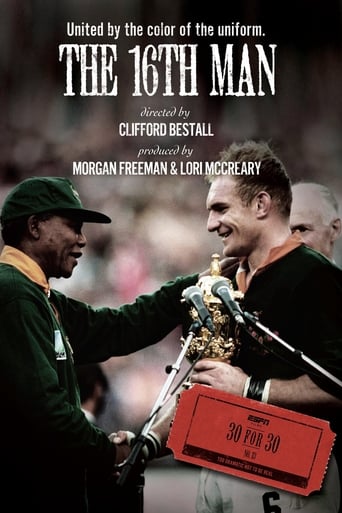
Rugby Union has long been viewed in South Africa as a game for the white population, and the country’s success in the sport has been a true source of Afrikaner pride. When the 50-year-old policies and entrenched injustices of apartheid were finally overthrown in 1994, Nelson Mandela’s new government began rebuilding a nation badly in need of racial unity. So the world was watching when South Africa played host to the 1995 Rugby World Cup. Though they had only one non-white player, the South African Springboks gained supporters of all colors as they made an improbable run into the final match where they beat the heavily favored New Zealand team. When Mandela himself marched to the center of the pitch cloaked in a Springbok jersey and shook hands with the captain of the South African team, two nations became one. Oscar winner Morgan Freeman and director Cliff Bestall will tell the emotional story of that cornerstone moment and what it meant to South Africa’s healing process.
The struggle to eradicate apartheid in South Africa has been chronicled over time, but no one has addressed the vital role music plays in this challenge. This documentary by Lee Hirsch recounts a fascinating and little-known part of South Africa's political history through archival footage, interviews and, of course, several mesmerizing musical performances.
In Cape Town's informal settlements, created to segregate the racialized population during Apartheid, the South African government never built a sewage system, hence the absence of flush toilets. Each resident must therefore invent an individualized solution for disposing of his or her excrement. Excrétapolitiques is a documentary based on meetings with some twenty people who are fighting against this infrastructural injustice.
South Africa, July 11th, 1963. Several members of the African National Congress, an organization declared illegal, are arrested in Rivonia, a country house near Johannesburg. The detainees, along with Nelson Mandela, imprisoned since 1962, are charged with serious crimes for their radical activism against the apartheid regime.
‘The Great Wall has been completed at its most southerly point.’ So begins Kafka’s short story ‘At the Building of the Great Wall of China’, and so, at Europe’s heavily militarised south-eastern frontier, begins this film. In the shadow of its own narratives of freedom, Europe has been quietly building its own great wall. Like its famous Chinese precursor, this wall has been piecemeal in construction, diverse in form and dubious in utility. Gradually cohering across the continent, this system of enclosure and exclusion is urged upon a populace seemingly willing to accept its necessity and to contribute to its building.
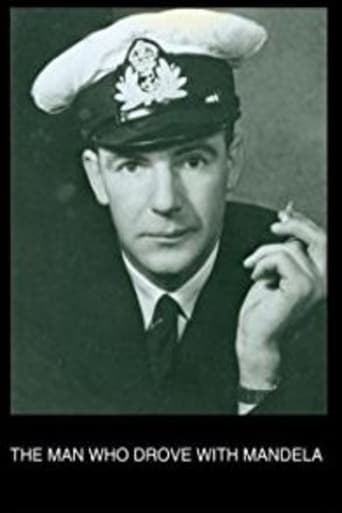
During the time of apartheid Nelson Mandela drove around South Africa in a limousine disguised as a chauffeur while organizing the armed struggle against the apartheid regime. But who was the distinguished looking white man sitting in the back seat? Meet Cecil Williams, an acclaimed gay white theatre director and communist.
Eugene de Kock, nicknamed "Prime Evil," was South Africa's most notorious government assassin under the apartheid regime. A highly decorated and powerful man, he led police death squads against enemies of the state; his victims were mainly connected with the ANC. The film includes interviews with torture victims and with friends of de Kock.