

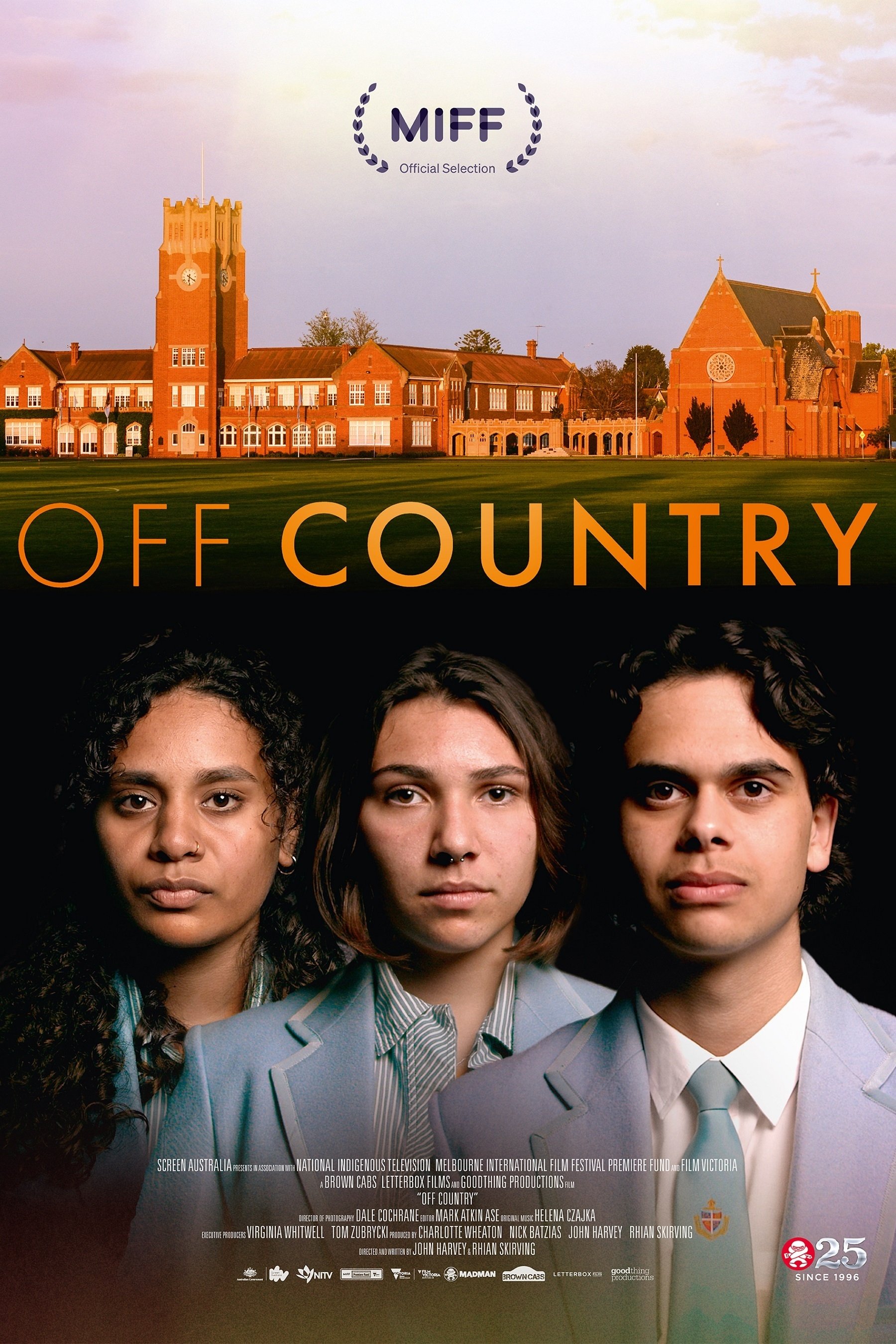
Off Country
Documentary
Overview
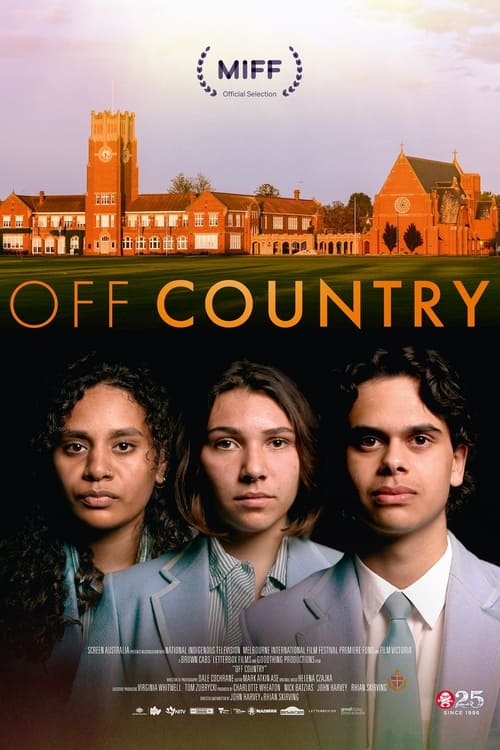
Every year, around 3000 Indigenous students receive scholarships to attend some of Australia’s most prestigious boarding schools. It is an immense opportunity, setting many of the youngsters on a path to a bright future, but it also means they must leave their homes and communities. Over the course of a year, Off Country follows several such students, who, despite hailing from distinct nations and having vastly different circumstances, each share a commitment to doing themselves and their families proud – no matter the difficulties.


No cast information.
Similar Movies
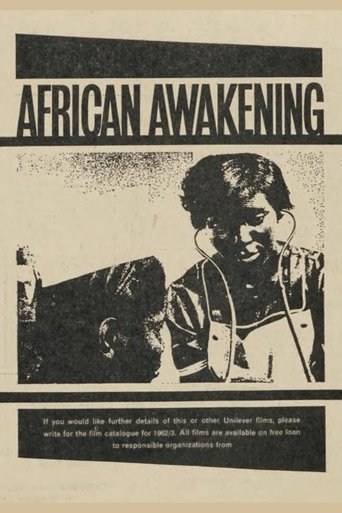
Among the many parts of the world in which Unilever companies operate, West Africa has a special place. The Africa of popular imagination is a land of jungles, swamps and mud huts; but side by side with the traditional, a new Africa is growing and the film "African Awakening” is an expression of this, of the attitudes of those African men and women who are today the driving force of West African progress. “African Awakening”, a colour film which runs for 38 minutes, is one of a series of Unilever films dealing with different aspects of African life.
The film graphically calls attention to the brutal dangers of playing on top of elevators in public housing high-rise 30-story buildings in New York City. The slang is called "elevator surfing", "elevator action" or "elevator chicken" and it is a deadly game in which groups of children ride up and down the elevator shafts on top of a moving elevator car and jump from one moving car to the top of another. At times, a child waits in the pit of the elevator shaft. When a car pauses on the lowest floor, he grabs the electrical cable and rides upward. "Children Are Too Young To Die" begins with a bloody reenactment of an elevator accident in which a 10-year-old boy gets his arm cut off by the counterweight in an elevator shaft. The story unfolds and reveals real issues and deaths resulting from such dangerous activities.
The purpose of Rise Above the Mark, narrated by Peter Coyote, is to educate the general public about the “corporate takeover” of Indiana public schools and what parents, community members and educators can do to protect their local public schools. Legislators are calling the shots and putting public schools in an ever-shrinking box. WLCSC Board of School Trustees and Superintendent of Schools, Rocky Killion, want to secure resources and legislative relief necessary to achieve the school district’s mission of creating a world-class educational system for all children. The school district’s strategic plan will introduce a model of education that puts decision making back into the hands of local communities and public school teachers, rather than leaving it in the hands of legislators and ultimately lining the pockets of corporations.
Preschool to Prison is a compelling examination of how the United States public school system is built and operated like prisons. Zero-tolerance policies are used to justify suspension and arrests that set up a pathway to send children of color and children with special needs from school to prison. Children are being suspended, restrained, dragged, physically manhandled, and subsequently arrested for minor offenses such as throwing candy on a school bus. These personal accounts from people affected by the school-to-prison pipeline give riveting tales about the generational impact on society.
This film takes us on an emotional journey from sacred ground above Byron Bay to Antarctica, Indonesia to Pakistan, and is sure to light a fire under the strongest climate change denier. THE POWER OF ACTIVISM focuses on six highly spirited female activists as they are put under the microscope to ascertain the financial impact of their environmental solutions… and the results are astonishing. From shark conservation to indigenous practices, intensive farming to plastic pollution; all their ‘causes' fall under the umbrella of "climate change", but they should also fall under the umbrella of "saving tax payers hundreds of millions of dollars!”
Set in New York City, the epicenter of a phenomenon cropping up in communities across the United States, "Nursery University" reveals the oddly competitive process of nursery school admissions. The film tells the story of five families attempting to place their toddlers in preschool classrooms that have limited space and high price tags.
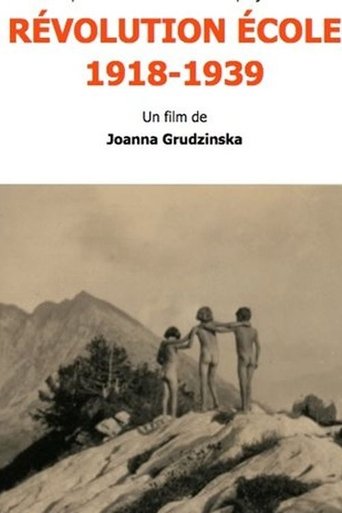
In a Europe traumatized by the First World War, educationalists point the finger of blame: the school, which produced “brave soldiers”. The task now is to build peace and develop a new education for a generation of children who, it is hoped, will never wage war again. How can we educate them without surveillance and punishment? How can we help them to emancipate themselves? To make children happy is to make them better adults, according to those who embarked on the adventure. Their names are Rudolf Steiner, Maria Montessori, Célestin Freinet, Alexander S. Neill, Ovide Decroly, Paul Geheeb or Janusz Korczak, each of them inventing educational methods. A Swiss pedagogue, Adolphe Ferrière, brought them together in the Ligue internationale de l'éducation nouvelle.
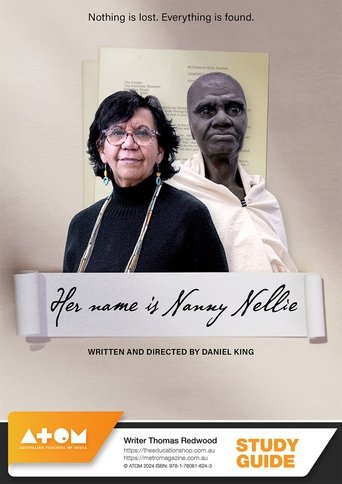
Powerful and poignant, Her Name is Nanny Nellie offers us the rare privilege of bearing witness to a family reclaiming their history. In 1925, the Australian Museum commissioned three statues of ‘full blood ’Aboriginal people: a child, a man and a woman, exhibited as nameless objects to be studied as examples of a ‘dying race.’ The woman was Nellie Walker, Irene Walker’s great grandmother and director Daniel King’s great, great grandmother. Now Irene is on a journey to retrace Nellie’s life and to reconnect the other families to their ancestors’ statues and re-display them, this time with their names, identities and dignity. This is far more than a symbolic quest, but an opportunity to change how we remember and represent, and to give the nameless names.
A group of uniformed Japanese schoolchildren make their way to class. But what they will be taught when they get there is a subject increasingly under government scrutiny. EDUCATION AND NATIONALISM traces growing government intervention in Japanese history and social science education over the last decade — a process embraced by the late Japanese Prime Minister Shinzo Abe.