

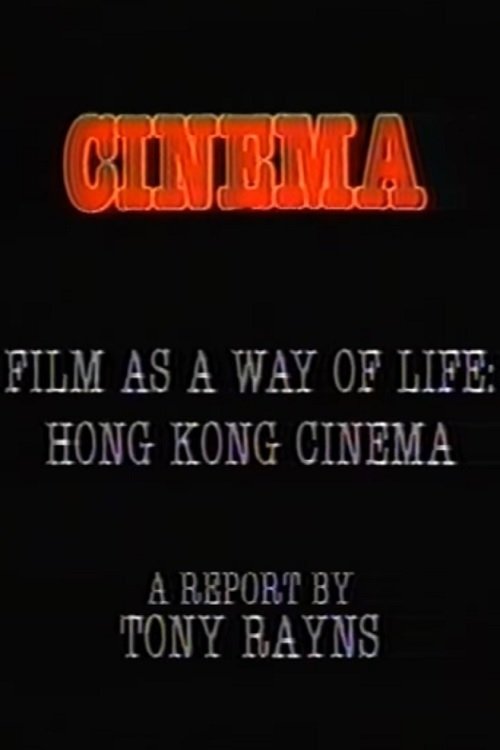
Visions Cinema: Film as a Way of Life: Hong Kong Cinema - A Report by Tony Rayns
Documentary
Overview
Examines the early 1980s Hong Kong filmmaking community. Tony Rayns interviews some of the new generation of filmmakers and figures from the wider film culture.





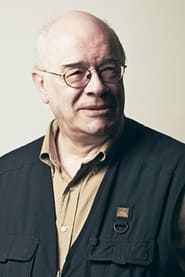
Tony Rayns
Tony Rayns
Self
Tony Rayns
Self
Li Cheuk-To
Li Cheuk-To
Self
Li Cheuk-To
Self

Ann Hui
Ann Hui
Self
Ann Hui
Self
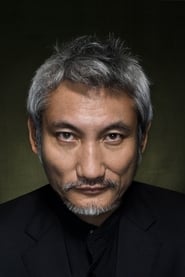
Tsui Hark
Tsui Hark
Self
Tsui Hark
Self
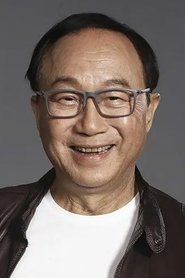
Michael Hui Koon-Man
Michael Hui Koon-Man
Self
Michael Hui Koon-Man
Self
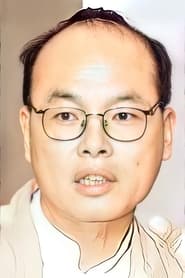
Allen Fong
Allen Fong
Self
Allen Fong
Self
Chiu Kang-Chien
Chiu Kang-Chien
Self
Chiu Kang-Chien
Self
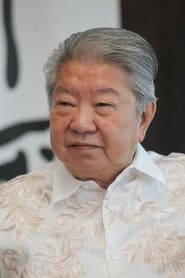
Chua Lam
Chua Lam
Self
Chua Lam
Self

Lau Shing-Hon
Lau Shing-Hon
Self
Lau Shing-Hon
Self
Roger Garcia
Roger Garcia
Self
Roger Garcia
Self
Similar Movies
The history of the Yakuza Eiga at the TOEI studio is roughly outlined. Real Yakuza and also their connections to the movie business are discussed, and many important actors and directors of the genres are interviewed. Former real yakuza boss turned actor Noboru Ando, Takashi Miike, Sonny Chiba and many more get a chance to speak.
This timely, bold set of one-on-one interviews presents two of the most venerable figures from the American Left—renowned historian Howard Zinn and linguist and philosopher Noam Chomsky—each reflecting upon his own life and political beliefs. At the age of 88, Howard Zinn reflects upon the Civil Rights and anti–Vietnam War movements, political empires, history, art, activism, and his political stance. Setting forth his personal views, Noam Chomsky explains the evolution of his libertarian socialist ideals, his vision for a future postcapitalist society, the Enlightenment, the state and empire, and the future of the planet.
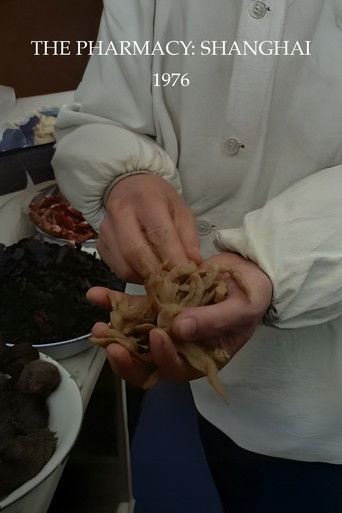
Filmed inside Pharmacy No. 3 in Shanghai, Joris Ivens and Marceline Loridan-Ivens document the daily work of a state pharmacy that functions as both a dispensary and a neighborhood medical center. The film focuses on routine interactions between staff and patients, revealing an integrated model of urban healthcare in 1970s China.
Swimming, Dancing examines audiovisual representations of the Yangtze (1934–present), from silent film to video art to the contemporary vlog. Inspired by the city symphonies of the 1920s, Swimming, Dancing pieces together a “river symphony”, evoking the images, sounds and contradictions that make up the river’s turbulent history.