

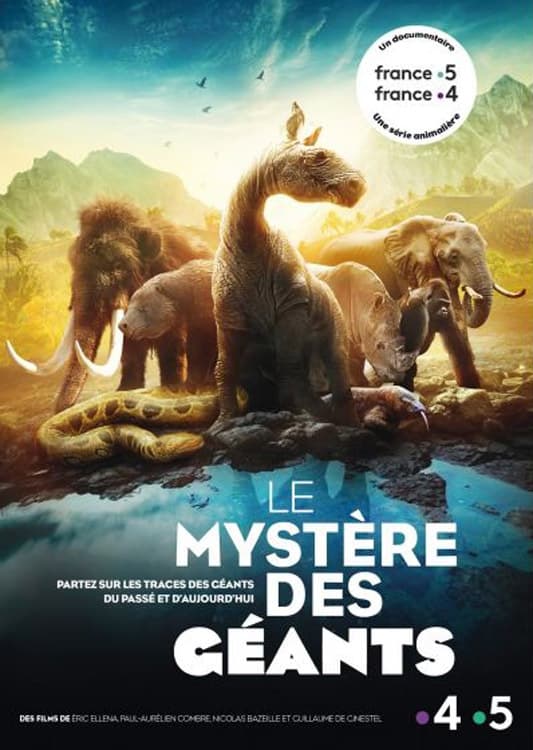
The Mysteries of the Giants
Documentary
Overview
When a huge meteorite crashed into the earth 66 million years ago and caused the disappearance of the dinosaurs, some of the planet’s tiniest species survived the cataclysm, and—against all odds—eventually became some of the greatest giants to ever roam the earth. From the poles of the planet to the belly of the equator, this documentary sheds new light on four giant animals that are still a great mystery to science today: the Titanoboa snake, the Megalodon shark, the giant rhinoceros and the giant sloth.


No cast information.
Similar Movies
Three researchers work on a paleontological project focusing on two dinosaurs: one fictional, the one created by special effects genius Ray Harryhausen for the film The Valley of Gwangi (1969); the other real, the Concavenator corcovatus, whose remains were discovered in 2003 at the Las Hoyas site, in the province of Cuenca (Spain), very close to where the filming took place.
Following the journey of fossils from their discovery in remote corners of the earth to laboratories, museums, auction houses and collectors’ living rooms, the film weaves together interlocking stories of eccentric characters caught between the demands of commerce and the basic human drive to unlock the most profound mysteries of life. THE BONES takes us deep into the Gobi, Sahara, and North American badlands, and through laboratories, museums, high-end auction houses, and grungy hotel rooms at the Tucson gem show. Wrapped in elusive questions about the origins of life on earth, and its potential future demise, THE BONES unearths the deep passions at the heart of the dinosaur world.
Titans of the Ice Age transports viewers to the beautiful and otherworldly frozen landscapes of North America, Europe and Asia ten thousand years before modern civilization. Dazzling computer-generated imagery brings this mysterious era to life - from saber-toothed cats and giant sloths to the iconic mammoths, giants both feared and hunted by prehistoric humans.
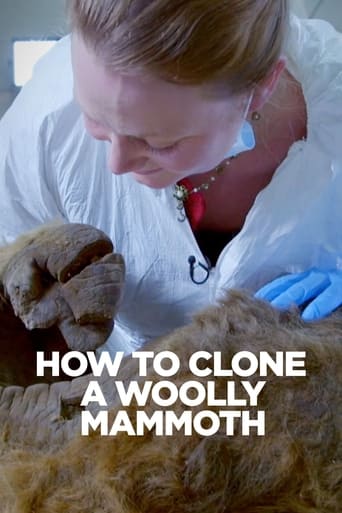
The Siberian discovery of the best-preserved woolly mammoth on record has teams of experts working around the globe, and around the clock, on some of the most ambitious projects in science. In Russia, paleontologists are conducting a historic autopsy on the 40,000-year-old beast to find out how it lived, and how it died. Meanwhile labs in South Korea and at Harvard University are using the latest advances in DNA manipulation in hopes of cloning the furry giant and introducing it to the modern world.
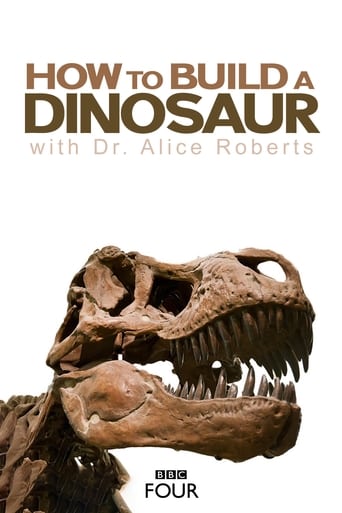
Dinosaurs died out 65 million years ago and we have hardly ever found a complete skeleton. So how do we turn a pile of broken bones into a dinosaur exhibit? Dr Alice Roberts finds out how the experts put skeletons back together, with muscles, accurate postures, and even - in some cases - the correct skin color. Here's a conundrum. Most dinosaur skeletons are incomplete, so how do you create museum exhibits that are realistic? As Dr Alice Roberts discovers, it's a practical question for those putting together an exhibition at LA County's Natural History Museum, who have to design dynamic, punter-pleasing displays that also reflect the latest thinking in paleontology circles.
Cleaning up a weird scientist's messy study is a chore four kids decide to make short work of on a Saturday morning! The kids file animals into drawers according to their species, 'til they discover a replica of a dinosaur. They hesitate to dispense with the oldest creature on earth by filing it in the "EXTINCT" drawer! However, they soon find many surprises in store, including disagreement as to what creature actually is the oldest on earth, from four wisecracking and argumentative cockroaches eavesdropping from a shelf!