

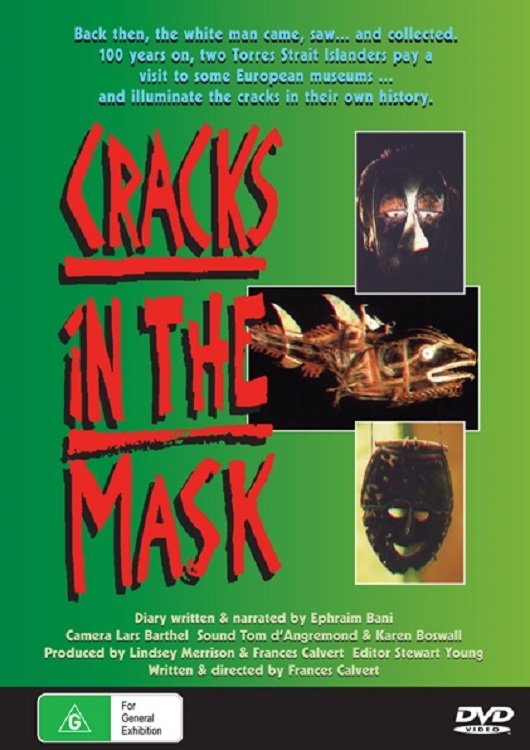
Cracks in the Mask
Documentary
Overview
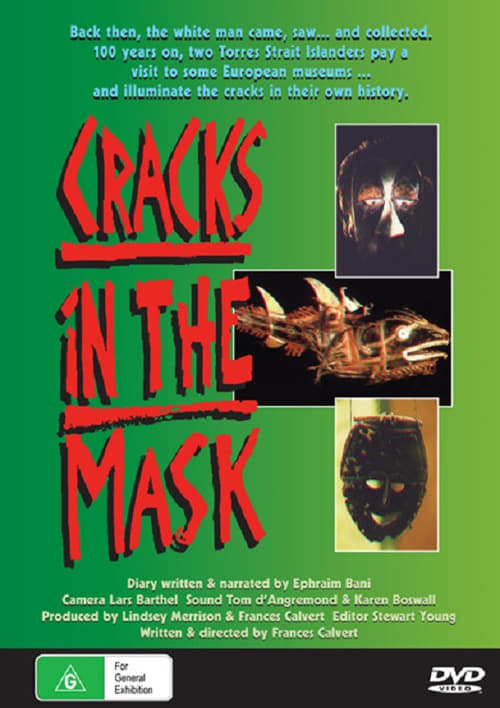
A century ago the Torres Strait Island were the subjects of the famous Cambridge Anthropological Expedition - the resulting depletion of their cultural artifacts left them with nothing but a history of remembered loss. The only people in the Pacific to make elaborate turtleshell masks have none left - they are all in foreign museums. In a quest to reclaim the past, Ephraim Bani, a wise and knowledgeable Torres Strait Islander, travels with his wife to the great museums of Europe where his heritage lies. The film, an SBS Independent production, shows that the thickest of masks cracks when a descendant of the original owners enters a museum.
Top Cast


Ephraim Bani
Ephraim Bani
Self / Narrator
Ephraim Bani
Self / Narrator
Petharie Bari
Petharie Bari
Self
Petharie Bari
Self
Stewart Coulter
Stewart Coulter
Self
Stewart Coulter
Self
Antonia Lovelace
Antonia Lovelace
Self
Antonia Lovelace
Self
Charles Hunt
Charles Hunt
Self
Charles Hunt
Self
Anthony Shelton
Anthony Shelton
Self
Anthony Shelton
Self
Jacques Hainard
Jacques Hainard
Self
Jacques Hainard
Self
Anita Herle
Anita Herle
Self
Anita Herle
Self
Markus Schindlbeck
Markus Schindlbeck
Self
Markus Schindlbeck
Self
Similar Movies
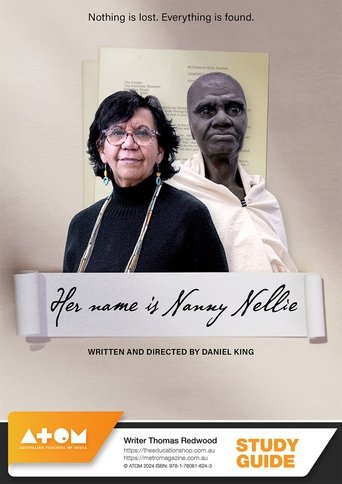
Powerful and poignant, Her Name is Nanny Nellie offers us the rare privilege of bearing witness to a family reclaiming their history. In 1925, the Australian Museum commissioned three statues of ‘full blood ’Aboriginal people: a child, a man and a woman, exhibited as nameless objects to be studied as examples of a ‘dying race.’ The woman was Nellie Walker, Irene Walker’s great grandmother and director Daniel King’s great, great grandmother. Now Irene is on a journey to retrace Nellie’s life and to reconnect the other families to their ancestors’ statues and re-display them, this time with their names, identities and dignity. This is far more than a symbolic quest, but an opportunity to change how we remember and represent, and to give the nameless names.
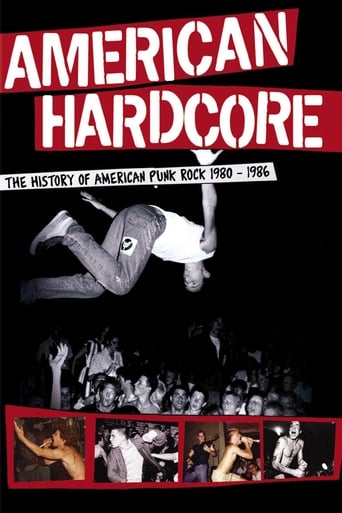
Inspired by Steven Blush's book "American Hardcore: A tribal history" Paul Rachman's feature documentary debut is a chronicle of the underground hardcore punk years from 1979 to 1986. Interviews and rare live footage from artists such as Black Flag, Bad Brains, Minor Threat, SS Decontrol and the Dead Kennedys.
The first of two coproductions by the British Broadcasting Corporation and the National Film Board of Canada, People of the Seal, Part 1: Eskimo Summer is compiled from some of the most vivid footage ever filmed of the life of the Netsilik Inuit in the Kugaaruk region (formerly Pelly Bay) of the Canadian Arctic. The original films of the Netsilik series attempted to recreate the traditional lifestyle of Netsilingmiut living there. They show the incredible resourcefulness of the Netsilik (People of the Seal) who have adapted to one of the world's harshest environments. Part 1: Eskimo Summer shows how Inuit families prepare for winter by hunting seal, birds and caribou and by fishing for Arctic Char during the extended hours of daylight.
Huelva, Spain, an isolated region lost in time. The grass, the sand and the sky are the same that those foreigners saw in the spring of 1895, when they crossed the sea from a distant country to mark the unspoiled terrain and extract its wealth, when the tower was new, when people could climb to the top of the highest dune and imagine that the city of Tartessos was still there, in the distance, almost invisible in the morning brume.

An unprejudiced portrait of Spanish folklore and a crude analysis in black and white of its intimate relationship with atavism and superstition, with violence and pain, with blood and death; a story of terror, a journey to the most sinister and ancestral Spain; the one that lived far from the most visited tourist destinations, from the economic miracle and unstoppable progress, relentlessly promoted by the Franco regime during the sixties.

Some of them move. Others make noise. One weighs in at 700 pounds. Collectively, they represent the future of contemporary craft. Go behind the scenes of the "40 under 40: Craft Futures" exhibition, featuring traditional and non-traditional works of decorative art created by the top 40 American craft artists under the age of 40. Observe this wildly creative and diverse exhibition, assembled for the 40th anniversary of the Smithsonian American Art Museum's Renwick Gallery, and witness the challenges and rewards of bringing together 40 unique artists at the top of their craft.
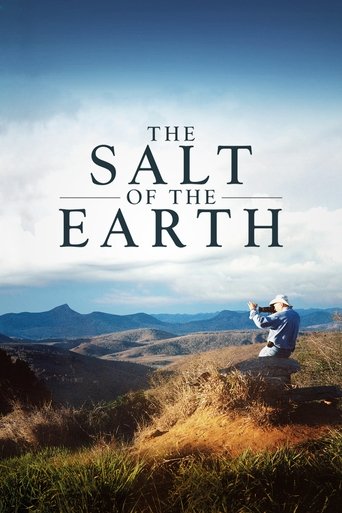
During the last forty years, the photographer Sebastião Salgado has been travelling through the continents, in the footsteps of an ever-changing humanity. He has witnessed the major events of our recent history: international conflicts, starvations and exodus… He is now embarking on the discovery of pristine territories, of the wild fauna and flora, of grandiose landscapes: a huge photographic project which is a tribute to the planet's beauty. Salgado's life and work are revealed to us by his son, Juliano, who went with him during his last journeys, and by Wim Wenders, a photographer himself.
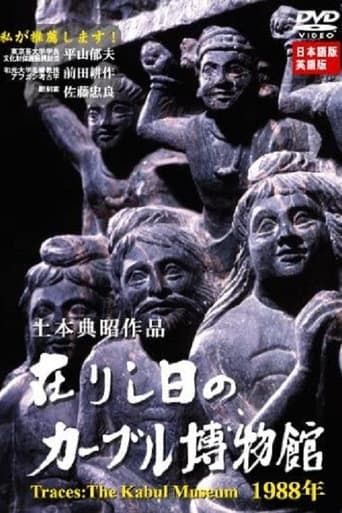
The Kabul National Museum, once known as the "face of Afghanistan," was destroyed in 1993. We filmed the most important cultural treasures of the still-intact museum in 1988: ancient Greco-Roman art and antiquitied of Hellenistic civilization, as well as Buddhist sculpture that was said to have mythology--the art of Gandhara, Bamiyan, and Shotorak among them. After the fall of the Democratic Republic of Afghanistan in 1992, some seventy percent of the contents of the museum was destroyed, stolen, or smuggled overseas to Japan and other countries. The movement to return these items is also touched upon. The footage in this video represents that only film documentation of the Kabul Museum ever made.