

O Índio - Ontem, Hoje e Amanhã
Documentary
Overview
The surviving 14 minutes of the original documentary about the Villas Boas expedition to the Amazonian tribes in Brazil.
Top Cast

Orlando Villas Boas
Orlando Villas Boas
himself
Orlando Villas Boas
himself
Cláudio Villas-Boas
Cláudio Villas-Boas
himself
Cláudio Villas-Boas
himself
Similar Movies
UFO experts claim that after the explosion of the bombs on Hiroshima and Nagasaki, there was an increase in the number of sightings of UFO'S (Unidentified Flying Objects) worldwide. Just over two decades later, the Brazilian medium Chico Xavier confided to close friends that when man reached the moon on July 20, 1969, happened a meeting with the celestial beings of our solar system to check the progress of humanity. They decided to grant a period of 50 years for humanity to evolve morally and live in peace, without provoking a third world war. If we live in peace until the Deadline, humanity would be ready to enter a new era of its existence, and magnificent feats would be checked everywhere, including our brothers from other planets would be expressly authorized to present themselves publicly and officially to Earth's residents.

A tomato is planted, harvested and sold at a supermarket, but it rots and ends up in the trash. But it doesn’t end there: Isle of Flowers follows it up until its real end, among animals, trash, women and children. And then the difference between tomatoes, pigs and human beings becomes clear.
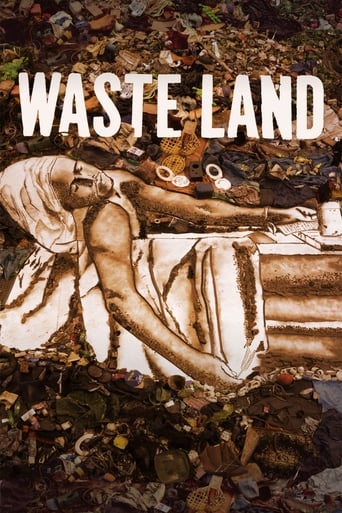
An uplifting feature documentary highlighting the transformative power of art and the beauty of the human spirit. Top-selling contemporary artist Vik Muniz takes us on an emotional journey from Jardim Gramacho, the world's largest landfill on the outskirts of Rio de Janeiro, to the heights of international art stardom. Vik collaborates with the brilliant catadores, pickers of recyclable materials, true Shakespearean characters who live and work in the garbage quoting Machiavelli and showing us how to recycle ourselves.
City of God – 10 Years Later investigates what happened to the actors who took part in the award-winning film directed by Fernando Meirelles and Katia Lund. This documentary shows what City of God’s worldwide success meant to their lives. Were the actors prepared for the film’s success? Did the social background of some of them prove stronger than the opportunity that came their way?
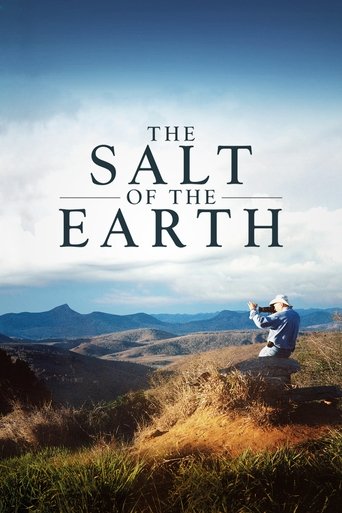
During the last forty years, the photographer Sebastião Salgado has been travelling through the continents, in the footsteps of an ever-changing humanity. He has witnessed the major events of our recent history: international conflicts, starvations and exodus… He is now embarking on the discovery of pristine territories, of the wild fauna and flora, of grandiose landscapes: a huge photographic project which is a tribute to the planet's beauty. Salgado's life and work are revealed to us by his son, Juliano, who went with him during his last journeys, and by Wim Wenders, a photographer himself.
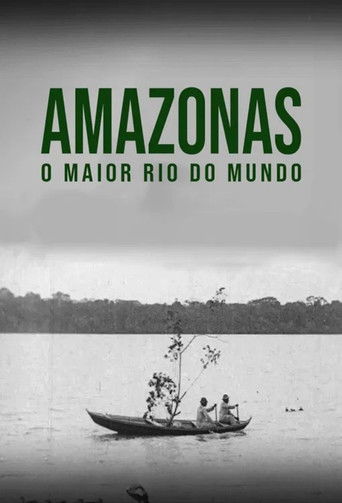
Documentary by Portuguese Silvino Santos, about the Amazon, its flora, fauna, its inhabitants and among other wonderful images from the beginning of the 20th century with alternating close-up shots of caimans, jaguars and tropical flora with footage of Indigenous rituals--including some of the earliest known moving images of the Indigenous Witoto people--and longer sequences showcasing the region’s extractive industries: rubber, the Brazil nut, timber, fishing, even the egret feathers that were a staple of women’s fashion at the time.
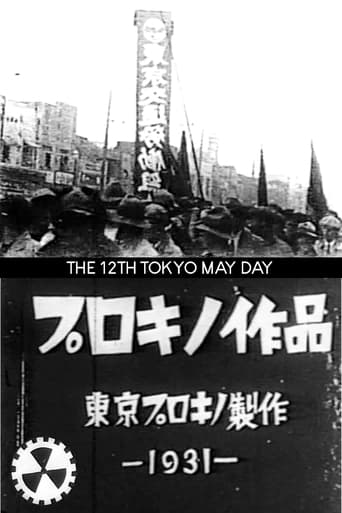
On May 1st, unions all over Japan celebrate May Day, the international day for workers. Workers gather together at parks and hold demonstrations and parades. May Day has its origins in a strike that occurred in the United States on May 1, 1886, a strike that called for an eight-hour workday. Prokino recorded the May Day every year from 1927 to 1932. Among these films, this work is the only one that has survived. However, only its first part has survived. The original film depicts the march to the Ueno Park where the rally was dismissed. Iwasaki Akira coordinated the entire Tokyo Prokino organization as it photographed the 1931 May Day celebrations. They shot in both 16mm and 35mm (other 35mm productions were planned, but this is the only one that achieved completion). A 16mm print was circulated around the countryside by mobile projection units, and a 35mm print was shown at Soviet film nights in Tokyo and Osaka.
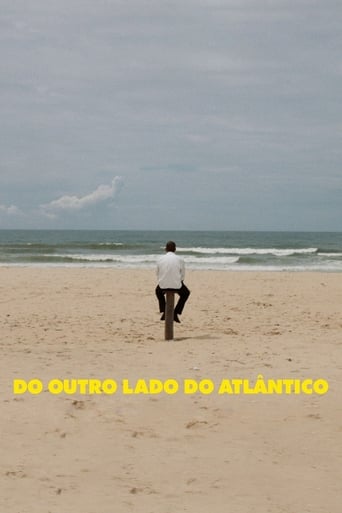
The Other Side of the Atlantic is a documentary that builts a bridge in the ocean that separates Brazil and Africa. The film tackles the cultural exchanges, the imaginary created through the mirroring, the prejudice and dreams built in both sides of the atlantic through the life stories of the students of african countries in transit through Brazil.
Festive Land examines one of the largest and most extraordinary popular celebrations in the world, the week-long Carnival that brings more than two million people to the streets of Salvador, the capital of Bahia, in northeastern Brazil. Carnival is the most expressive showcase of the unique cultural richness of Bahia, where African culture has survived, prospered, and evolved, mixing with other Brazilian influences to create forms found nowhere else in the world. The film captures this unique cultural energy through extraordinary footage of musical performances, dances, religious manifestations, and street celebrations. At the same time, Carnival reflects the racial and social tensions of Brazil's heterogeneous society. At first glance there appear to be two million people chaotically mixed on the streets, but a more detailed look reveals how patterns of segregation driven by racial, social and economic differences continue in Carnival.