

Colored Frames
Documentary
Overview
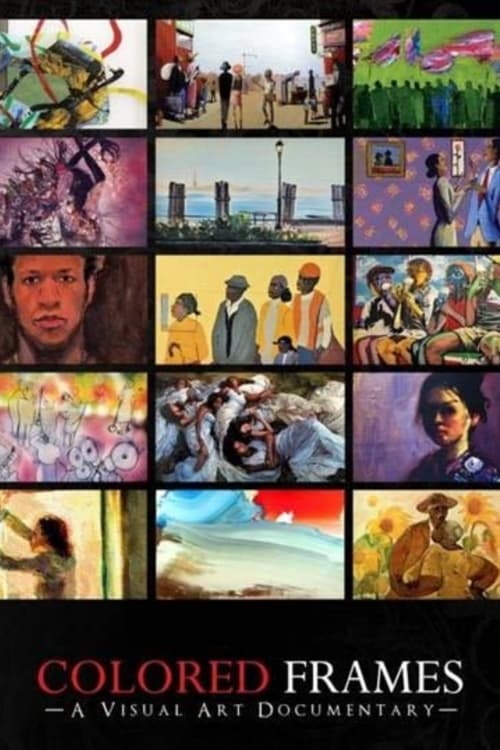
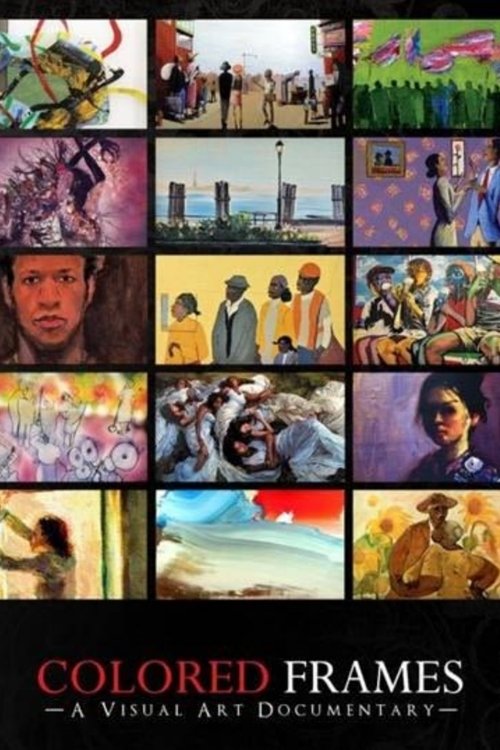
A look back at the last fifty years in African American art, Colored Frames is an unflinching exploration of influences, inspirations and experiences of black artists. Beginning at the height of the Civil Rights Era and leading up to the present, it is a naked and truthful look at often ignored artists and their progenies.
Top Cast


Howardena Pindell
Howardena Pindell
Self
Howardena Pindell
Self
Benny Andrews
Benny Andrews
Self
Benny Andrews
Self
Gustave Blache III
Gustave Blache III
Self
Gustave Blache III
Self
Nanette Carter
Nanette Carter
Self
Nanette Carter
Self
Ed Clark
Ed Clark
Self
Ed Clark
Self
Dianne Smith
Dianne Smith
Self
Dianne Smith
Self
Wangechi Mutu
Wangechi Mutu
Self
Wangechi Mutu
Self
Linda Goode Bryant
Linda Goode Bryant
Self
Linda Goode Bryant
Self
Similar Movies
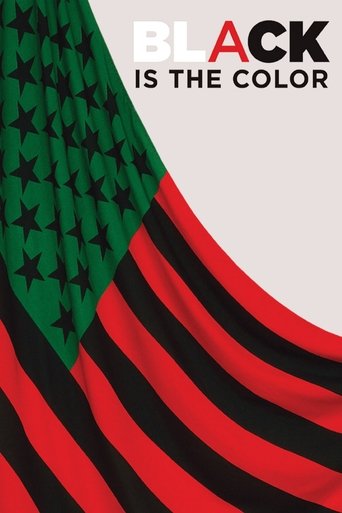
Black Is the Color highlights key moments in the history of Black visual art, from Edmonds Lewis’s 1867 sculpture Forever Free, to the work of contemporary artists such as Whitfield Lovell, Kerry James Marshall, Ellen Gallagher, and Jean-Michel Basquiat. Art historians and gallery owners place the works in context, setting them against the larger social contexts of Jim Crow, WWI, the civil rights movement and the racism of the Reagan era, while contemporary artists discuss individual works by their forerunners and their ongoing influence.

The life and work of New York artist Jean-Michel Basquiat have been marked by a long quest for identity, by his Haitian and Puerto Rican family origins and by a founding trip to Africa. To portray this major painter of the 20th century, who died in 1988 at only 27 years old, is also to evoke the place of black American artists in the conservative and racist America of the Reagan years.

Don Letts's hilarious and colourful profile of the godfather of funk, whose 50-year career has defined the genre. From his 1950s days running a doo-wop group out of the back of his barber store, through the madness of the monster Parliament/Funkadelic machine of the 70s to his late 90s hip-hop collaborations with Dre and Snoop, George Clinton has inspired generations of imitators. Contributors include Outkast's Andre 3000 and Macy Gray.

Under the Trump administration, USA is a deeply divided country. One side feeds populism and religious rectitude in a monochromatic landscape, painted white, lamenting for a past that never will return. The other side fuels diversity and multiculturalism, a biased vision of a progressive future, quite unlikely. Both sides are constantly confronted, without listening to each other. Only a few reasonable people gather to change this potentially dangerous situation.
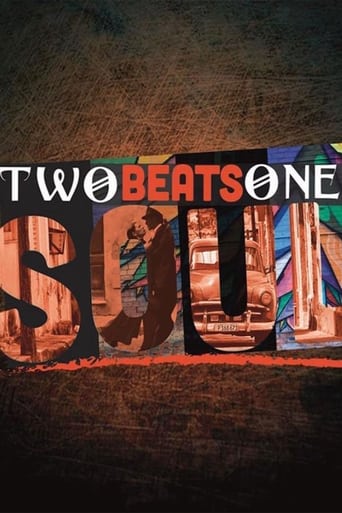
Husband and wife music producers Ray Chew and Vivian Scott Chew embark on an ambitious two week journey to Cuba to create a collaboration of sounds which originated from Afro-Caribbean roots that has evolved into what we now consider modern day Salsa music. Bringing together multiple artists from the U.S. and Cuba, the film shines a light on Cuban culture and takes the viewer through the creative process and challenges of producing an album while providing an auditory sensation that touches the soul. Featuring Eric Benét, Louie Vega and Sergio George-who has produced albums for Jennifer Lopez, Marc Anthony and more. Audiences will walk away feeling the passion, positive energy, triumph and love that keeps this musical marriage strong.
Zakarya Diouf, winner of the San Francisco Foundation 2005 Community Leadership Awards (Helen Crocker Russell Award) - for his vision in unifying the African cultural arts community, for serving as a mentor and educator of young artists, and for his artistic contributions to the development of African-based performing arts.
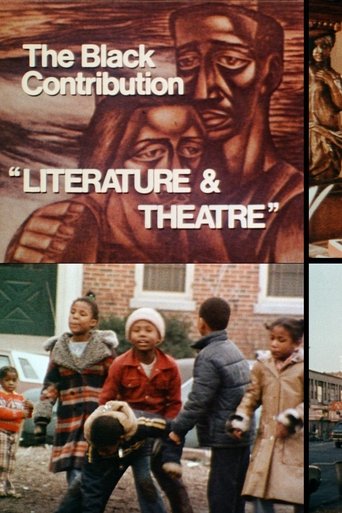
The Black Contribution – Literature and Theater 1978 is a rare documentary highlighting the voices and cultural impact of African American writers and performers during the civil rights era. Introduced by NAACP leader Benjamin Hooks and narrated by Roscoe Lee Brown, the film weaves together dramatic readings, theatrical excerpts, and candid urban street footage. Margaret Walker’s poem For My People is performed alongside scenes of daily Black life in New York City — children playing, families on stoops, open fire hydrants, and the realities of poverty in 1970s neighborhoods. James Baldwin appears in interview footage, while signs for his play The Amen Corner and stage excerpts from Lorraine Hansberry’s A Raisin in the Sun underscore the powerful presence of Black voices in American theater. With rare shots of Harlem life, literature, and performance, this film documents the enduring contributions of African American artists to U.S. culture and history.
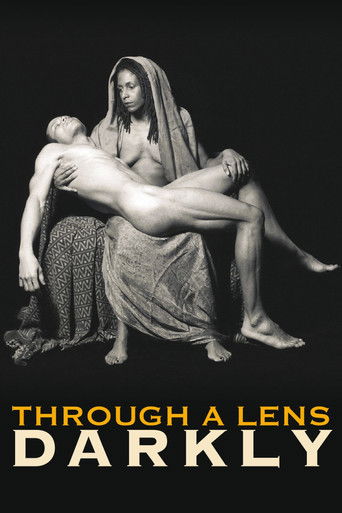
The film explores the role of photography, since its rudimentary beginnings in the 1840s, in shaping the identity, aspirations, and social emergence of African Americans from slavery to the present. The dramatic arch is developed as a visual narrative that flows through the past 160 years to reveal black photography as an instrument for social change, an African American point-of-view on American history, and a particularized aesthetic vision.