

Je suis la Fête des Vignerons
Documentary
Overview
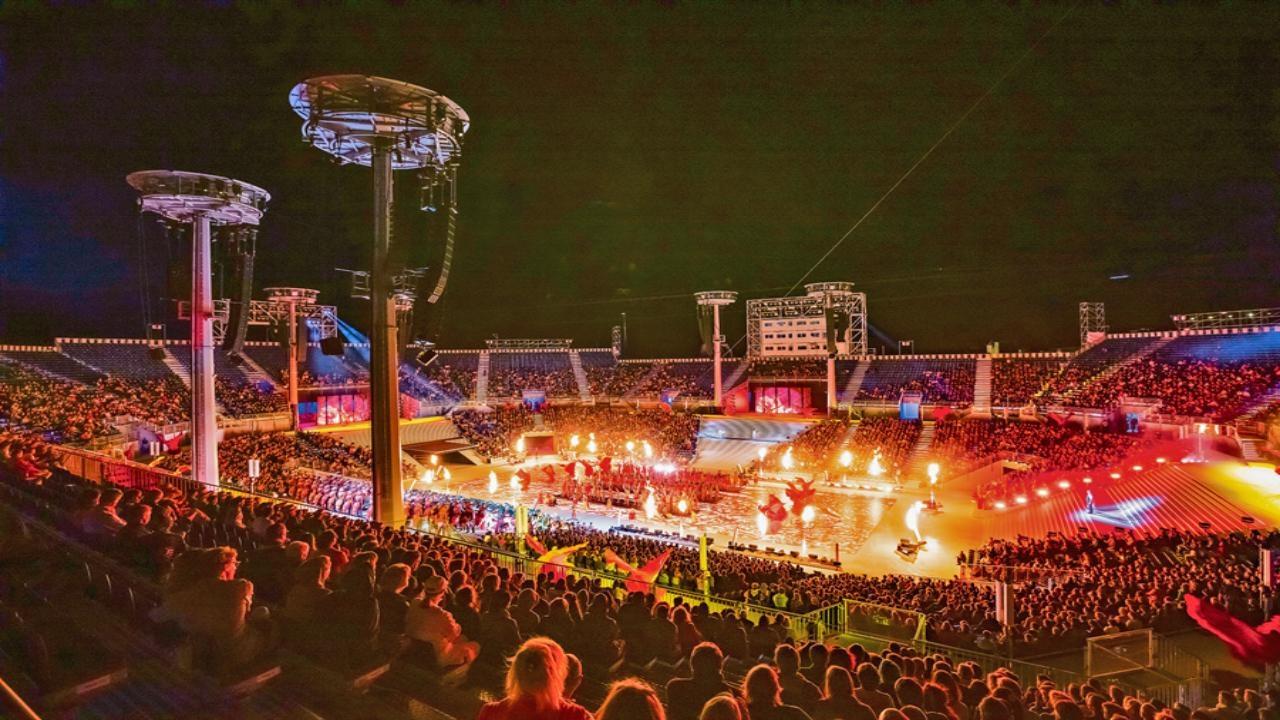
It is like a miracle that has occurred five times a century since 1797. The Fête des Vignerons frees the character of the Vaudois from their legendary restraint. It turns an entire region into a gigantic drunken boat. The 2019 arena welcomes 20,000 spectators, the equivalent of the population of Vevey. Guarantor of tradition, the Confrérie des Vignerons ensures that it evolves and engages the artists who best stick to their time.
Top Cast



Sophie Gardaz
Sophie Gardaz
Narrator (voice)
Sophie Gardaz
Narrator (voice)
Similar Movies
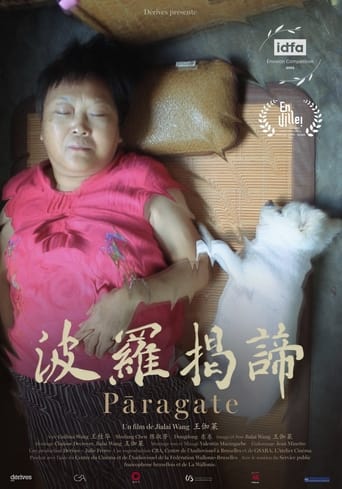
From Belgium, Jialai Wang maintains contact via smartphone and camera with her mother and grandmother in China. When her grandmother’s health deteriorates, Jialai returns to Shanghai, but when she arrives, her grandmother has already died, and she is left alone with her mother. A devout Buddhist, her mother seems to pay more attention to her daily prayers, Maoist past and dog Dongdong than she does to her daughter. She herself had been abandoned as a child by her own mother, when she divorced Jialai’s grandfather and moved to the city.

Although director Olga Kosanović was born and raised in Austria, she is not allowed to be Austrian. Her first attempt at naturalization failed. One contemptuous social media comment summed it up: “If a cat gives birth in the Spanish Riding School, that doesn’t make the kittens Lipizzaners.”What notion of identity underlies a legal system that divides society into “us” and “them”? A film about belonging — and about a second attempt.
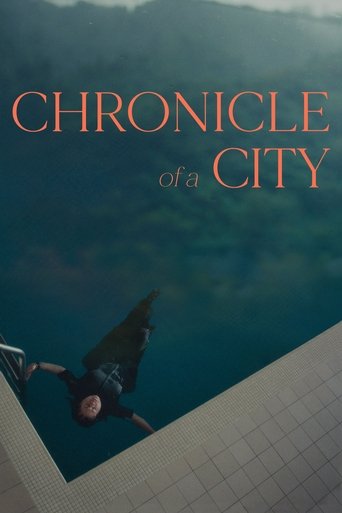
A patchwork of millions of lives, urban spaces are not only streets and concrete. They are where our dreams and deepest worries unfold. Chronicle of a City drifts and strolls through time and chance encounters, moving between fantasy and reality, echoing the intimate and ghostly voices of our metropolises, reminding us that we inhabit The City as much as it inhabits us. This roaming essay is a visual and sonic meditation that invites us to see urban life as a web of sensations that move through us and draw us closer to one another, even in the midst of solitude.

About Stefan Stricker, who calls himself Juwelia and has been running a gallery on Sanderstraße in Berlin Neukölln for many years. Every weekend he invites guests to shamelessly recount from his life and to sing poetic songs written with his friend from Hollywood Jose Promis. Juwelia has been poor and sexy all her life, has always struggled for recognition, but only partially.

After delivery of a parcel, on leaving a restaurant, hotel or train, or following an exchange with the customer service department of your telephone operator, the same request: to rate. On a scale from 0 to 10, embellished with colors, or by awarding pretty, playful little stars. A simple, mechanical and painless action for the rater. But behind this harmless gesture lies a brutal management system, operated directly by the customer, without their knowledge. Even more worrying: without knowing it, we are all being rated, to feed the algorithms of opaque companies that claim to be able to predict the future. The film questions this invasion of rating systems, and the consequences of this practice for our individual realities and collective freedoms.

30,000 people die in the US each year by firearms. Collateral damage of an undeclared civil war, from which the arms industry has benefited for decades under German and European participation. Starting from the massacre at Sandy Hook Elementary School, this documentary examines why we can't stop the arms madness.

"TDS, derrière l'écran des travailleuses du sexe" is a deep dive into the lives of Betty, Anaïs, Noochka, Manon, and Barty. They have all ventured into the world of selling sexual content online. What pushes someone to take the step of signing up on these platforms? What are their motivations? What are the consequences on their personal lives? Why do some choose to stick with it for years, while others decide to stop for good?
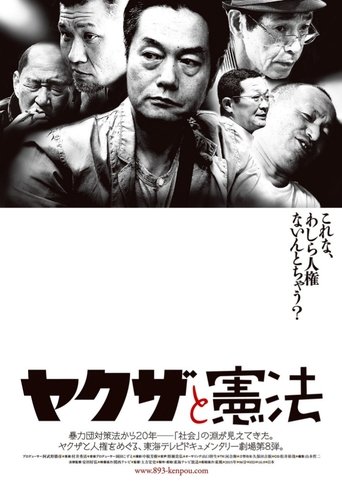
Since the enactment of the Anti-Boryokudan Act and Yakuza exclusion ordinances, the number of Yakuza members reduced to less than 60,000. In the past 3 years, about 20,000 members have left from Yakuza organizations. However, just numbers can’t tell you the reality. What are they thinking, how are they living now? The camera zooms in on the Yakuza world. Are there basic human rights for them?

The ideal of youth is at the centre of this eloquent film, mixing documentary and fiction, art and experimentation. Demonstrating both formal and narrative freedom, Bélanger weaves a deliberately loose weave in which the initiatory journey of two young people, wandering through Montreal in search of a job, unfolds. But not just any job. The two idealists want a job that will satisfy their desire for freedom, peace and respect. Of course, even though the breath of renewal from Expo 67 still floats here and there, the world they encounter does not correspond - by far - to their aspirations. Strangers in this country that tells them nothing, they come across brutally, materialism, violence, and egocentrism.