



Merkel: Anatomy of a Crisis
History
Overview
Angela Merkel's decision in autumn 2015 to open the borders for refugees split the country - some praised the moral stance, others criticized the surrender of sovereignty. Yet what would appear to be well-planned activity is in reality a policy of muddling along, chance, trial and error. The Driven Ones is a chronicle of the refugee crisis which shows that the political actors are being driven along, crushed between self-imposed constraints and events that have spun out of control.
Top Cast

Imogen Kogge
Angela Merkel

Josef Bierbichler
Horst Seehofer

Wolfgang Pregler
Thomas de Maizière

Tristan Seith
Peter Altmaier
Rüdiger Vogler
Wolfgang Schäuble

Timo Dierkes
Sigmar Gabriel
Walter Sittler
Frank-Walter Steinmeier

Gisela Aderhold
Beate Baumann

Silvina Buchbauer
Eva Christiansen

Urs Remond
Steffen Seibert
Uwe Preuss
Joachim Sauer

Hendrik Heutmann
Jens Spahn










Imogen Kogge
Imogen Kogge
Angela Merkel
Imogen Kogge
Angela Merkel
Josef Bierbichler
Josef Bierbichler
Horst Seehofer
Josef Bierbichler
Horst Seehofer
Wolfgang Pregler
Wolfgang Pregler
Thomas de Maizière
Wolfgang Pregler
Thomas de Maizière
Tristan Seith
Tristan Seith
Peter Altmaier
Tristan Seith
Peter Altmaier
Rüdiger Vogler
Rüdiger Vogler
Wolfgang Schäuble
Rüdiger Vogler
Wolfgang Schäuble
Timo Dierkes
Timo Dierkes
Sigmar Gabriel
Timo Dierkes
Sigmar Gabriel
Walter Sittler
Walter Sittler
Frank-Walter Steinmeier
Walter Sittler
Frank-Walter Steinmeier
Gisela Aderhold
Gisela Aderhold
Beate Baumann
Gisela Aderhold
Beate Baumann
Silvina Buchbauer
Silvina Buchbauer
Eva Christiansen
Silvina Buchbauer
Eva Christiansen
Urs Remond
Urs Remond
Steffen Seibert
Urs Remond
Steffen Seibert
Similar Movies
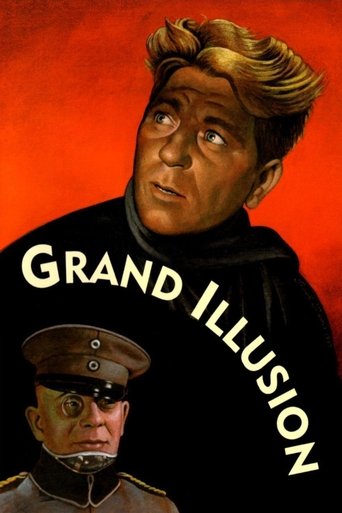
A group of French soldiers, including the patrician Captain de Boeldieu and the working-class Lieutenant Maréchal, grapple with their own class differences after being captured and held in a World War I German prison camp. When the men are transferred to a high-security fortress, they must concoct a plan to escape beneath the watchful eye of aristocratic German officer von Rauffenstein, who has formed an unexpected bond with de Boeldieu.

The events in Sarajevo in June 1914 are the backdrop for a thriller directed by Andreas Prochaska and written by Martin Ambrosch, focusing on the examining magistrate Dr. Leo Pfeffer (Florian Teichtmeister) investigating the assassination of Archduke Franz Ferdinand. Trying to do his job in a time of lawlessness and violence, intrigues and betrayal, Leo struggles to maintain his integrity and save his love, Marija, and her father, prominent Serbian merchant. But the events of Sarajevo have set into motion an inescapable course of events that will escalate to become … the Great War.
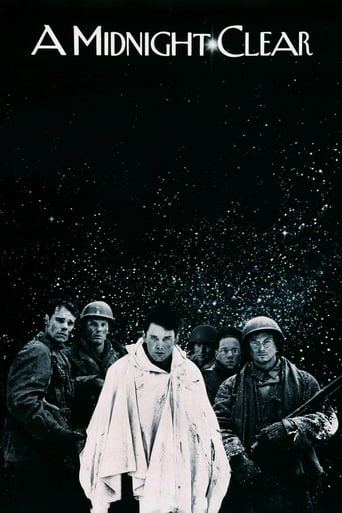
In 1944 France, an American Intelligence Squad locates a German Platoon wishing to surrender rather than die in Germany's final war offensive. The two groups of men, isolated from the war at present, put aside their differences and spend Christmas together before the surrender plan turns bad and both sides are forced to fight the other.

A man's story parallels Hitler's rise. Austrian Klaus Schneider, wounded in World War I, recovers in the care of Dr. Emil Bettleheim. Bettleheim discovers that Schneider possesses powers of empathy and of clairvoyance, such that could aid suicidal patients. After the war, with one friend as his manager and another as his lover, Schneider changes his name to Eric Jan Hanussen and goes to Berlin, as a hypnotist and clairvoyant performing in halls and theaters. He always speaks the truth, which brings him to the attention of powerful Nazis. He predicts their rise (good propaganda for them) and their violence (not so good). He's in pain and at risk. What is Hanussen's future?

One journalist described it as a chance "to see justice catch up with evil." On November 20, 1945, the twenty-two surviving representatives of the Nazi elite stood before an international military tribunal at the Palace of Justice in Nuremberg, Germany; they were charged with the systematic murder of millions of people. The ensuing trial pitted U.S. chief prosecutor and Supreme Court judge Robert Jackson against Hermann Göring, the former head of the Nazi air force, whom Adolf Hitler had once named to be his successor. Jackson hoped that the trial would make a statement that crimes against humanity would never again go unpunished. Proving the guilt of the defendants, however, was more difficult than Jackson anticipated. This American Experience production draws upon rare archival material and eyewitness accounts to recreate the dramatic tribunal that defines trial procedure for state criminals to this day.

Near the end of World War II, Gen. Dietrich von Choltitz receives orders to burn down Paris if it becomes clear the Allies are going to invade, or if he cannot maintain control of the city. After much contemplation Choltitz decides to ignore his orders, enraging the Germans and giving hope to various resistance factions that the city will be liberated. Choltitz, along with Swedish diplomat Raoul Nordling, helps a resistance leader organize his forces.