

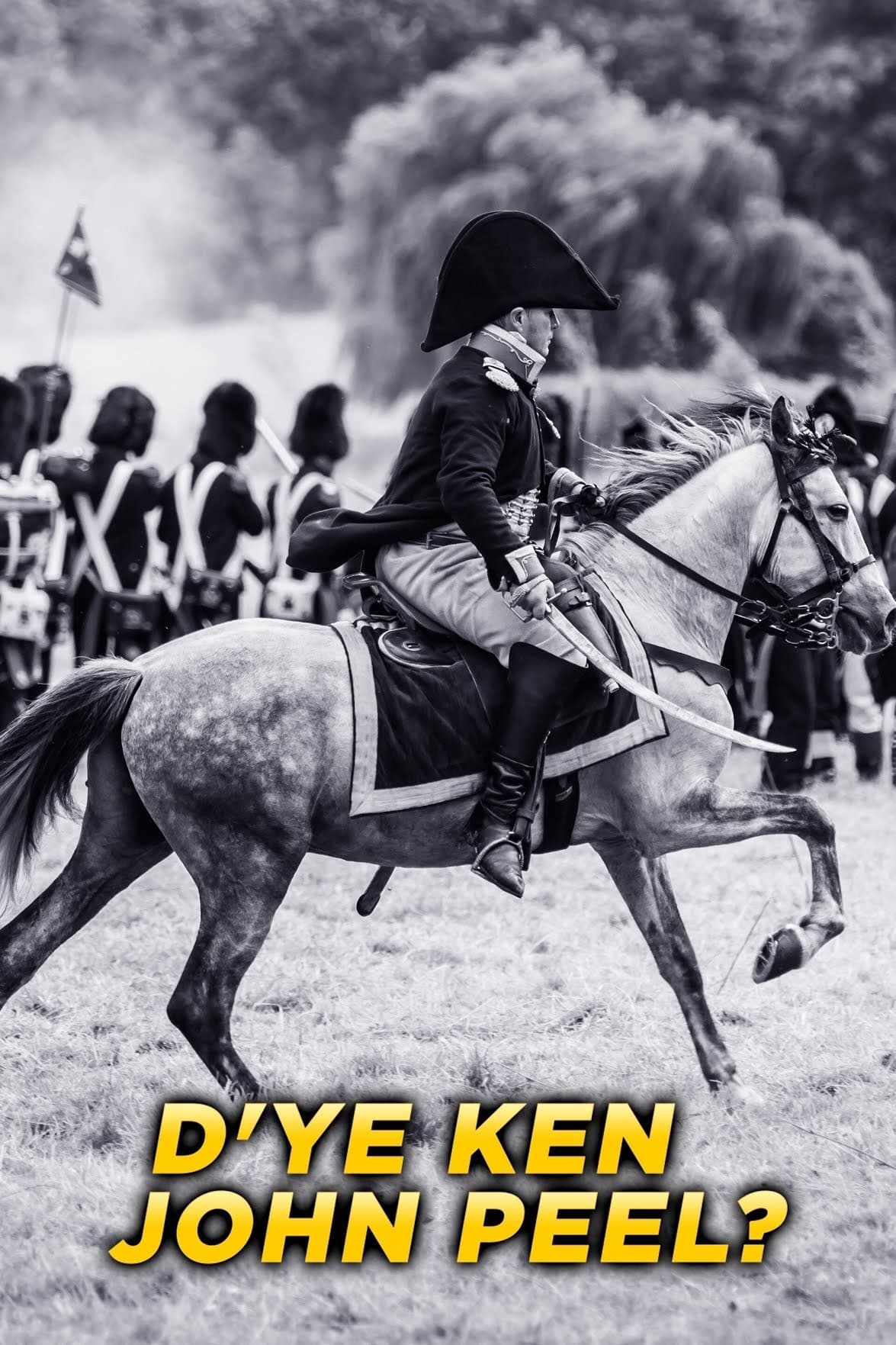
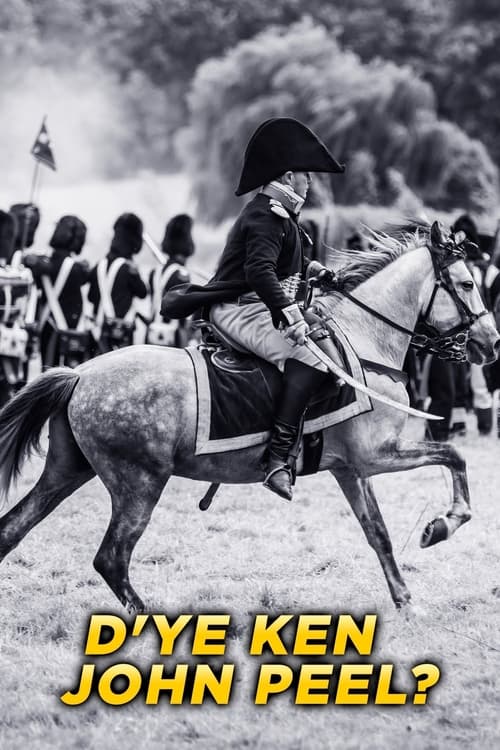
D’Ye Ken John Peel?
Adventure · Drama · Romance
Overview
Major John Peel returns to England, following Napoleon's Waterloo defeat, and renews his acquaintance with Lucy Merrall, but she tells him she is engaged to be married. He later learns that, Cravens, the man she is to marry already has a wife. He also learns that Craven cleaned out Lucy's father in a crooked gambling game, and Lucy is paying the price to hold the family home together.
Top Cast

John Garrick
Major John Peel

Winifred Shotter
Lucy Merrall

Stanley Holloway
Sam Small
John Stuart
Captain Moonlight / Captain Freeman

Leslie Perrins
Sir Charles Hawksley / Mr. Craven

Mary Lawson
Toinette
Charles Carson
Francis Merrall
Wilfrid Caithness
Latimer
Morris Harvey
Glover
Gabrielle Casartelli
Lizzie
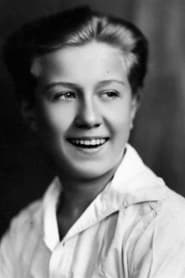
Charles Eaton
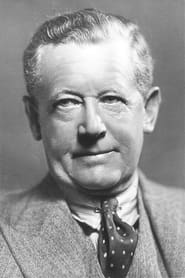
O.B. Clarence
Ogleby






John Garrick
John Garrick
Major John Peel
John Garrick
Major John Peel
Winifred Shotter
Winifred Shotter
Lucy Merrall
Winifred Shotter
Lucy Merrall
Stanley Holloway
Stanley Holloway
Sam Small
Stanley Holloway
Sam Small
John Stuart
John Stuart
Captain Moonlight / Captain Freeman
John Stuart
Captain Moonlight / Captain Freeman
Leslie Perrins
Leslie Perrins
Sir Charles Hawksley / Mr. Craven
Leslie Perrins
Sir Charles Hawksley / Mr. Craven
Mary Lawson
Mary Lawson
Toinette
Mary Lawson
Toinette
Charles Carson
Charles Carson
Francis Merrall
Charles Carson
Francis Merrall
Wilfrid Caithness
Wilfrid Caithness
Latimer
Wilfrid Caithness
Latimer
Morris Harvey
Morris Harvey
Glover
Morris Harvey
Glover
Gabrielle Casartelli
Gabrielle Casartelli
Lizzie
Gabrielle Casartelli
Lizzie
Similar Movies

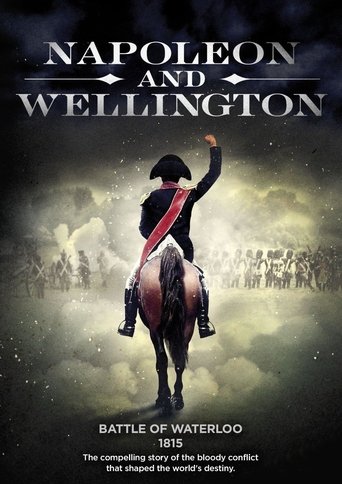
After defeating France and imprisoning Napoleon on Elba, ending two decades of war, Europe is shocked to find Napoleon has escaped and has caused the French Army to defect from the King back to him. The best of the British generals, the Duke of Wellington, beat Napolean's best generals in Spain and Portugal, but now must beat Napoleon himself with an Anglo Allied army.
In 1800, as Napoleon Bonaparte rises to power in France, a rivalry erupts between Armand and Gabriel, two lieutenants in the French Army, over a perceived insult. For over a decade, they engage in a series of duels amidst larger conflicts, including the failed French invasion of Russia in 1812, and shifts in the political and social systems of Europe.
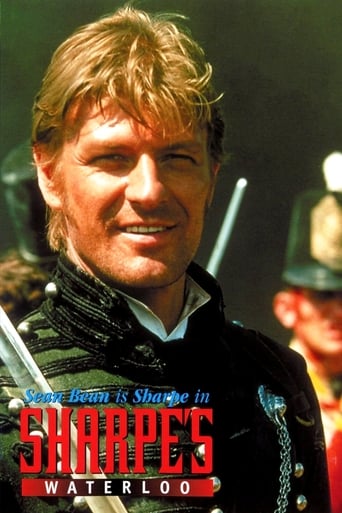
France, 1815. Sharpe seems to have settled down for life on a tranquil French farm with his new partner Lucille when the sudden news of Napoleon's return from exile compels him to go back to the army to fight in the great Battle of Waterloo. He joins the staff of Wellington's ally, the Prince of Orange. Once again reunited with the Chosen Men, Sharpe abandons his inept commander to organise the defence of the British key positions on the farm of La Haie Sainte and plays a courageous and important role in securing one of Britain's most famous victories.
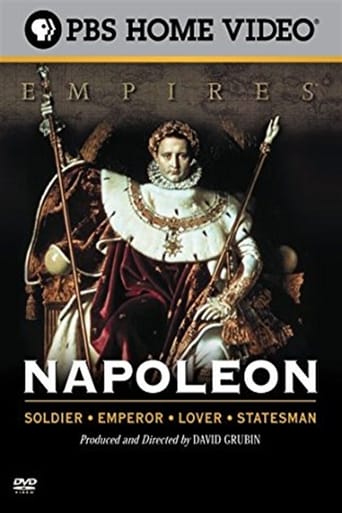
In David Grubin's NAPOLEON watch Napoleon's rise from obscurity to victories that made him a hero to the French people and convinced him he was destined for greatness. Learn of his love for Josephine Beauharnais, and his rise to Emperor. Witness his extraordinary achievements and ultimately his fall, his final battles, his exile to Elba, and his defeat at Waterloo. For nearly two decades he strode the world stage like a colossus -- loved and despised, venerated and feared. From his birth on the rugged island of Corsica to his final exile on the godforsaken island of St. Helena, NAPOLEON brings this extraordinary figure to life.
This film gives an overview of Napoleons return to France in 1815 before covering in detail the Battles of Ligny and Quatre Bras. Filmed on the Battlefields in Belgium using re-enaction footage expert Presenters follow the Emperors brilliant initial plan which however soon begins to fall apart due to flaws in the French staff, Napoleons arrogance and the courage and fighting ability of the Allied Troops. Both these battles deserve to be better known but they have been overshadowed by Waterloo the culmination of the Campaign
Following on from Hougoumont and D'Erlon's Attack, Part III starts just as the great battle reaches its crisis point. Marshal Ney launched thousands of France's finest heavy cavalry against Wellington's thinning lines who had already taken a terrible battering on the Mont St Jean Ridge. Wave after wave of armoured horsemen broke against the steady squares of British, Dutch/Belgian and German troops. The crisis, however, took a further turn for the worse as the key bastion in Wellington's centre, the fortified farm of La Haie Sainte, fell to the French onslaught. The way to Brussels was now open and Wellington muttered, 'Give me Blucher or give me night'. With the situation looking bleaker by the second for Wellington and his troops, Napoleon fatefully hesitated to complete the coup de grace as the Prussians had closed in on his right flank at the Village of Plancenoit. Would the Young Guard be able to hold Blucher's men? There was all still to play for.
Following on from Ligny and Quatre Bras, Part II starts by focusing on the concentration of the Allies on the ridge of Mont St Jean and the plans of the opposing armies. While the guns of the Grand Battery thundered in the centre, French columns bore down on the Hougoumont chateau and farm complex, which protected Wellington's flank held by the Guards and their German allies. Thus began an epic 'battle within a battle' that sucked away valuable troops from Napoleon's main attack, causing Wellington to declare that 'the battle turned on the closing of the gates at Hougoumont'.Meanwhile D'Erlons Corps attempted to bludgeon its way through Wellington's centre, not knowing that the British and Dutch line was in waiting on the reverse slope. Upon seeing the French advance, the British released a disciplined volley of musket fire that checked the French. A further brilliantly timed charge by the Household and Union Cavalry Brigades finally saw the French off.
This film shows the kit and equipment that the 42nd of Foot, The Black Watch wore and used at Waterloo. The Battalion was in 9 Bde of Picton's 5th Division and fought at Quatre Bras and Waterloo. The 8 British Battalions in Picton's Division were all Peninsula Battalions and most probably the most relaible in Wellington's Army. Hence their use at Quatre Bras and their position at Waterloo. The Division lost 43% of its men as casualties at Waterloo including Picton himself, Wellington's greatest fighting general.
This final part takes us through the dramatic events when Wellington’s Anglo-Dutch Army aided by Blucher’s Prussians defeat Napoleon. The French army was outfought and Napoleon was out-generaled by Wellington. At Wavre Grouchy beat the Prussian rearguard before retreating to France. Meanwhile, the Anglo-Dutch army counted the bloody cost of the previous days fighting while Wellington wrote his controversial Waterloo Dispatch and the vengeful Prussians pursued the French towards Paris, leading to Napoleon's abdication and the occupation of the city by the Allies.