

The 42nd of Foot - Black Watch - Dress and Equipment at Waterloo
Documentary · History · War
Overview
This film shows the kit and equipment that the 42nd of Foot, The Black Watch wore and used at Waterloo. The Battalion was in 9 Bde of Picton's 5th Division and fought at Quatre Bras and Waterloo. The 8 British Battalions in Picton's Division were all Peninsula Battalions and most probably the most relaible in Wellington's Army. Hence their use at Quatre Bras and their position at Waterloo. The Division lost 43% of its men as casualties at Waterloo including Picton himself, Wellington's greatest fighting general.
Top Cast







Andrew Duff
Andrew Duff
Presenter and Producer
Andrew Duff
Presenter and Producer
Tim Saunders
Tim Saunders
Director and Editor
Tim Saunders
Director and Editor
Similar Movies
Following on from the story of Hell's Highway, the series reaches the battle to seize the great Bridges over two of Europe's largest water ways; the Maas and the Waal at Nijmegen. Here the 82nd US airborne were, as elsewhere, denied coup de main attacks to seize the bridges by the air commanders. While the Grave Bridge was captured, confusion in US orders meant that the barely defended bridge in Nijmegen was only attacked when the Germans had taken the opportunity to reinforce the garrison. The resulting battle to regain control of the situation is an epic of Anglo-American military history. This programme tells the story of the amazing courage of the American and British soldiers who won this battle against desperate odds.
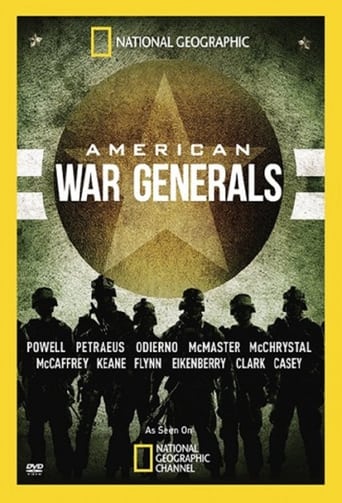
Powell. McChrystal. McCaffrey. Petraeus. Clark. For the first time, National Geographic Channel gathers the nation's leading war generals for an unprecedented look at 50 years of military history, from the Vietnam War to America's war on Al-Qaeda. The two-hour special American War Generals reveals never-before-heard stories and insightful opinions from eleven active and retired U.S. Army generals. Their accounts take us through the big changes that have transformed the U.S. military from the first troops to enter Vietnam to the last combat troops to exit Afghanistan, explaining the critical personal experiences that shaped their lives and the way they approached modern warfare.
In June 2010, French actress Marion Cotillard spent a week in the heart of the tropical forests of the Democratic Republic of Congo with members of Greenpeace France and Greenpeace Africa. She delivers in video a strong testimony on the looting of Congolese forests which benefits a few industrial groups, often European.

Kang Aries and Kang Oca are two cultural observers of Kujang who try to provide a justification perspective on the Kujang Philosophy made by one of the blacksmiths named Abah Jajang, where the general public often considers that Kujang is a sharp weapon. The two of them "Kang Aris & Kang Oca" entered the realm of the trial to defend the essence of Kujang, so as not to be considered misunderstood by the general public.

On November 4th, 2008, three states - California, Florida and Arizona - voted to amend their constitutions, denying and revoking the rights of same-sex couples to marry. On May 26, 2009, with Canadian allies, gay American families rally at a Vancouver demonstration to protest these amendments that persecute the LGBTQ community. Demonstration organizer Roger Chin relays the California Supreme Court's infamous decision on Prop 8. Subsequent speakers talk about couples living in exile. Weaving elements of public protest and intimate interviews, four families share their stories of how they met, their decision to escape to freedom in Canada, their Canadian experience and their dreams of returning to their home country, family and friends. In the end, the organizer celebrates the freedoms to marry that exists in Canada.

When does someone stop being a Stranger? In a world emerging from social lockdown, this documentary explores the way communication is changing. Seven participants give us their views on social interactions, before having a conversation with a Stranger. Will this change their perceptions?
Stanley Kubrick’s first color film, commissioned by the Seafarers International Union to promote the benefits of union membership. Shot inside the union’s Atlantic and Gulf Coast District facilities, it features scenes of ships, machinery, cafeteria life, and meetings, highlighting the daily routines and camaraderie of seafarers. Thought lost for decades, the film was rediscovered in 1973 and preserved by the Library of Congress.