

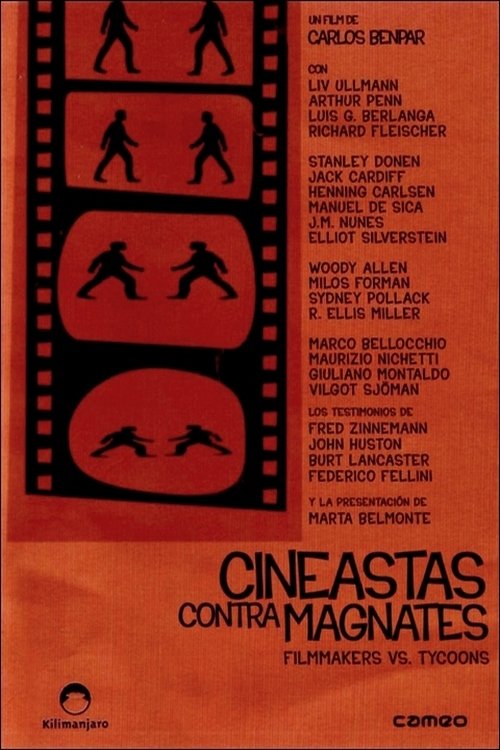
Filmmakers vs. Tycoons
Documentary
Overview
How the cinema industry does not respect the author's work as it was conceived, how manipulates the motion pictures in order to make them easier to watch by an undemanding audience or even how mutilates them to adapt the original formats and runtimes to the restrictive frame of the television screen and the abusive requirements of advertising. (Followed by “Filmmakers in Action.”)







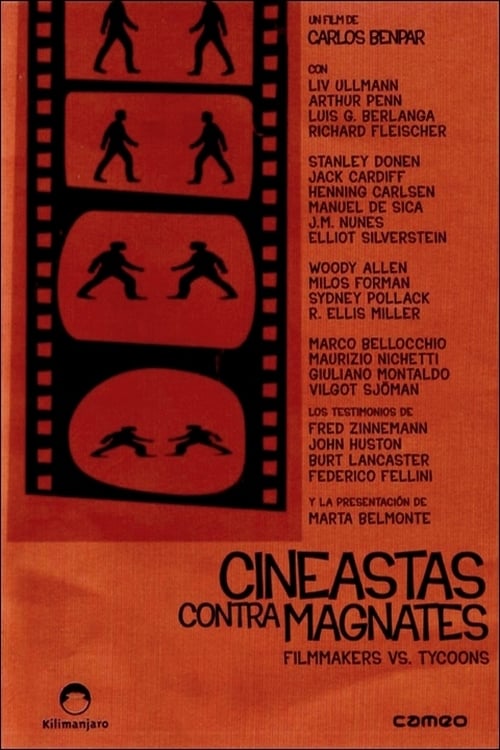

Marta Belmonte
Marta Belmonte
Marta
Marta Belmonte
Marta
Jesús Ángel Domínguez
Jesús Ángel Domínguez
Jester
Jesús Ángel Domínguez
Jester
Víctor Jerez
Víctor Jerez
Knight
Víctor Jerez
Knight

Tunet Vila
Tunet Vila
Monk
Tunet Vila
Monk

Daniel Medrán
Daniel Medrán
Navarrete
Daniel Medrán
Navarrete
Antonio Regueiro
Antonio Regueiro
Philip II of Spain
Antonio Regueiro
Philip II of Spain
Ramón Planas
Ramón Planas
Priest
Ramón Planas
Priest
Tomàs Mallol
Tomàs Mallol
Professor
Tomàs Mallol
Professor
Santiago Lapeira
Santiago Lapeira
Projectionist
Santiago Lapeira
Projectionist

Mark Schardan
Mark Schardan
Receptionist
Mark Schardan
Receptionist
Similar Movies
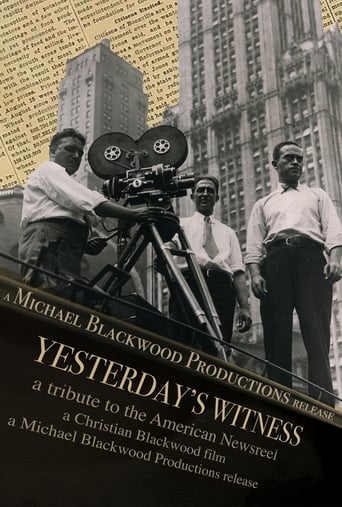
For the first 50 years of film history, the newsreel was a fixture in American movie theaters. From 1911 to 1967, these shorts proved an influential source of information – and misinformation – for generations of American moviegoers. Television news and public affairs programs became a great improvement over the scanty information offered by the newsreels. This documentary offers insight into a medium which has disappeared.
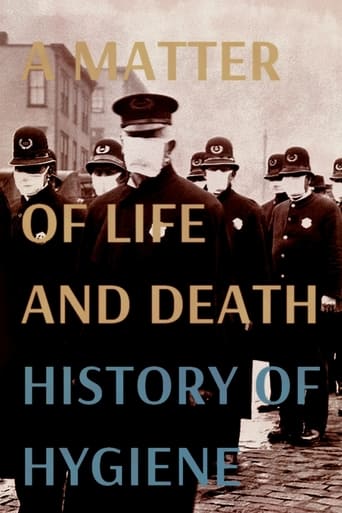
Hygienic habits are as old as the various human civilizations; but each era establishes its own customs: whether private or public, everywhere and at all times, methods of personal cleanliness have depended on cultural conventions, religious morals, political ideologies and economic interests; because the control of basic hygiene has also been and is one more tool in the infinite exercise of power over the masses.
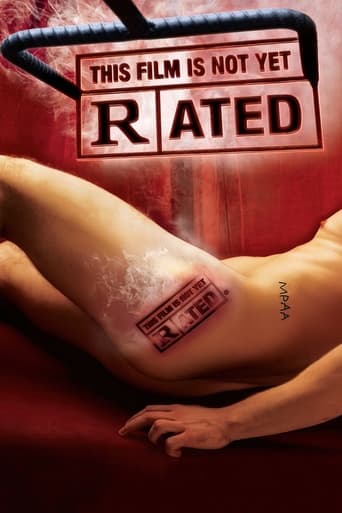
Kirby Dick's provocative documentary investigates the secretive and inconsistent process by which the Motion Picture Association of America (MPAA) rates films, revealing the organization's underhanded efforts to control culture. Dick questions whether certain studios get preferential treatment and exposes the discrepancies in how the MPAA views sex and violence.
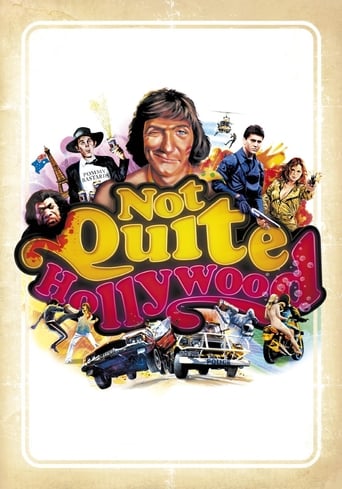
As Australian cinema broke through to international audiences in the 1970s through respected art house films like Peter Weir's "Picnic At Hanging Rock," a new underground of low-budget exploitation filmmakers were turning out considerably less highbrow fare. Documentary filmmaker Mark Hartley explores this unbridled era of sex and violence, complete with clips from some of the scene's most outrageous flicks and interviews with the renegade filmmakers themselves.