


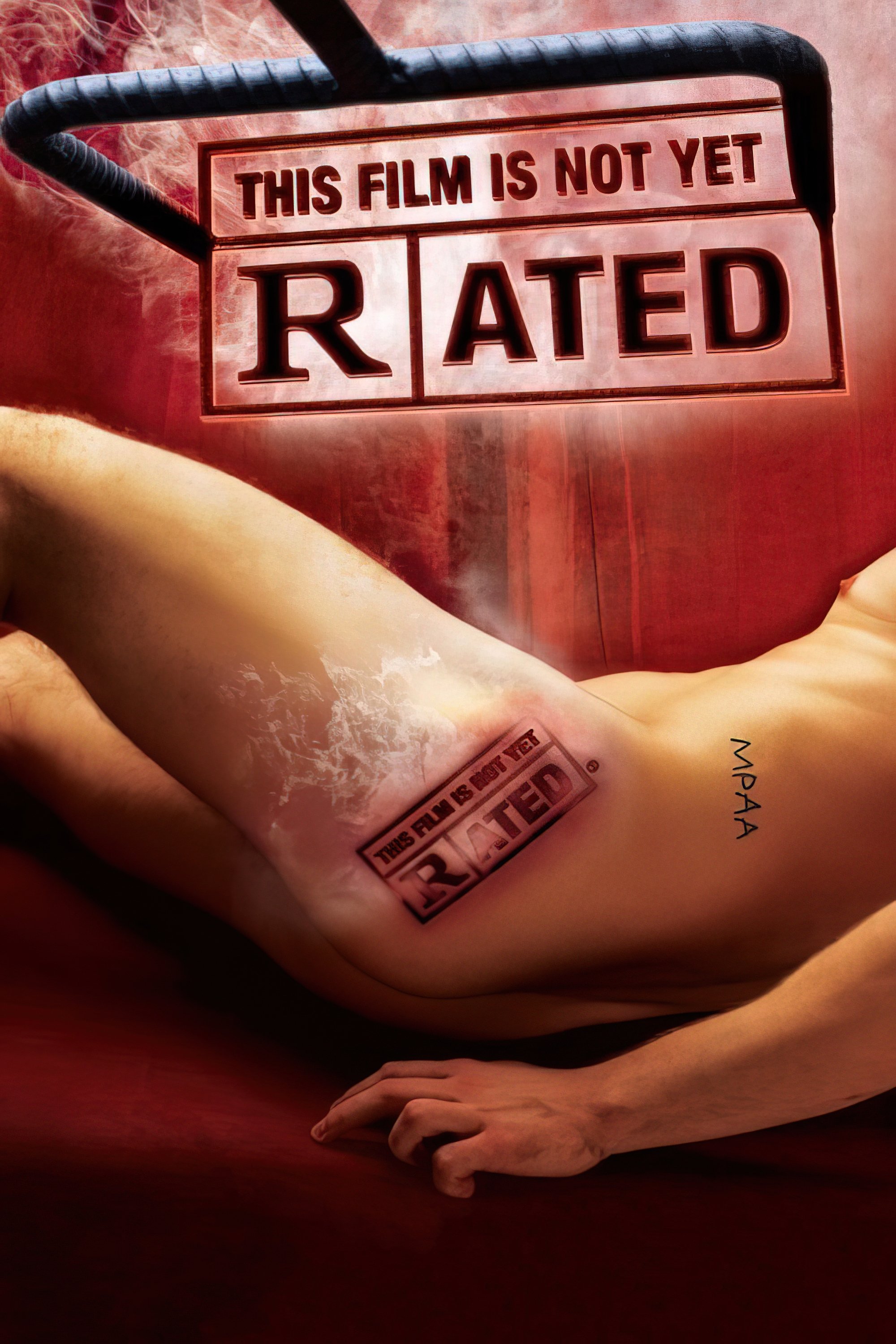
This Film Is Not Yet Rated
Documentary
Overview
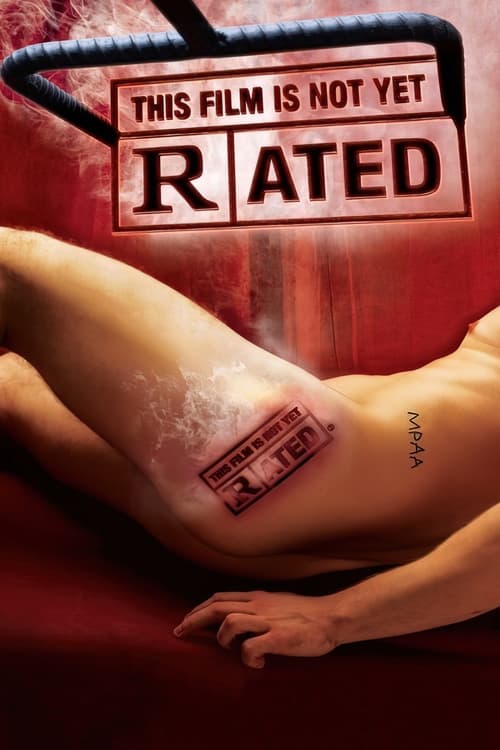
Kirby Dick's provocative documentary investigates the secretive and inconsistent process by which the Motion Picture Association of America (MPAA) rates films, revealing the organization's underhanded efforts to control culture. Dick questions whether certain studios get preferential treatment and exposes the discrepancies in how the MPAA views sex and violence.
Top Cast

Kimberly Peirce
Self - Director of 'Boys Don't Cry'
Jon Lewis
Self - Author of 'Hollywood v. Hardcore'
David Ansen
Self - Film Critic at 'Newsweek'
Martin Garbus
Self - First Amendment Attorney

Wayne Kramer
Self - Director of 'The Cooler'
Paul Dergarabedian
Self - Box Office Analyst

Kevin Smith
Self - Director of 'Clerks' and 'Jersey Girl'
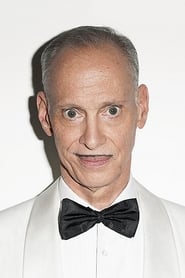
John Waters
Self - Director of 'A Dirty Shame'

Matt Stone
Self - Producer of 'South Park' and 'Team America'
Richard Heffner
Self - Former Rating Board Chairman
Bingham Ray
Self - Co-Founder of October Films
Joel Federman
Self - Author of 'Media Ratings'







Kimberly Peirce
Kimberly Peirce
Self - Director of 'Boys Don't Cry'
Kimberly Peirce
Self - Director of 'Boys Don't Cry'
Jon Lewis
Jon Lewis
Self - Author of 'Hollywood v. Hardcore'
Jon Lewis
Self - Author of 'Hollywood v. Hardcore'
David Ansen
David Ansen
Self - Film Critic at 'Newsweek'
David Ansen
Self - Film Critic at 'Newsweek'
Martin Garbus
Martin Garbus
Self - First Amendment Attorney
Martin Garbus
Self - First Amendment Attorney
Wayne Kramer
Wayne Kramer
Self - Director of 'The Cooler'
Wayne Kramer
Self - Director of 'The Cooler'
Paul Dergarabedian
Paul Dergarabedian
Self - Box Office Analyst
Paul Dergarabedian
Self - Box Office Analyst
Kevin Smith
Kevin Smith
Self - Director of 'Clerks' and 'Jersey Girl'
Kevin Smith
Self - Director of 'Clerks' and 'Jersey Girl'
John Waters
John Waters
Self - Director of 'A Dirty Shame'
John Waters
Self - Director of 'A Dirty Shame'
Matt Stone
Matt Stone
Self - Producer of 'South Park' and 'Team America'
Matt Stone
Self - Producer of 'South Park' and 'Team America'
Richard Heffner
Richard Heffner
Self - Former Rating Board Chairman
Richard Heffner
Self - Former Rating Board Chairman
Similar Movies

Amidst the grand walls of the Forbidden City, the film takes us on a deep journey through the ceremonial life of the Chinese emperor, unveiling the secrets and intrigues of concubines, eunuchs, and palace maids. As the West begins to influence China in the late 19th century, the dynamics within the city shift dramatically. The film highlights the preservation and restoration of invaluable treasures and paintings, culminating in the creation of the Palace Museum. With insights from renowned China scholar, Jonathan Spence, this is an intimate exploration of the rich cultural and historical tapestry that makes up the heart of ancient China.

Cruelty, psychological and sexual violence, humiliations: reality television seems to have gone mad. His debut in the early 2000s inaugurated a new era in the history of the audio-visual. Fifty years of archives trace the evolution of entertainment: how the staging of intimacy during the 80s opened new territories, how the privatization of the biggest channels has changed the relationship with the spectator. With the contribution of specialists, including philosopher Bernard Stiegler, this documentary demonstrates how emotion has made way for the exacerbation of the most destructive impulses.

In an intimate and provocative journey, Vibrations is a documentary-essay that explores the filmmaker’s complex relationship with explicit imagery and his own sexuality. Born into a Catholic family and struggling to put his homosexuality into words, the director finds in pornography a space for self-exploration and acceptance. The film dives into the nuances of alternative pornography, challenging stigmas and revealing how desire, identity, and the politics of the body intertwine both on screen and in life. A work that pulses between the personal and the universal, Vibrations challenges perceptions and invites a rediscovery of pleasure and freedom through the image.
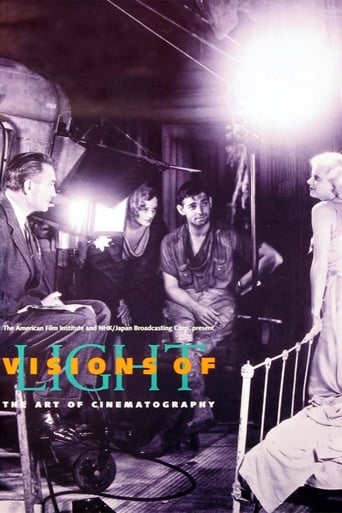
Cameramen and women discuss the craft and art of cinematography and of the "DP" (the director of photography), illustrating their points with clips from 100 films, from Birth of a Nation to Do the Right Thing. Themes: the DP tells people where to look; changes in movies (the arrival of sound, color, and wide screens) required creative responses from DPs; and, these artisans constantly invent new equipment and try new things, with wonderful results. The narration takes us through the identifiable studio styles of the 30s, the emergence of noir, the New York look, and the impact of Europeans. Citizen Kane, The Conformist, and Gordon Willis get special attention.
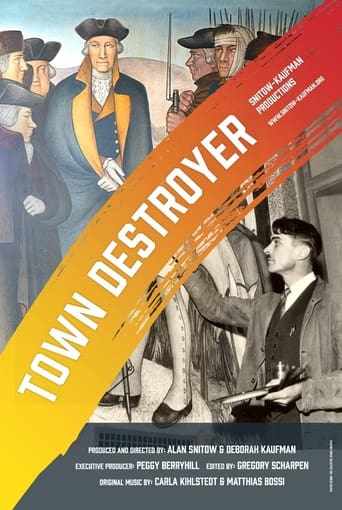
Controversy erupts over a New-Deal-era mural of the namesake of San Francisco’s George Washington High School. The thirteen-panel artwork "The Life of Washington" by Victor Arnautoff offers a view of the Founding Father both celebratory and critical, referencing his involvements in slavery and Native American genocide.

In 150 years, twice marked by total destruction —a terrible earthquake in 1923 and incendiary bombings in 1945— followed by a spectacular rebirth, Tokyo, the old city of Edo, has become the largest and most futuristic capital in the world in a transformation process fueled by the exceptional resilience of its inhabitants, and nourished by a unique phenomenon of cultural hybridization.