

Zítra se bude tančit všude
Music
Overview
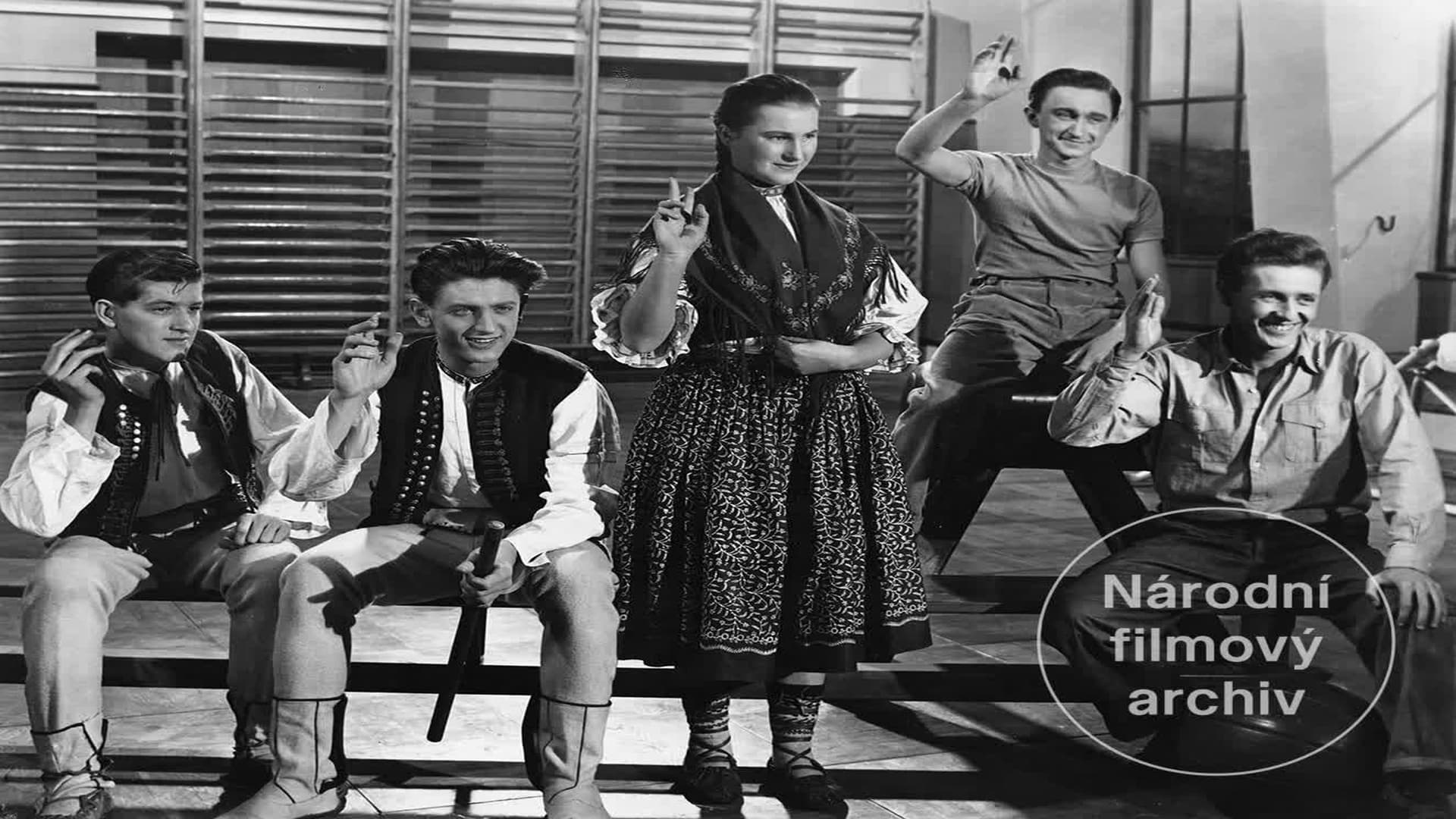
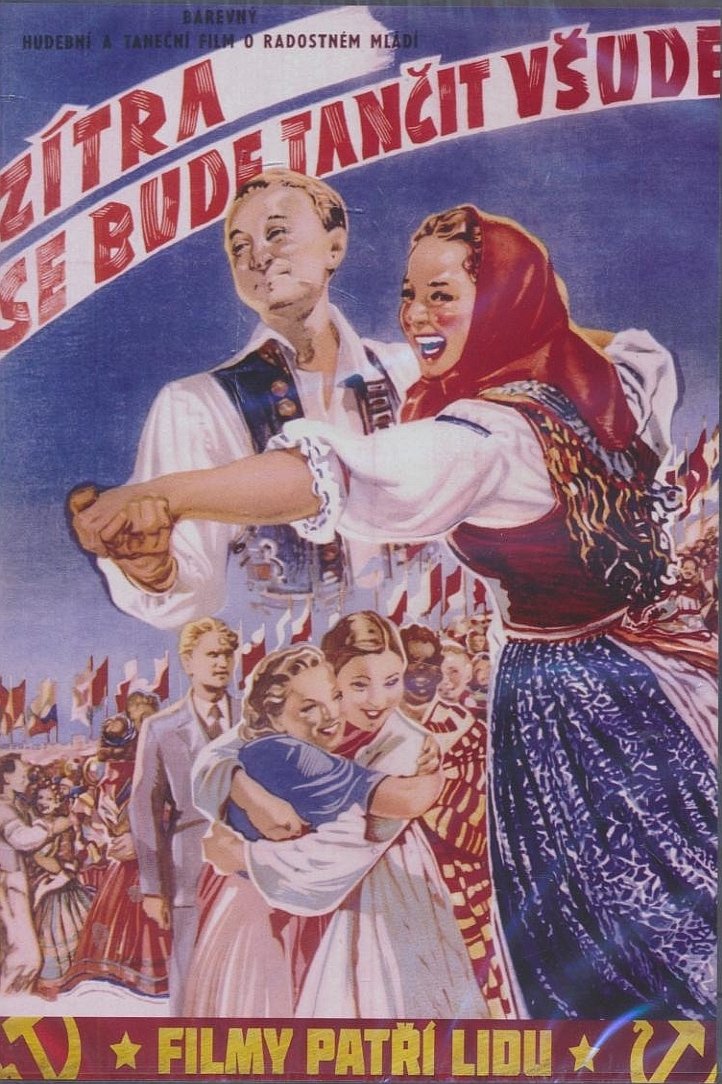
A group of union members, impressed by the First World Festival of Democratic Youth, held in Prague in 1947, decide to found a dance troupe. However, they are looking for someone who can teach them everything they need...






Zdeněk Buchvaldek
Zdeněk Buchvaldek
Pavel
Zdeněk Buchvaldek
Pavel
Eva Kubešová
Eva Kubešová
Alena
Eva Kubešová
Alena

Miloš Nesvadba
Miloš Nesvadba
Lojza
Miloš Nesvadba
Lojza
Marcela Martínková
Marcela Martínková
Rozárka
Marcela Martínková
Rozárka
Jiří Vala
Jiří Vala
Mirek
Jiří Vala
Mirek
Jiří Adamíra
Jiří Adamíra
Ruda
Jiří Adamíra
Ruda
Pavel Šmok
Pavel Šmok
Ota
Pavel Šmok
Ota
Ludmila Vendlová
Ludmila Vendlová
Hanka
Ludmila Vendlová
Hanka
Jitka Frantová
Jitka Frantová
Věra
Jitka Frantová
Věra
An Seong-hui
An Seong-hui
Korean dancer
An Seong-hui
Korean dancer
Similar Movies
Shortly after WWII, the DEFA Studios produced a series of operas and operettas which belonged to the classical German musical heritage. This enchanting film, the very first opera production of DEFA, stands out because of its lavish decor and costumes, its outstanding actors and their masterful voices of that time.
Theater director Falke, dressed as a bat, ends up in prison after a merry carnival night. Director Frank only releases him after some time. Falke decides to take revenge on his friend Gabriel von Eisenstein, to whom he owes the whole affair. The annual masked ball at Prince Orlofsky's provides the opportunity. Falke stages a game of mistaken identity in which Eisenstein does not recognize his own wife and courts her, while maid Adele appears as the countess. Eisenstein is duped, Falke has taken his revenge.
A musician is offered a job in Vienna as stage director, but his disagreements with the aristocratic opera manager end in abrupt firing in spite of a mutual attraction. He's quickly engaged by another theatre and becomes famous for his lavish stage productions and fine acting, which begins their golden age with Suppé and Strauss.
A young man asks a hat check girl to pose as his fiancée in order to make his dying father's last moments happy. However, the old man's health takes a turn for the better and now his son doesn't know how to break the news that he's engaged to someone else, especially since his father is so taken with the impostor.
A marching band of Germans, Italians, and Japanese march through the streets of swastika-motif Nutziland, serenading "Der Fuehrer's Face." Donald Duck, not living in the region by choice, struggles to make do with disgusting Nazi food rations and then with his day of toil at a Nazi artillery factory. After a nervous breakdown, Donald awakens to find that his experience was in fact a nightmare.
The two pigs building houses of hay and sticks scoff at their brother, building the brick house. But when the wolf comes around and blows their houses down (after trickery like dressing as a foundling sheep fails), they run to their brother's house. And throughout, they sing the classic song, "Who's Afraid of the Big Bad Wolf?".
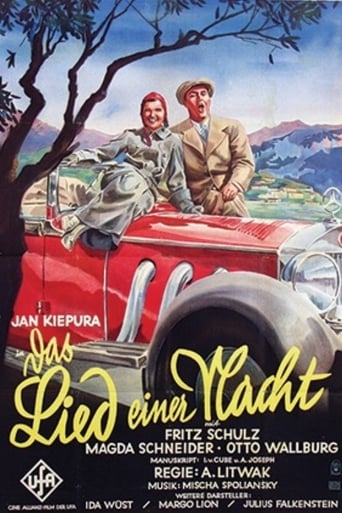
He was known as Anatole Litvak during his Hollywood directorial career, but he was still Anatole Litwak when he helmed the German musical Das Lied Einer Nacht (The Song of Night). Famed Polish tenor Jan Kiepura stars as famed Italian tenor Ferraro. Escaping from his tyrannical manager, Ferraro switches identities with a young tourist (Fritz Schulz) and goes off on an unscheduled Swiss holiday. Still travelling incognito, our hero falls in love with a winsome mountain girl (Magda Schneider). Alas, both his romance -- and his freedom -- are placed in jeopardy when it turns out that the charming young fellow with whom Ferraro traded identities was actually a notorious swindler. Anatole Litvak also directed the English-language version of Das Lied Einer Nacht, Be Mine Tonight
Marika is a cheerful girl who lives on the Danube aboard an old barge she inherited from her father. She works as a waitress in her aunt's inn, entertaining the guests with singing and dancing. Her greatest dream is to save enough money to repair the old barge and sail down the Danube. One day, she meets three young artists, Georg, Oskar, and Christoph, who all fall in love with her. Together, they put on an open-air revue and raise the necessary money. And with Georg, Marika is lucky in love.
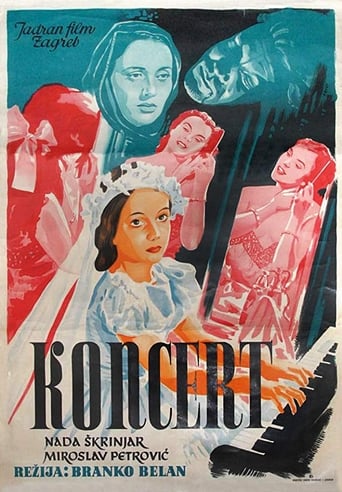
Celebrating the end of World War II and liberation of their city, a group of students is set on holding a cultural evening. They invite Ema, a reclusive piano teacher from the same building, to play for them. Ema declines, but starts reminscing back on her own life and the historical events that have seemingly overshadowed it.