

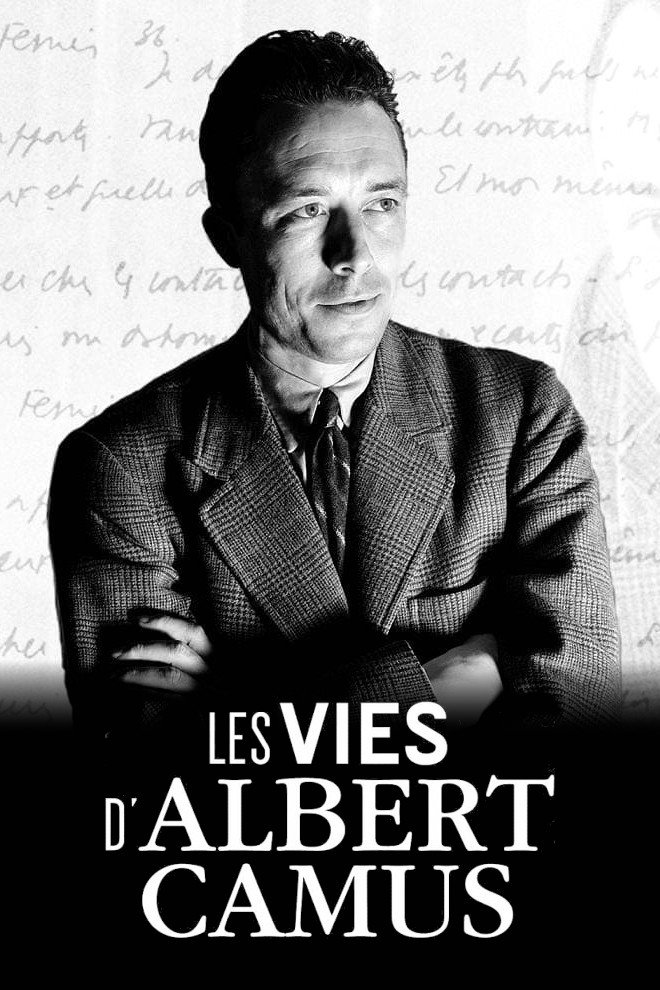
The Lives of Albert Camus
Documentary · History
Overview
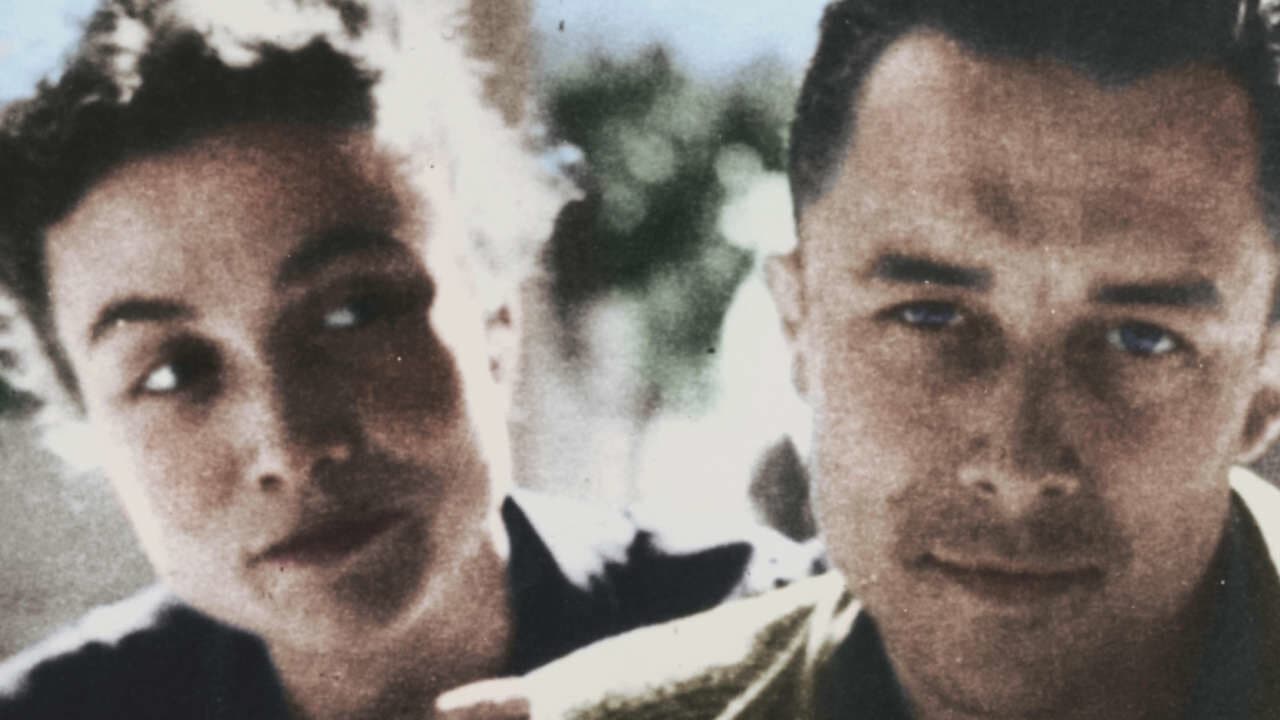
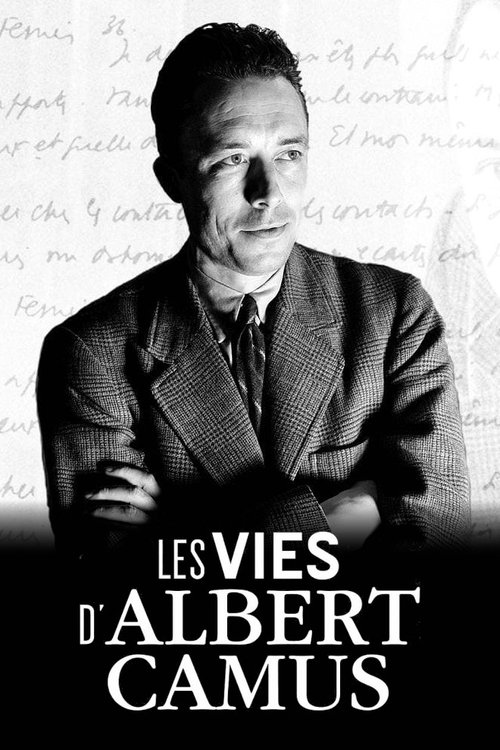
Albert Camus died at 46 years old on January 4, 1960, two years after his Nobel Prize in literature. Author of “L'Etranger”, one of the most widely read novels in the world, philosopher of the absurd and of revolt, resistant, journalist, playwright, Albert Camus had an extraordinary destiny. Child of the poor districts of Algiers, tuberculosis patient, orphan of father, son of an illiterate and deaf mother, he tore himself away from his condition thanks to his teacher. French from Algeria, he never ceased to fight for equality with the Arabs and the Kabyle, while fearing the Independence of the FLN. Founded on restored and colorized archives, and first-hand accounts, this documentary attempts to paint the portrait of Camus as he was.
Top Cast
Philippe Torreton
Narrator
Albert Camus
Self (archive footage)
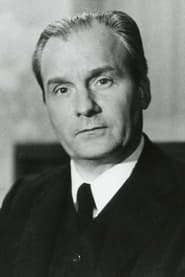
Michel Bouquet
Self
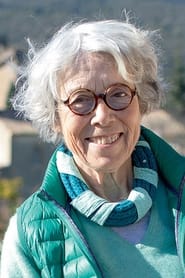
Catherine Camus
Self
Francine Faure
Self (archive footage)
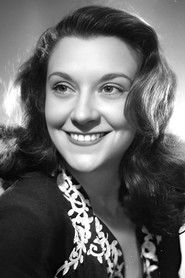
María Casares
Self (archive footage)
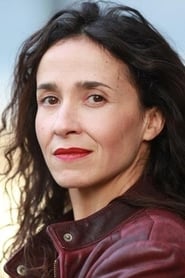
Chloé Réjon
(voice)
Max-Pol Fouchet
Self (archive footage)
Blanche Balain
Self (archive footage)
Robert Namia
Self (archive footage)
Marcello Mastroianni
Self (archive footage)
Brice Parrain
Self (archive footage)



Philippe Torreton
Philippe Torreton
Narrator
Philippe Torreton
Narrator
Albert Camus
Albert Camus
Self (archive footage)
Albert Camus
Self (archive footage)
Michel Bouquet
Michel Bouquet
Self
Michel Bouquet
Self
Catherine Camus
Catherine Camus
Self
Catherine Camus
Self
Francine Faure
Francine Faure
Self (archive footage)
Francine Faure
Self (archive footage)
María Casares
María Casares
Self (archive footage)
María Casares
Self (archive footage)
Chloé Réjon
Chloé Réjon
(voice)
Chloé Réjon
(voice)
Max-Pol Fouchet
Max-Pol Fouchet
Self (archive footage)
Max-Pol Fouchet
Self (archive footage)
Blanche Balain
Blanche Balain
Self (archive footage)
Blanche Balain
Self (archive footage)
Robert Namia
Robert Namia
Self (archive footage)
Robert Namia
Self (archive footage)
Similar Movies
The years 1851-1856: events from the life of the writer Božena Němcová, who, because of her free-thinking views and strong patriotic feelings, comes into conflict with the society, the church and the Austrian authorities... A cold, too readable version of the writer's biography. The playwright František Pavlíček dealt with the theme of "Němcová" also later - in the times of his dissidence.
A documentary about Edie Sedgwick featuring photos of her and clips from Factory Girl, narrated by her real-life friends and loved ones, including her brother Jonathan, cousin John Sedgwick, roommate Danny Fields, artists Richie Berlin and Gerard Malanga, photographer Nat Finkelstein, designer Betsey Johnson, and others.
Danton and Robespierre were close friends and fought together in the French Revolution, but by 1793 Robespierre was France's ruler, determined to wipe out opposition with a series of mass executions that became known as the Reign of Terror. Danton, well known as a spokesman of the people, had been living in relative solitude in the French countryside, but he returned to Paris to challenge Robespierre's violent rule and call for the people to demand their rights. Robespierre, however, could not accept such a challenge, even from a friend and colleague, and he blocked out a plan for the capture and execution of Danton and his allies.
When Francois Truffaut approached Alfred Hitchcock in 1962 with the idea of having a long conversation with him about his work and publishing this in book form, he didn't imagine that more than four years would pass before Le Cinéma selon Hitchcock finally appeared in 1966. Not only in France but all over the world, Truffaut's Hitchcock interview developed over the years into a standard bible of film literature. In 1983, three years after Hitchcock's death, Truffaut decided to expand his by now legendary book to include a concluding chapter and have it published as the "Edition définitive". This film describes the genesis of the "Hitchbook" and throws light on the strange friendship between two completely different men. The centrepieces are the extracts from the original sound recordings of the interview with the voices of Alfred Hitchcock, Francois Truffaut, and Helen Scott – recordings which have never been heard in public before.
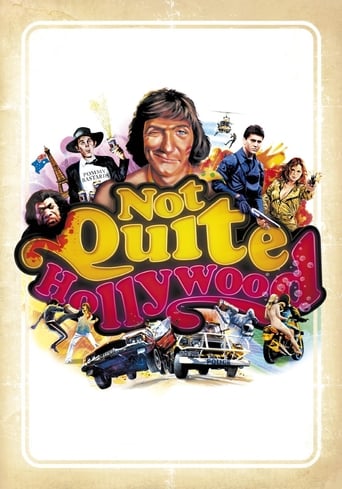
As Australian cinema broke through to international audiences in the 1970s through respected art house films like Peter Weir's "Picnic At Hanging Rock," a new underground of low-budget exploitation filmmakers were turning out considerably less highbrow fare. Documentary filmmaker Mark Hartley explores this unbridled era of sex and violence, complete with clips from some of the scene's most outrageous flicks and interviews with the renegade filmmakers themselves.
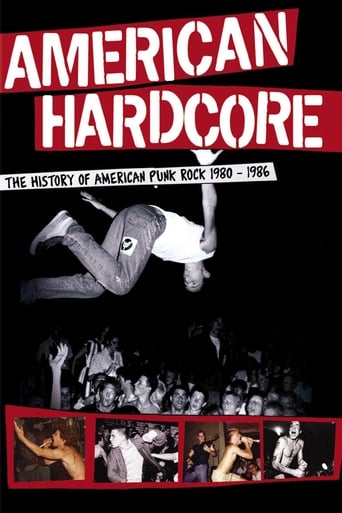
Inspired by Steven Blush's book "American Hardcore: A tribal history" Paul Rachman's feature documentary debut is a chronicle of the underground hardcore punk years from 1979 to 1986. Interviews and rare live footage from artists such as Black Flag, Bad Brains, Minor Threat, SS Decontrol and the Dead Kennedys.

This horror documentary is not the same as the 1986 TV special Stephen King's World of Horror nor the 1988 VHS release of the same name, which runs 45 minutes, was distributed by Front Row Entertainment and is about King himself. Instead, This Is Horror (copyright 1989) was a TV special which ran in four 60 minute increments. This new special used some framing footage from the original 'World of Horror' but is primarily newer interviews and behind-the-scenes footage about what was hot in horror in the late 80s. Here in the U.S., a condensed 90-minute version made its way onto video courtesy of Goodtimes in 1990. Elsewhere, the entire special was released as 2 different tapes running 90 minutes apiece. In the UK these were titled This is Horror: A Video Encyclopedia of Horror (Volumes 1 and 2) and in Germany they were called Best of Stephen King's World of Horror (Parts 1 & 2).