

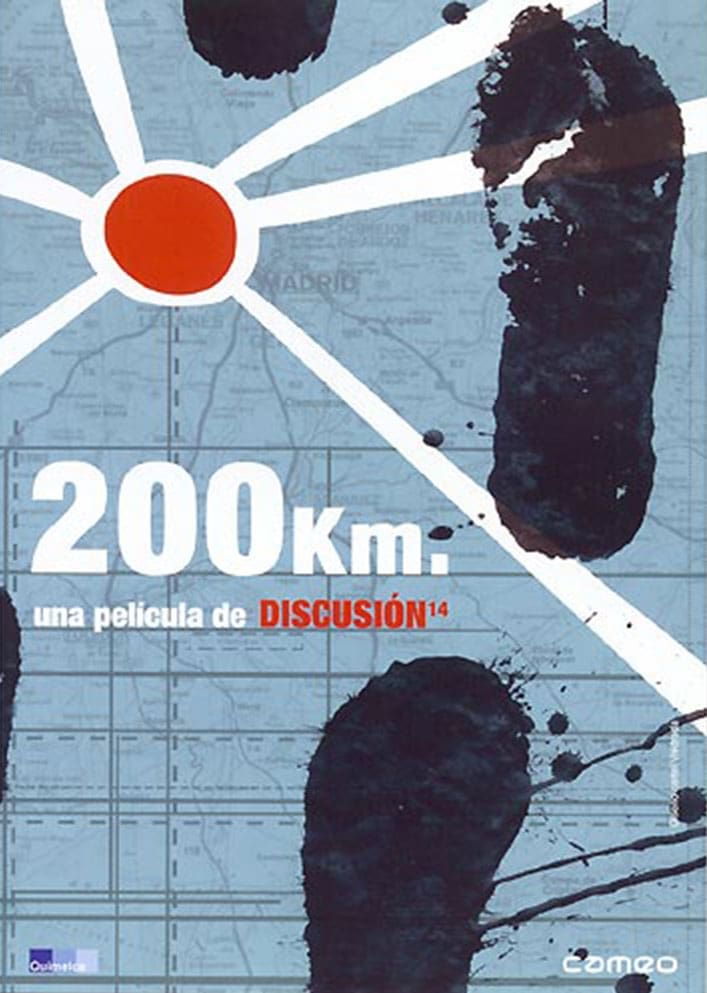
200 Km
Documentary · History
Overview
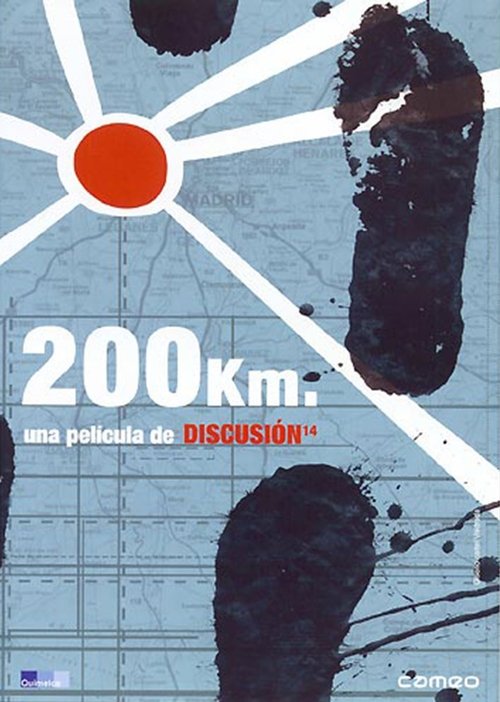
200 km follows the marches carried out by Sintel workers to reach Madrid on May 1, 2002. Sintel was a subsidiary of Telefónica that, when it was privatized, was closed, leaving its 1,800 workers on the streets. One year after setting up the "Camp of Hope" with which they occupied Madrid's Avenida de la Castellana for months, and with the promises they were made unfulfilled, Sintel workers began a 10-day, 200-km march to Madrid to claim your job. Premiered on San Sebastian Film Festival 2003.













No cast information.
Similar Movies
On September 16, 2022, in Teheran, the murder by police of the young Mahsa Amini, arrested for "wearing a headscarf contrary to the law", sparked off an unprecedented insurrection. Within hours, a spontaneous movement formed around the rallying cry: "Woman, life, freedom". For the first time, women, joined by men and students, took the initiative and removed their veils, the hated symbol of the Islamic Republic. The Iranian population, from all regions and social categories, rose up in protest. Social networks went wild. The diaspora (between 5–8 million Iranians) took up the cause, and the whole world discovered the scale of this mobilization: could the theocratic regime be overthrown this time?
In the 60s, Vadim, a Soviet engineer, is in love with Vera, a researcher in biology. But their romance is suddenly disrupted by a mission entrusted to Vadim: sent to Egypt, he must participate in one of the great utopian ventures initiated by the USSR. Based on unpublished archives, this film is inspired by a true story.
As anger and resentment grow in the face of social inequalities, many citizens-led protests are being repressed with an ever-increasing violence. In this documentary, David Dufresne gathers a panel of citizens to question, exchange and confront their views on the social order and the legitimacy of the use of force by the State.
In a small commercial harbour in the south of France, two Moroccan sailors are watching over ferries that were abandoned by ship-owners. Young Syrians make a stopover to load their cattle, African traders prepare a convoy of second-hand vehicles. Men, machines, and animals transit through this space open onto the sea.
1972 in Haute-Savoie (France) : the Bertrand's farm, with a hundred dairy cows owned by three bachelor brothers, is filmed for the first time. In 1997, they were the subject of Gilles Perret's first movie, as they let their farm to their nephew Patrick and his wife Hélène. Nowadays, 25 years later, Gilles Perret take another look at this farm, managed by Hélène who will step down. Through their words, an intimate, social and economic history of the rural world.