

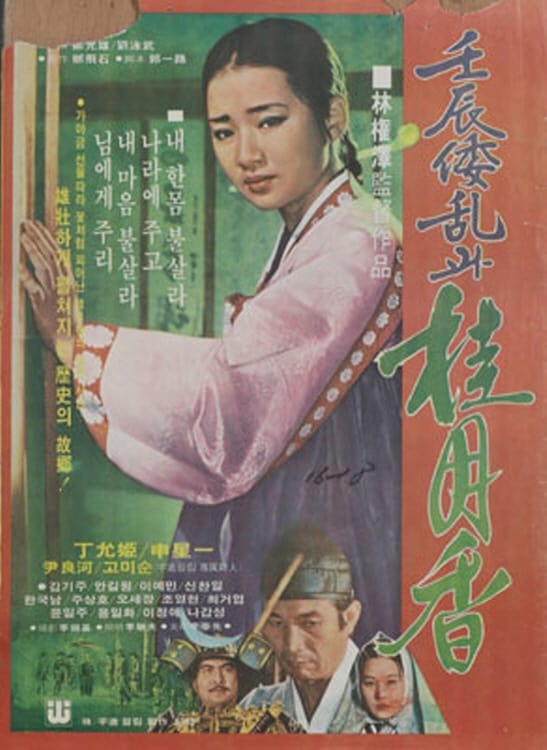
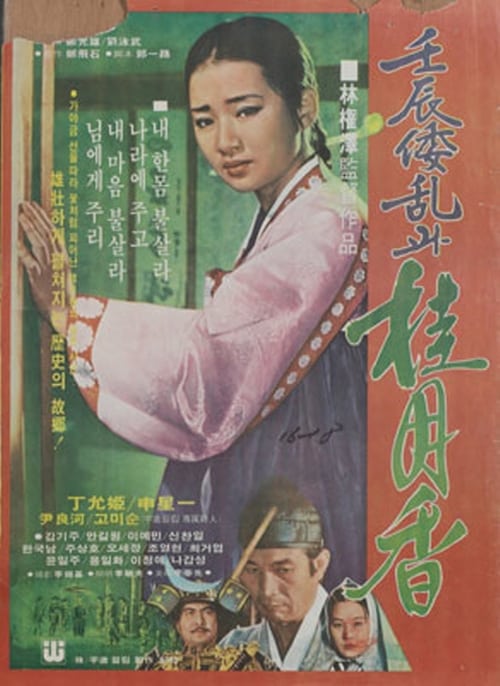
Japanese Invasion in the Year of Imjin and Gye Wol-hyang
Romance · Drama · History
Top Cast


Shin Seong-il
Shin Seong-il
Shin Seong-il

Jeong Yun-hui
Jeong Yun-hui
Jeong Yun-hui
Similar Movies

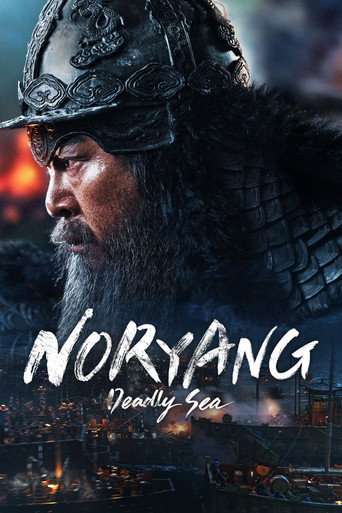
A famous general who defeated Japanese invaders with the world's first iron ship, 'Turtle battleship' during Chosun dynasty, was intrigued against by many villainous retainers. Even when he was reduced to a much lower rank, he served in the war worrying about the nation's wellbeing. This film depicts General Lee Sun-Shin who is probably the most famous general in Korean history, based on his 'Wartime Diary.'
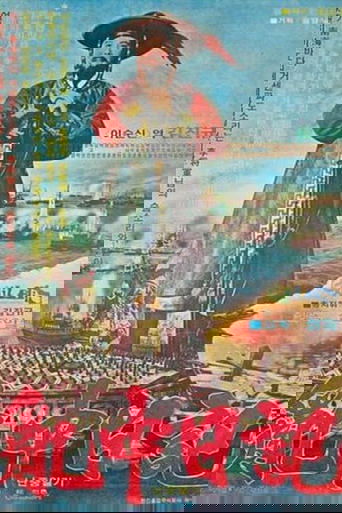
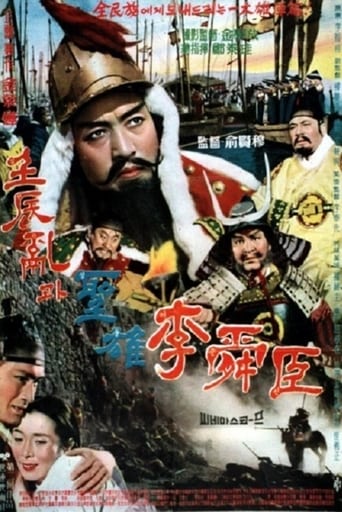
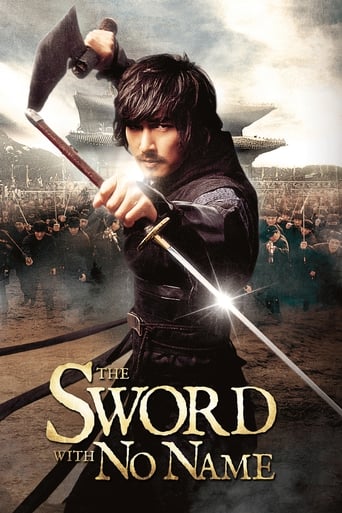
Admiral Lee Sun-shin designs and builds the 'Turtle Ships' in preparation of the Japanese invasion during the Injin War. He is promoted after his victories, but due to his expanding influence and increased popularity in military circles, the king comes to fear him and has him imprisoned. A year later, the Japanese navy attempts another invasion and the king is required to enter the prison and beg the admiral's assistance.
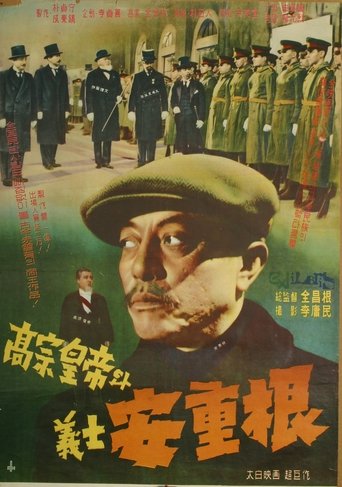
At the end of the Joseon Dynasty, shortly after the Eulsa Treaty has been forced to be concluded by Ito Hirobumi and the pro-Japanese courtiers, Japan pressures King Gojong to step down from the throne. Meanwhile, An Jung-geun, who is cultivating men of ability at Samheung school, is deeply impressed by a speech made by An Chang-ho, and heads for Russia to volunteer the army fighting for independence of the country. As both a lieutenant general of the Korean militia and a commander of the Korean expeditionary force in Manchuria, he carries on the independence movement in defiance of Japanese coercion.
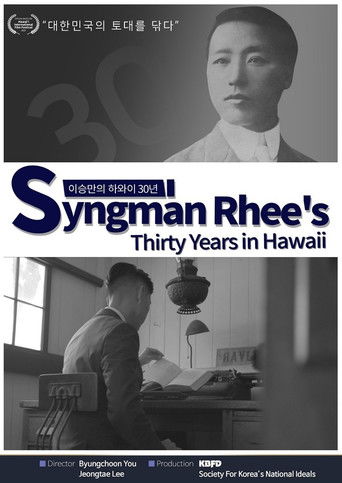
Syngman Rhee, the founding president of the Republic of Korea spent a total of thirty years in Hawaii. The first 25 years occurred before he was elected the founding president and five years were after he resigned from the presidency. What is the significance of 30 years in one’s life span?

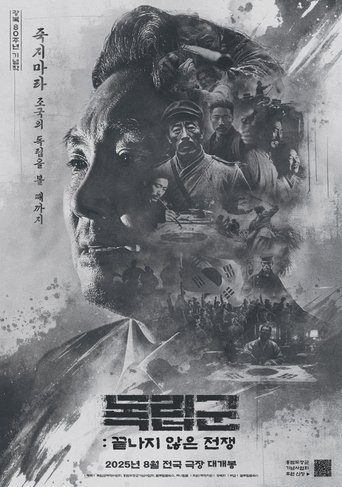
A documentary film covering the life of President Syngman Rhee and the contributions he made to the Republic of Korea, spanning his childhood, focusing on his independence movement, the founding of the nation, the process of leading to victory in the Korean War, and the process of laying the foundation for Korea's industrialization.
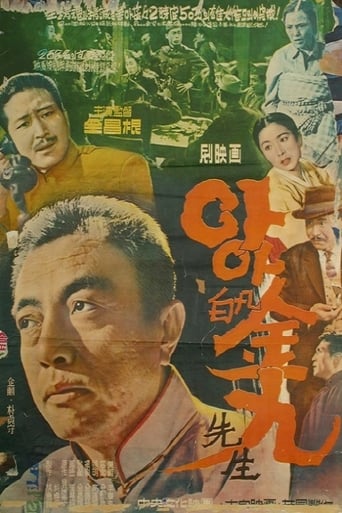
Kim Chang-su, who participated in the Donghak Movement, escapes to Manchuria after being chased by the Japanese army, finally making his way home. Angered by the assassination of Empress Myeong-seong, he murders a Japanese lieutenant and is sent to jail. He escapes from prison turns his focus on the democratic movement by teaching civilians and organizing Sinminheo (a democratic organization), even changing his name to 'Kim Gu.' After he is imprisoned again, he gets out on parole and goes to China, where he participates in establishing a provisional government from which he can direct the anti-Japanese struggle. Kim Gu goes on to play a part in Yun Bong-gil's deeds in Shanghai, the events at Hongkou Park, the encounter with Jiang Jish, and the establishment of the Korean National Army, and leads the struggle for Korea's independence with warm fraternal love and clear national spirit. When Korea is liberated in August 15, 1945, he returns back to his native land.