


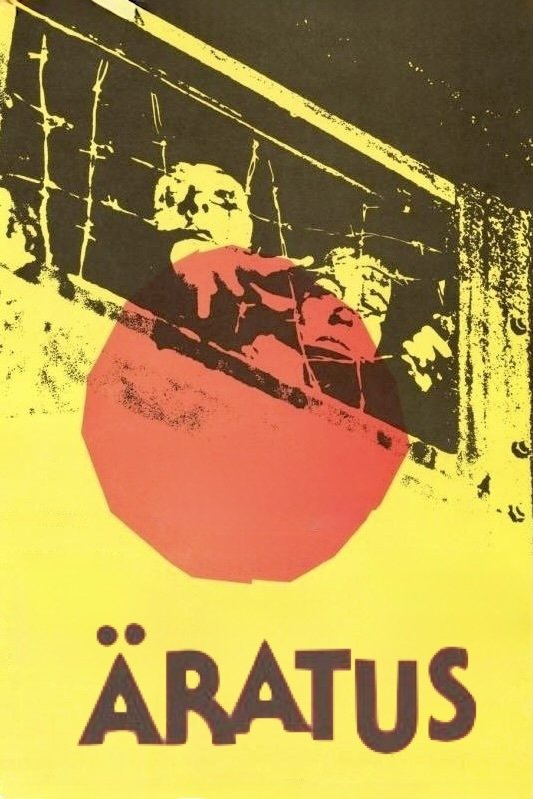
Awakening
Drama · History
Overview
It is the night of March 25, 1949. A full moon hangs over Estonia. Endless rows of cattle cars are waiting to transport thousands of Estonian families, asleep in their homes, to Siberia. The Stalinist regime is ready to treat people like animals.






















Tõnu Kark
Tõnu Kark
Voldemar Rass
Tõnu Kark
Voldemar Rass

Sulev Luik
Sulev Luik
City Man
Sulev Luik
City Man

Kaljo Kiisk
Kaljo Kiisk
Jaan
Kaljo Kiisk
Jaan

Maria Klenskaja
Maria Klenskaja
City Woman
Maria Klenskaja
City Woman

Ülle Kaljuste
Ülle Kaljuste
Aliide
Ülle Kaljuste
Aliide
Väino Laes
Väino Laes
Arnold
Väino Laes
Arnold

Arvo Kukumägi
Arvo Kukumägi
Kaarel Peterson
Arvo Kukumägi
Kaarel Peterson

Anne Paluver
Anne Paluver
Salme Peterson
Anne Paluver
Salme Peterson

Jaan Rekkor
Jaan Rekkor
Peeter Kängsepp
Jaan Rekkor
Peeter Kängsepp

Mati Klooren
Mati Klooren
Richardi Sass
Mati Klooren
Richardi Sass
Similar Movies
After his plane crashes in Siberia, a Russian dancer, who defected to the West, is held prisoner in the Soviet Union. The KGB keeps him under watch and tries to convince him to become a dancer for the Kirov Academy of Ballet again. Determined to escape, he befriends a black American expatriate and his pregnant Russian wife, who agree to help him escape to the American Embassy.
Budapest in the 1930s. Restaurant owner Laszlo hires pianist András to play in his restaurant. Both men fall in love with the beautiful waitress Ilona who inspires András to his only composition. His song of Gloomy Sunday is, at first, loved and then feared, for its melancholic melody sets off a chain of suicides. The fragile balance of the erotic ménage à trois is sent off kilter when the German Hans falls in love with Ilona as well.
In 1942, the young Jewish girl Misha, her Russian mother Gerusha and her German father Reuven hide from the Germans in a small house in Ardennes, Belgium. Misha is very connected to her mother that advises her that if one day a person comes to her saying "love of my life", she would follow him or her without any question. When her parents are captured by the Nazis, Misha is delivered to a German family and the abusive matriarch gives a bad treatment to the girl. However, she finds support in the family of Ernest and his deranged wife Marthe that supplies groceries to foster family. Misha loves Ernest's dogs and the old man gives a compass to her and tells that her parents have been sent to East to forced labor. When the old couple is denounced for sheltering the girl and arrested by the Germans, Misha flees through the woods heading east. Along her journey seeking out her parents...
June 14, 1941, 3 a.m. Over 40000 people from Estonia, Latvia and Lithuania are deported by Soviets to Siberia. Among them is a philosophy student Erna, a happily married mother of a little girl. Separated from her husband, Erna and her daughter are dispatched together with other women and children to remote Siberian territories. Despite hunger, fear and brutal humiliation Erna never in next fifteen years loses her sense of freedom and hope of returning to homeland.
When Ruth's husband dies in New York, in 2000, she imposes strict Jewish mourning, which puzzles her children. A stranger comes to the house - Ruth's cousin - with a picture of Ruth, age 8, in Berlin, with a woman the cousin says helped Ruth escape. Hannah, Ruth's daughter engaged to a gentile, goes to Berlin to find the woman, Lena Fisher, now 90. Posing as a journalist investigating intermarriage, Hannah interviews Lena who tells the story of a week in 1943 when the Jewish husbands of Aryan women were detained in a building on Rosenstrasse. The women gather daily for word of their husbands. The film goes back and forth to tell Ruth and Lena's story. How will it affect Hannah?
The true story of pianist Władysław Szpilman's experiences in Warsaw during the Nazi occupation. When the Jews of the city find themselves forced into a ghetto, Szpilman finds work playing in a café; and when his family is deported in 1942, he stays behind, works for a while as a laborer, and eventually goes into hiding in the ruins of the war-torn city.
September of 1944, a few days before Finland went out of the Second World War. A chained to a rock Finnish sniper-kamikadze Veikko managed to set himself free. Ivan, a captain of the Soviet Army, arrested by the Front Secret Police 'Smersh', has a narrow escape. They are soldiers of the two enemy armies. A Lapp woman Anni gives a shelter to both of them at her farm. For Anni they are not enemies, but just men.
A touching story of an Italian book seller of Jewish ancestry who lives in his own little fairy tale. His creative and happy life would come to an abrupt halt when his entire family is deported to a concentration camp during World War II. While locked up he tries to convince his son that the whole thing is just a game.
In an unknown first world airport the arrival of an ecuadorian flight is heard. The 'members of the European Union' passby migration, while the 'others', in the other line, wait. In the middle of the claims, a group of ecuadorians is arrested. They are taken to the Room, where they wait to be deported. Seems like everyone hides something, like PROMETEO the young magician with his hands tied like a delinquent who has a 'magical' trunk as luggage. Time passes, a way of being, Ecuador happens in this waiting room. Seems like there is no possible exit. Meanwhile, a different but well-known way of life takes place. The only thing left as a promising way out is illusion.