



Drama · History
Overview
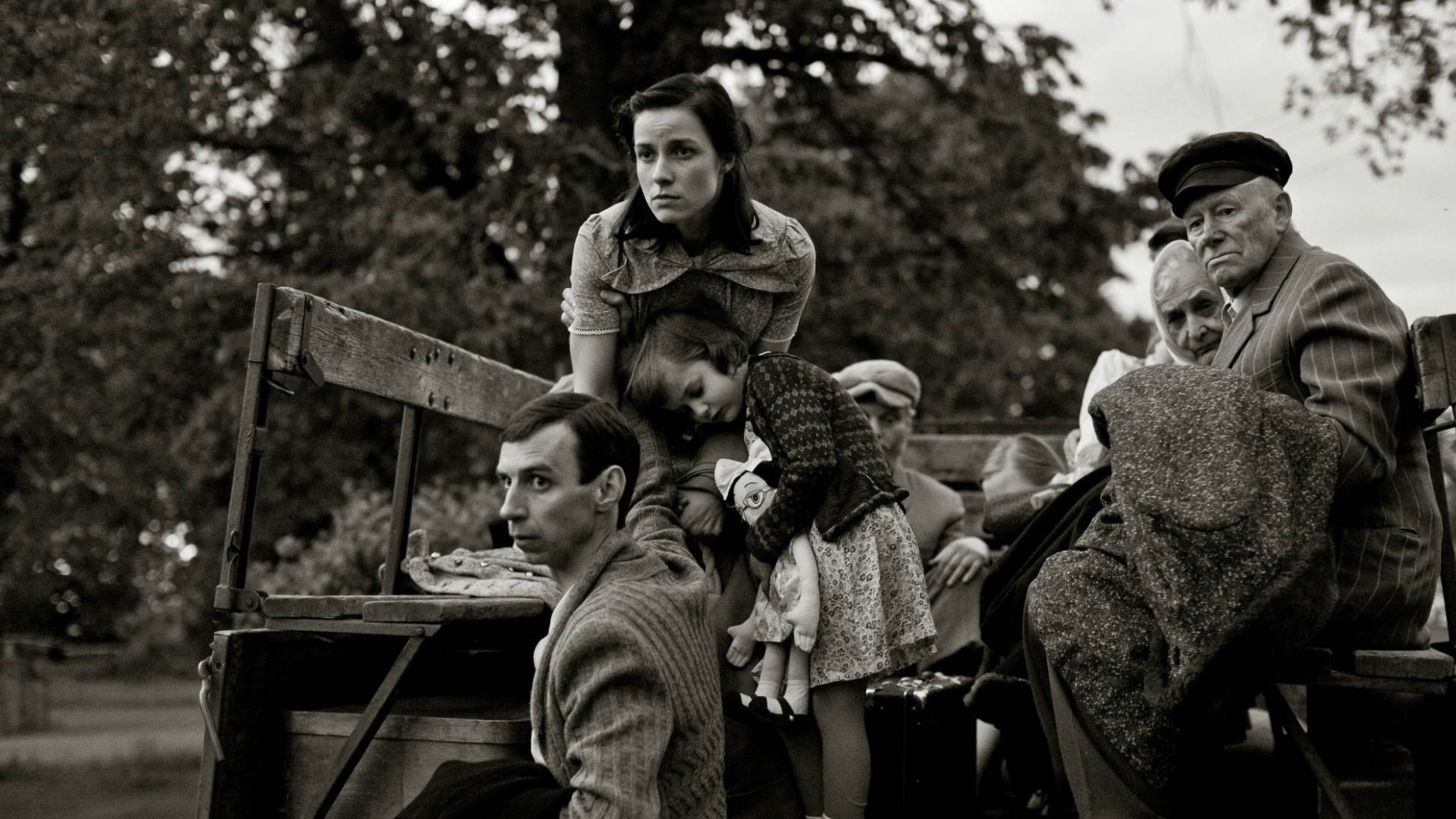
June 14, 1941, 3 a.m. Over 40000 people from Estonia, Latvia and Lithuania are deported by Soviets to Siberia. Among them is a philosophy student Erna, a happily married mother of a little girl. Separated from her husband, Erna and her daughter are dispatched together with other women and children to remote Siberian territories. Despite hunger, fear and brutal humiliation Erna never in next fifteen years loses her sense of freedom and hope of returning to homeland.















Laura Peterson-Aardam
Laura Peterson-Aardam
Erna
Laura Peterson-Aardam
Erna

Tarmo Song
Tarmo Song
Heldur
Tarmo Song
Heldur
Mirt Preegel
Mirt Preegel
Eliide
Mirt Preegel
Eliide

Ingrid Isotamm
Ingrid Isotamm
Hermiine
Ingrid Isotamm
Hermiine
Einar Hillep
Einar Hillep
Chairman of the Kolkhoz
Einar Hillep
Chairman of the Kolkhoz
Similar Movies
A touching story of an Italian book seller of Jewish ancestry who lives in his own little fairy tale. His creative and happy life would come to an abrupt halt when his entire family is deported to a concentration camp during World War II. While locked up he tries to convince his son that the whole thing is just a game.
In 1942, the young Jewish girl Misha, her Russian mother Gerusha and her German father Reuven hide from the Germans in a small house in Ardennes, Belgium. Misha is very connected to her mother that advises her that if one day a person comes to her saying "love of my life", she would follow him or her without any question. When her parents are captured by the Nazis, Misha is delivered to a German family and the abusive matriarch gives a bad treatment to the girl. However, she finds support in the family of Ernest and his deranged wife Marthe that supplies groceries to foster family. Misha loves Ernest's dogs and the old man gives a compass to her and tells that her parents have been sent to East to forced labor. When the old couple is denounced for sheltering the girl and arrested by the Germans, Misha flees through the woods heading east. Along her journey seeking out her parents...
Between 1942 and 1944 some 24,916 Jews were deported from Belgium to Auschwitz. The roundups and deportations were organized and carried out by the Nazis with the - not always conscious - cooperation of Belgian authorities. The attitude of the authorities here varied from outright resistance to voluntary or unwitting collaboration.
When Ruth's husband dies in New York, in 2000, she imposes strict Jewish mourning, which puzzles her children. A stranger comes to the house - Ruth's cousin - with a picture of Ruth, age 8, in Berlin, with a woman the cousin says helped Ruth escape. Hannah, Ruth's daughter engaged to a gentile, goes to Berlin to find the woman, Lena Fisher, now 90. Posing as a journalist investigating intermarriage, Hannah interviews Lena who tells the story of a week in 1943 when the Jewish husbands of Aryan women were detained in a building on Rosenstrasse. The women gather daily for word of their husbands. The film goes back and forth to tell Ruth and Lena's story. How will it affect Hannah?
Budapest in the 1930s. Restaurant owner Laszlo hires pianist András to play in his restaurant. Both men fall in love with the beautiful waitress Ilona who inspires András to his only composition. His song of Gloomy Sunday is, at first, loved and then feared, for its melancholic melody sets off a chain of suicides. The fragile balance of the erotic ménage à trois is sent off kilter when the German Hans falls in love with Ilona as well.
What would your family reminiscences about dad sound like if he had been an early supporter of Hitler’s, a leader of the notorious SA and the Third Reich’s minister in charge of Slovakia, including its Final Solution? Executed as a war criminal in 1947, Hanns Ludin left behind a grieving widow and six young children, the youngest of whom became a filmmaker. It's a fascinating, maddening, sometimes even humorous look at what the director calls "a typical German story." (Film Forum)
Au revoir les enfants tells a heartbreaking story of friendship and devastating loss concerning two boys living in Nazi-occupied France. At a provincial Catholic boarding school, the precocious youths enjoy true camaraderie—until a secret is revealed. Based on events from writer-director Malle’s own childhood, the film is a subtle, precisely observed tale of courage, cowardice, and tragic awakening.