

Bo Kata
Documentary
Overview
Bo Kata, loosely translated in English means hacked! That is the victory battle cry when kites are eliminated in raging sky duels, sometimes lasting hours. Filmed entirely in Lahore, Pakistan, over three continuous days, Bo Kata is a rare cinematic documentary treat, depicting uniquely the rooftop kite flyers of Lahore, who have been a traditional part of Pakistan's culture and heritage that has lasted for over 400 years. Their sport is now under threat from a complete ban, after a series of tragic fatalities involving children and motorcyclists, resulting in decapitations and dismemberment from illegal chemically coated strings used to fly the kites. The documentary highlights a population that is associated with the mysterious art of kite dueling amidst the political backdrop of an impending ban





No cast information.
Similar Movies
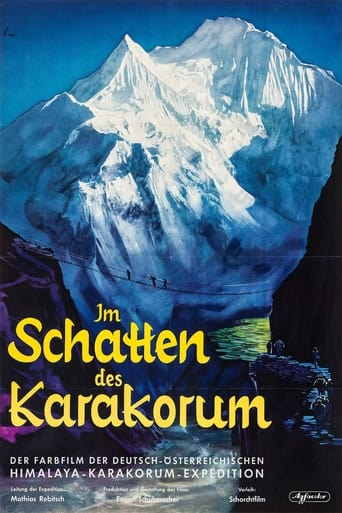
In 1954, a German-Austrian expedition led by Mathias Rebitsch set off for the difficult-to-access Karakoram Mountains, geographically north of the Himalayas. They come across the Hunza, a people who live in the valley of the same name and believe they are descended from the soldiers of Alexander the Great. The documentary conveys impressions of the poor life of the Hunza people, the harvest, a court hearing, festivals and the children's everyday school life. Finally, the expedition sets off again and sets up its main camp on the moraine ridge of a glacier, where they measure the glacier and the earth's magnetic field. Finally, some men from the research community set off for a sub-peak of Batura.

A Calling to Care is the inspiring story of 55 year-old Grace Stanley, a Canadian nurse who left her home and prestigious career behind to answer a calling halfway around the world in Karachi, Pakistan. Teaching nursing to local women in a strict Muslim culture that forbids them to even to touch men is a formidable task. However, Grace challenges her own values and belief systems to find common ground with her students, helping them to excel and feel respect for themselves in a culture that doesn't respect them. Whether it is getting her hands painted with henna, swimming fully-clothed in the ocean, or marching bravely with them on International Women's Day, Grace bonds with her students in a very special way, and ultimately discovers how the West can learn a lot more from the Third World than she ever thought.
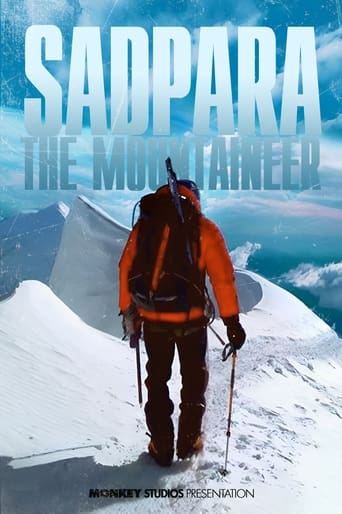
The film is based on the expedition of mountaineer Muhammad Ali Sadpara to K2 in Pakistan, which cost him his life in 2021 at the age of 45. The film opens with him passing the bottleneck with his companions, successfully climbing it, and then returning when he is caught in an avalanche or storm and ultimately loses his life. As his life fades from memory, the film shifts to flashbacks as he recalls the events of his life.
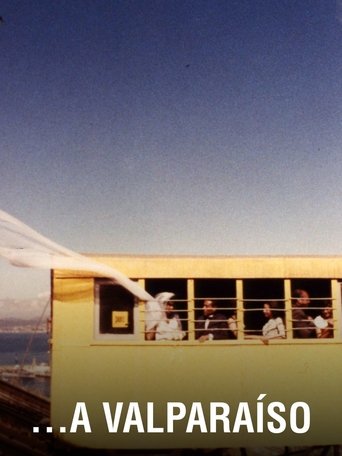
In 1962 Joris Ivens was invited to Chile for teaching and filmmaking. Together with students he made …A Valparaíso, one of his most poetic films. Contrasting the prestigious history of the seaport with the present the film sketches a portrait of the city, built on 42 hills, with its wealth and poverty, its daily life on the streets, the stairs, the rack railways and in the bars. Although the port has lost its importance, the rich past is still present in the impoverished city. The film echoes this ambiguous situation in its dialectical poetic style, interweaving the daily life reality (of 1963) with the history of the city and changing from black and white to colour, finally leaving us with hopeful perspective for the children who are playing on the stairs and hills of this beautiful town.
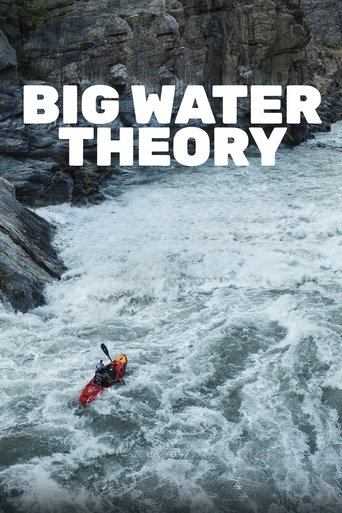
Follow French kayak superstar Nouria Newman and two childhood friends, as they navigate one of the world's most challenging sections of whitewater: the Rondu Gorge of the Indus River, in Pakistan. Documenting Nouria's attempt at completing the first integral descent of the Rondu Gorge by a woman, Big Water Theory is a compelling exploration of human spirit and the relentless pursuit of adventure. It offers a powerful and inspiring, yet highly detailed and informative look at the world of extreme kayaking. Set against the stunning backdrop of the Karakoram mountains, the film highlights the irreversible nature of the sport, with heart pounding descents that test the kayakers' psychological and physical limits.