

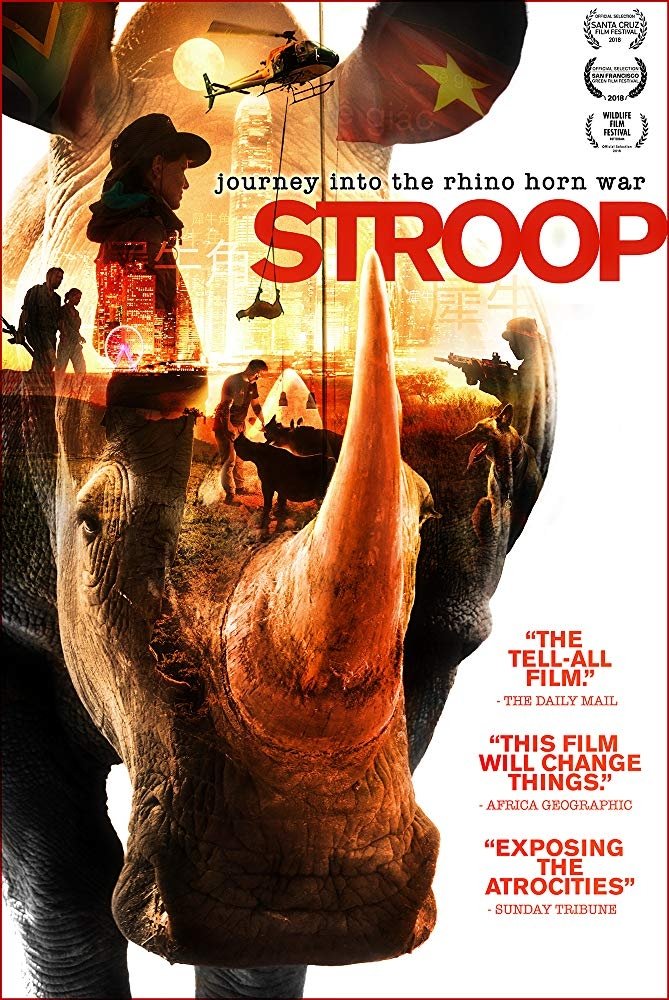
Stroop: Journey into the Rhino Horn War
Documentary
Overview
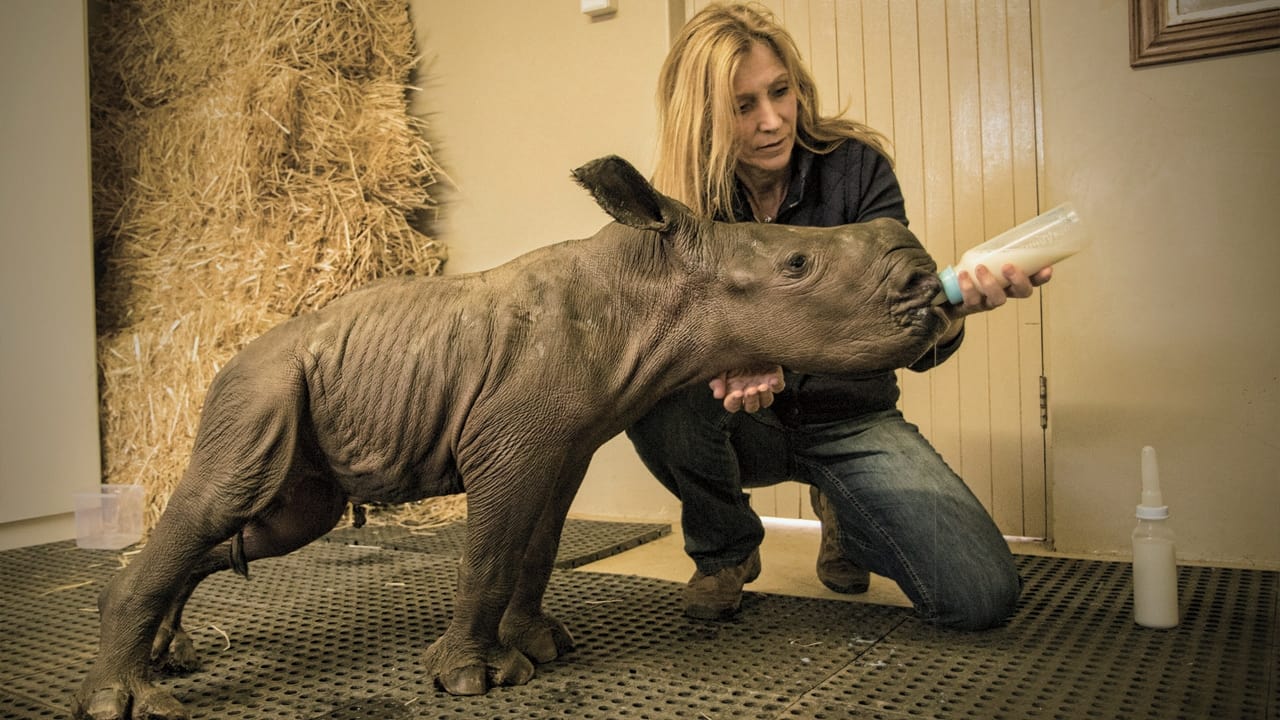
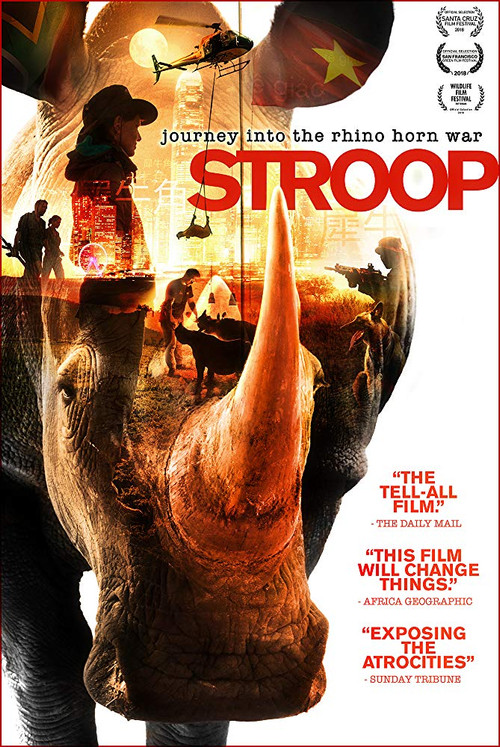
Two first-time filmmakers stop their lives to find out why rhinos are being killed for their horns. Carving out six months for the project, the women quickly find themselves immersed in a world far larger and more dangerous than they had imagined, only emerging from their odyssey four years later.





No cast information.
Similar Movies

This film uncovers the intriguing mystery of the return of the African rhino. In the 1800s there were more than 500,000 white and black rhinos in Africa. But by the 1990s, ivory poaching had left less than 7,000 animals alive. Remarkably, today their numbers have risen to 11,000. But there is now a new, deadly threat. Charging Back starts at the Pilansberg Game Reserve, where mysterious, unseen assailants were killing rhinos. Poachers could not be blamed, as the horns remained intact. Unexpectedly, the perpetrators prove to be relocated adolescent elephants, orphaned in culls. Lack of family structure has turned them into aggressive delinquents - a problem which conservation authorities now address by importing the steadying influence of older bulls. In astonishing scenes, the attackers are captured red-handed. Without the least provocation, elephants launch vicious assaults on unsuspecting rhinos.
Long a target for poachers, the rhino has been hunted for their horns across Africa. In The Last Horns of Africa, debut documentary feature director Garth De Bruno Austin follows those who are putting their lives on the line to protect the animal, from a hidden rhino orphanage to the Kruger National Park. With unparalleled access the filmmakers have created a compelling documentary that explores conservation, the illegal wildlife trade, and rhino poachers.
Today, only 3,200 tigers roam in the wild. At the current rate of poaching, elephants, rhinos and tigers living in the wild will be extinct in our lifetime. Who are the global players in this deadly game of power, greed and profit? Who pulls the strings and who are the customers? And why have ivory and rhino horn become perfect investment opportunities?
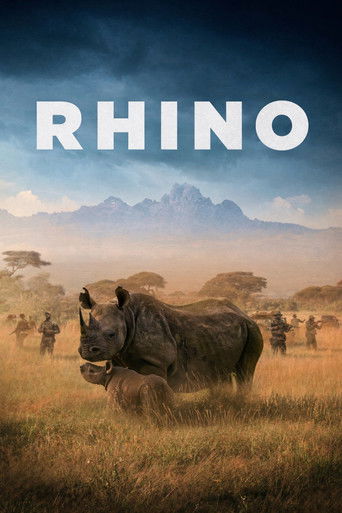
A dedicated park ranger has protected his population of critically endangered black rhinos so well that they have run out of space. Cornered by ruthless poachers, the rhinos are at risk of turning on each other. His team must implement a daring plan to move 21 rhinos across the country and open a new safe haven.
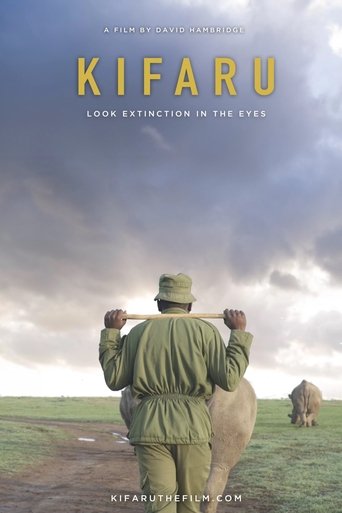
Journeying beyond the global headlines around 'Sudan,' the last male northern white rhino in existence, and explore the painful emptiness of extinction through the eyes of Sudan's three primary caregivers. Teetering on borrowed time and with his health in decline, Sudan's looming death and the uncertainty of employment that it will bring hangs over the heads of our three dynamic characters. Their only hope to save the species that they love - and perhaps their livelihood - rests fully in the success of a last resort IVF experiment.
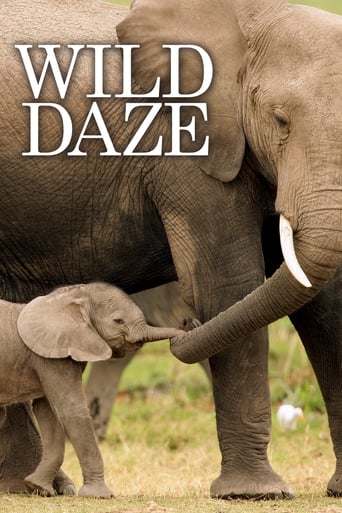
In Africa, poachers brutally maim and kill elephants for their ivory, much of which is exported to China or smuggled into the United States. The profits help fund terrorist organisations, and are used to buy guns and artillery. WILD DAZE takes an unflinching look at these problems from various perspectives, and shows how the slaughter has decimated the elephant population, left survivors traumatised, and seriously harmed the forests of Eastern and Southern Africa.