

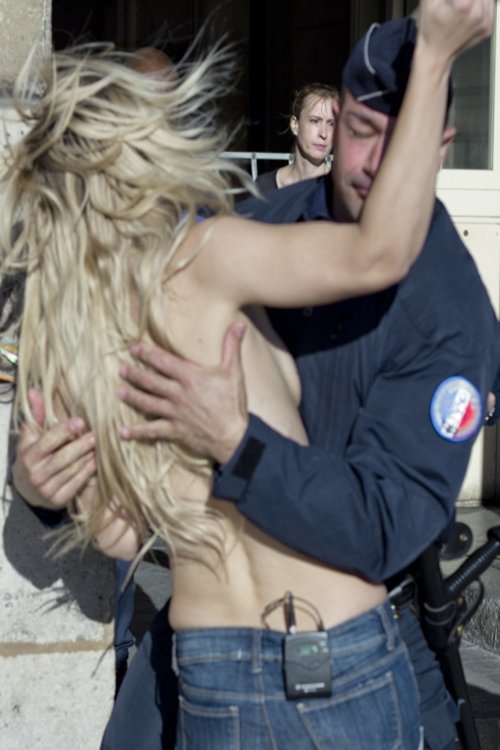
They Fight: Our Breasts, Our Weapons
Documentary
Overview
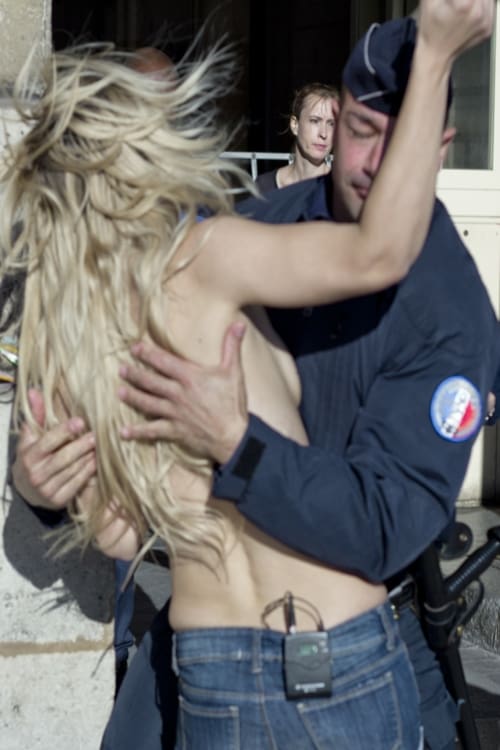
Born in Ukraine in 2008 in the wake of the "Orange Revolution," the feminist movement Femen fights for democracy, freedom of the press, women's rights, and against corruption, prostitution, sexism, racism, poverty, and religion. The activists quickly caught the attention of the media with their shocking protests. In 2012, at the creation of Femen France, Caroline Fourest followed their actions. They notably affirmed their support for "Marriage for All" by protesting on November 18, 2012, during the demonstration organized by the Civitas Institute against the bill, provoking sharp clashes.




Oksana Shachko
Oksana Shachko
Self
Oksana Shachko
Self

Anna Hutsol
Anna Hutsol
Self
Anna Hutsol
Self

Inna Shevchenko
Inna Shevchenko
Self
Inna Shevchenko
Self
Sasha Shevchenko
Sasha Shevchenko
Self
Sasha Shevchenko
Self
Aliaa El Mahdy
Aliaa El Mahdy
Self
Aliaa El Mahdy
Self
Safia Lebdi
Safia Lebdi
Self
Safia Lebdi
Self
Loubna Méliane
Loubna Méliane
Self
Loubna Méliane
Self
Nathalie Homs
Nathalie Homs
Narrator
Nathalie Homs
Narrator
Dorothée Pousséo
Dorothée Pousséo
Narrator
Dorothée Pousséo
Narrator
Similar Movies
TOMBOY explores the obstacles that young girls encounter on the recreational stage, the stereotypes, language issues and cultural disparities that follow, and ultimately the insufficient media coverage and compensation that afflicts elite professional athletes seeking full recognition for their talents. The journey of the female athlete is often discouraging, and despite progress achieved during the Title IX era, gender equity in athletics has a long way to go.
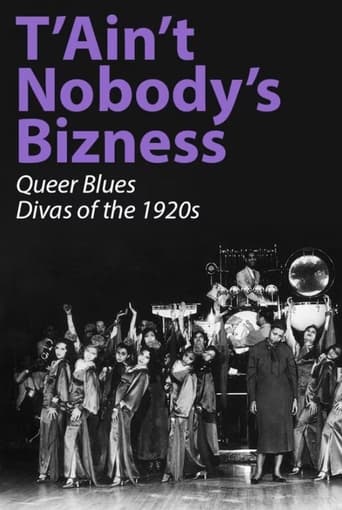
The 1920s saw a revolution in technology, the advent of the recording industry, that created the first class of African-American women to sing their way to fame and fortune. Blues divas such as Bessie Smith, Ma Rainey, and Alberta Hunter created and promoted a working-class vision of blues life that provided an alternative to the Victorian gentility of middle-class manners. In their lives and music, blues women presented themselves as strong, independent women who lived hard lives and were unapologetic about their unconventional choices in clothes, recreational activities, and bed partners. Blues singers disseminated a Black feminism that celebrated emotional resilience and sexual pleasure, no matter the source.
Kirby Dick's provocative documentary investigates the secretive and inconsistent process by which the Motion Picture Association of America (MPAA) rates films, revealing the organization's underhanded efforts to control culture. Dick questions whether certain studios get preferential treatment and exposes the discrepancies in how the MPAA views sex and violence.
The Road Forward is an electrifying musical documentary that connects a pivotal moment in Canada’s civil rights history—the beginnings of Indian Nationalism in the 1930s—with the powerful momentum of First Nations activism today. Interviews and musical sequences describe how a tiny movement, the Native Brotherhood and Sisterhood, grew to become a successful voice for change across the country. Visually stunning, The Road Forward seamlessly connects past and present through superbly produced story-songs with soaring vocals, blues, rock, and traditional beats.
SOUND OF THE SOUL is a compelling portrait of an Arab country where Muslims, Christians, and Jews have lived together in relative peace for centuries. Beautifully photographed during the Fez Festival of World Sacred Music, the film presents unforgettable performances from groups from Morocco, Ireland, Russia, Afghanistan, Mauritania, the USA, Portugal and France, which carry viewers into what the film's Moroccan sufi guide calls "the hearing of the heart": the essential Oneness at the core of all religions and faiths.
Directed by Oscar-winning filmmaker Nick Reed & Ryan Azevedo, the film tells the story of activist and Claire’s Place Foundation Founder Claire Wineland through interviews and footage, exploring her fight with cystic fibrosis and how she has inspired millions to find purpose and to live proudly.
This documentary profiles economist and writer Marilyn Waring. In extensive interviews, Waring details her feminist approach to finances and challenges commonly accepted truths about the global economy. The filmmakers detail Waring's early rise to political prominence and her successful protests against nuclear arms. Waring also speaks candidly about wartime economies, suggesting that government policies tend to marginalize the fiscal contributions of women.
“Touch one, touch us all” is a slogan of the women who took over the streets in Brazil and organized themselves in social networks to face male chauvinist and conservatism. Through testimonies of women who have been subjected to violence, the documentary reveals that, despite legal achievements, the woman still remains vulnerable. Amongst other deponents are Maria da Penha, Joanna Maranhão, Luíza Brunet, and Clara Averbuck.