

El Cepa Returns
Documentary
Overview
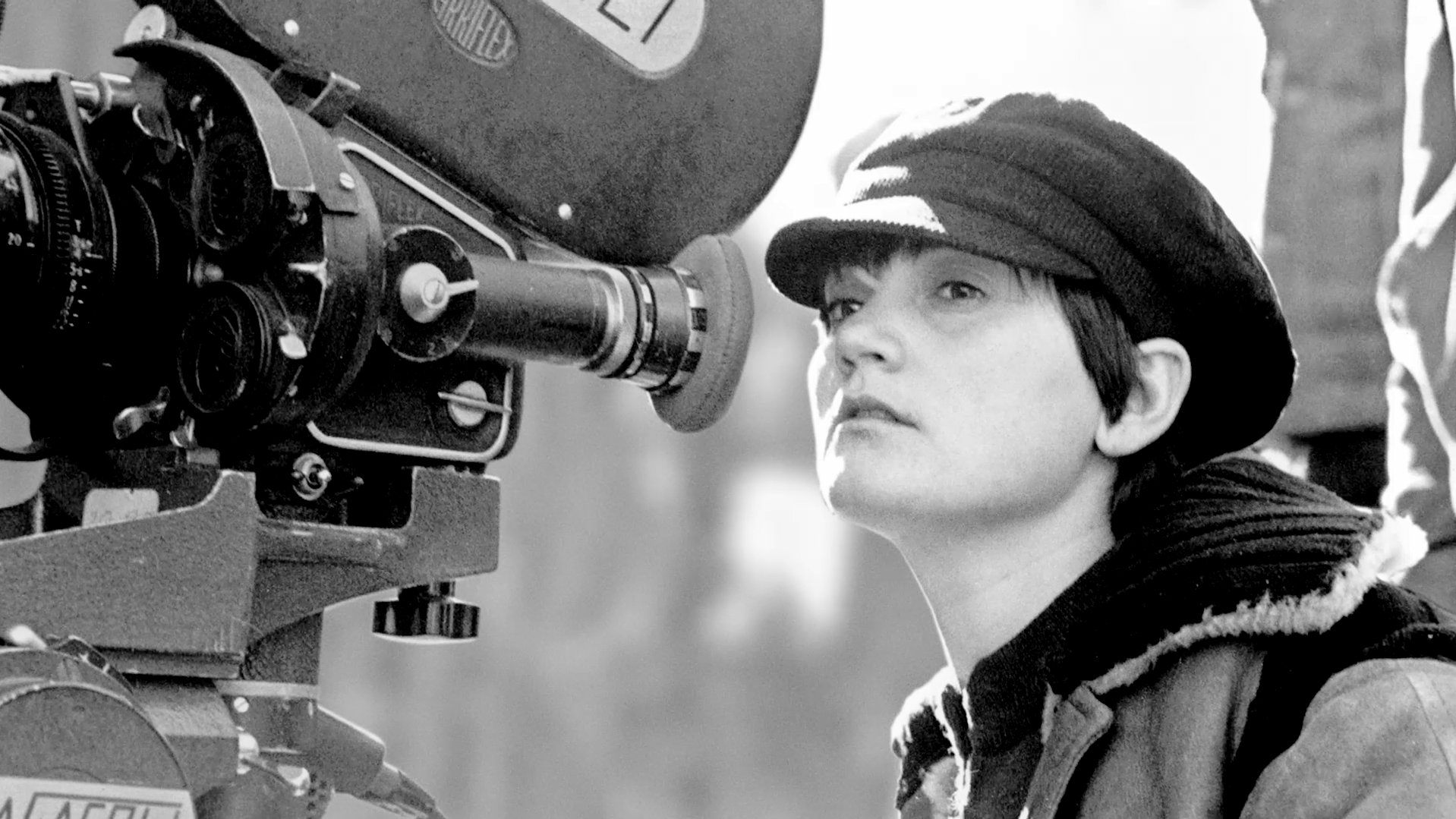
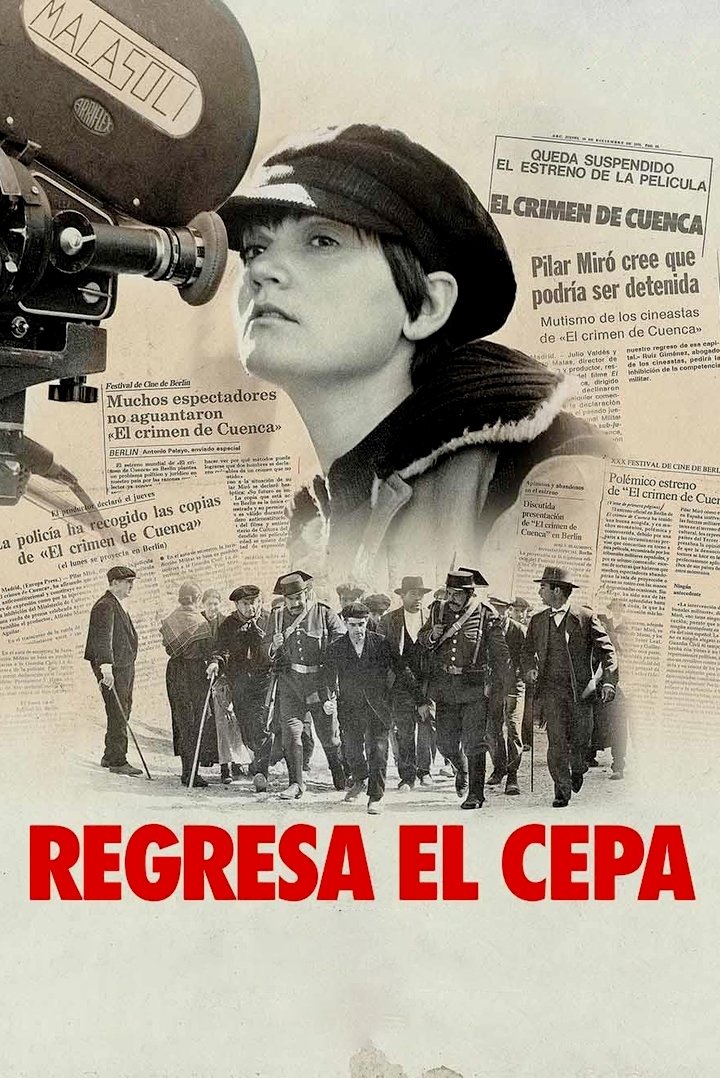
Forty years later, Guillermo Montesinos, the actor who played José María el Cepa in The Cuenca Crime (1980), directed by Pilar Miró, returns to the various locations where the shooting of the mythical film, narrating the infamous Grimaldos case (1910), took place.
Top Cast
Guillermo Montesinos
Self - Host / Actor (El Cepa)
África Gozalbes
Pilar Miró (voice)
Javier Dotú
Self - Narrator (voice)
Ramón Langa
Self - Narrator (voice)
Claudio Rodríguez
Self - Dubbing Director (1980) / Narrator (voice)
Héctor Alterio
Self - Actor (Isasa)
Francisco Casares
Self - Actor (Taboada)
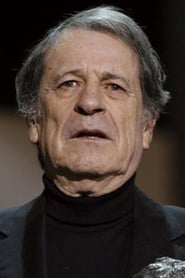
José Manuel Cervino
Self - Actor (León)

Mercedes Sampietro
Self - Actress (Alejandra)

Assumpta Serna
Self - Actress (Manuela)
Hans Burmann
Self - DOP (1980)
Marisol Carnicero
Self - Production Director (1980)



Guillermo Montesinos
Guillermo Montesinos
Self - Host / Actor (El Cepa)
Guillermo Montesinos
Self - Host / Actor (El Cepa)
África Gozalbes
África Gozalbes
Pilar Miró (voice)
África Gozalbes
Pilar Miró (voice)
Javier Dotú
Javier Dotú
Self - Narrator (voice)
Javier Dotú
Self - Narrator (voice)
Ramón Langa
Ramón Langa
Self - Narrator (voice)
Ramón Langa
Self - Narrator (voice)
Claudio Rodríguez
Claudio Rodríguez
Self - Dubbing Director (1980) / Narrator (voice)
Claudio Rodríguez
Self - Dubbing Director (1980) / Narrator (voice)
Héctor Alterio
Héctor Alterio
Self - Actor (Isasa)
Héctor Alterio
Self - Actor (Isasa)
Francisco Casares
Francisco Casares
Self - Actor (Taboada)
Francisco Casares
Self - Actor (Taboada)
José Manuel Cervino
José Manuel Cervino
Self - Actor (León)
José Manuel Cervino
Self - Actor (León)
Mercedes Sampietro
Mercedes Sampietro
Self - Actress (Alejandra)
Mercedes Sampietro
Self - Actress (Alejandra)
Assumpta Serna
Assumpta Serna
Self - Actress (Manuela)
Assumpta Serna
Self - Actress (Manuela)
Similar Movies
Homo Cinematographicus is a human species whose unit of measurement and point of reference is the cinema and its derivative, television. Filmed at the 1998 Cannes Film Festival, the film offers an unspecified number of statements, talking about memories and a thousand fragments of stories, titles and film scenes, the warp of a gigantic collective Chanson de geste.
In the late sixties, Spanish cinema began to produce a huge amount of horror genre films: international markets were opened, the production was continuous, a small star-system was created, as well as a solid group of specialized directors. Although foreign trends were imitated, Spanish horror offered a particular approach to sex, blood and violence. It was an extremely unusual artistic movement in Franco's Spain.
A portrait of Chinese writer Liu Xiaobo (1955-2017), a witness of the Tiananmen Square massacre (1989), a dissident, a woodpecker who tirelessly pecked the putrid brain of the Communist regime for decades, demanding democracy loudly and fearlessly. Silenced, arrested, convicted, imprisoned, dead. Nobel Peace Prize winner in 2010, alive forever. These are his last words.

As artificial intelligence becomes ever more sophisticated, the film industry is split between enthusiasm at what the technology can achieve and concern over the future for human workers in the industry. Will actors and actresses be replaced by machines? An overview on the coming wave of AI in cinema.

Between the end of the Second World War and the abolition of the "offence of homosexuality" in 1982, 10,000 sentences were handed down in France. Sentences in correctional courts, fines and sometimes imprisonment, the convictions were mainly against men. The last witnesses of this period speak out and tell of four decades of clandestine life, just before the tragedy of AIDS.
The incredible story of Bruno Lüdke (1908-44), the alleged worst mass murderer in German criminal history; or actually, a story of forged files and fake news that takes place during the darkest years of the Third Reich, when the principles of criminal justice, subjected to the yoke of a totalitarian system that is beginning to collapse, mean absolutely nothing.
A short documentary exploring the theatrical release of Just Jaeckin's Emmanuelle (1974) in Ontario, Canada, at the time of a major shift in its provincial film censorship regime. What followed was a new era in the Ontario government's uneasy dance with film, a debate over art and morality — not only about sex on screen, but about who gets to decide what is too much, too far, or too French.