

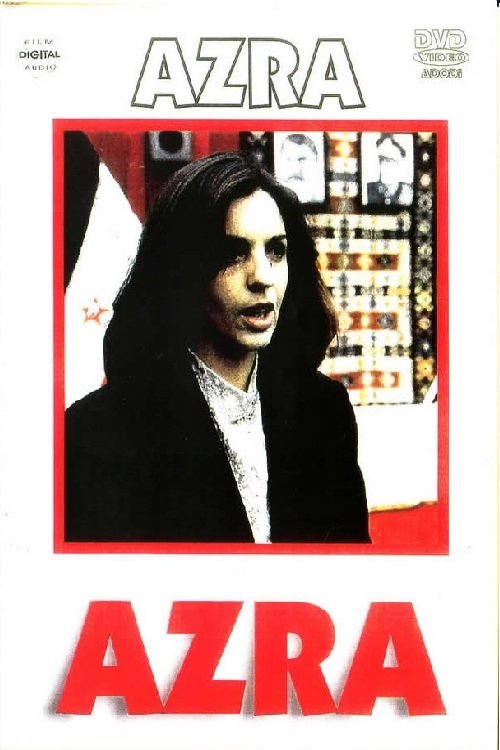
Azra
Drama
Overview
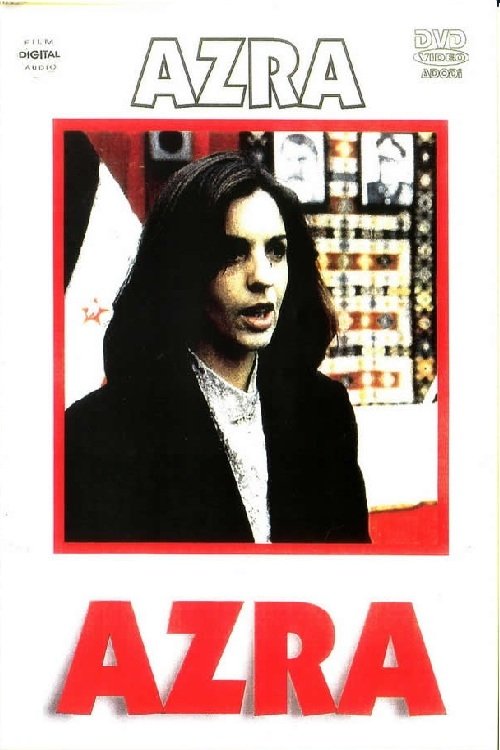
Azra a woman major in the partisan army, who fought the Germans in World War II, returns to her home village, which she helped to liberate. Although her husband was also a high ranking officer, and their goals were united, she finds it much harder to be accepted back into village and family life.







Dara Džokić
Dara Džokić
Azra
Dara Džokić
Azra
Mladen Nelević
Mladen Nelević
Hamo
Mladen Nelević
Hamo
Semka Sokolović-Bertok
Semka Sokolović-Bertok
Majka
Semka Sokolović-Bertok
Majka

Zvonko Lepetić
Zvonko Lepetić
Otac
Zvonko Lepetić
Otac

Senad Bašić
Senad Bašić
Zijo
Senad Bašić
Zijo
Snježana Martinović
Snježana Martinović
Ana
Snježana Martinović
Ana
Boris Kozić
Boris Kozić
Adi
Boris Kozić
Adi
Mia Begović
Mia Begović
Marina
Mia Begović
Marina

Bogdan Diklić
Bogdan Diklić
Zvonko
Bogdan Diklić
Zvonko
Faruk Begolli
Faruk Begolli
Osman
Faruk Begolli
Osman
Similar Movies
In a post-WWII Yugoslavia still under Stalinist rule in the 1950s, six-year-old Malik is oblivious as to why his father, Mehmed, has suddenly disappeared. In truth, Mehmed has been sent to a labor camp as punishment for acts of sexual indiscretion involving young girls. Malik's mother, Senija, however, has no answers, and the family must cope in the father's absence.
They meet in Yugoslavia. Katharina, daughter of a Yugoslavian immigrant worker, has grown up in the Federal Republic of Germany. She is a confident, energetic career woman who has managed to work her way up to become a successful television journalist. She goes to visit her parent's country, to do a story about the children of immigrant workers in their home country. Although she says she doesn´t need a "home" any more, even she feels strange in her own country. Peter is a rather "untypical" sort of man: a dreamer, a thinker. He has given up his steady job as a composer for advertising films and is divorced. He goes to Jugoslavia to find something out about the past. He travels to the places where his father was stationed during the Second World War.
Belgrade in 1963. In a yard surrounded by buildings, a group of young people of different backgrounds and social status, but of similar views about love and self-affirmation, spend their time together. Their friendship is dyed with various events typical for socialism, such as working actions or Youth Day's parade. All what happens within this yard may become an allegory of one generation's destiny.

During the Cold War, diplomatic courier Mike Kells must retrieve a dispatch containing top-secret intelligence. But when he arrives at the meeting point, a train station in Salzburg, his contact turns up dead, and the message is nowhere to be found. With no clear suspect in sight, Kells must sort through his uncertain relationships with two women, while sidestepping the pitfalls of subterfuge, sabotage and spies in his search for the documents.
Leah Weiss, a Polish Jew, was first forced into prostitution at Auschwitz. Afterwards, she was victimized in medical experiments. Now, twenty years later, German war crimes prosecutors hope she will be their star witness. But can she stand up to the shame, the publicity, and the reliving of those experiences?
"Andremo in città" (We'll Go to the City) is a 1966 Italian drama film directed by Nelo Risi. It is based on the novel of the same name by Edith Bruck, Risi's wife. Bruck, a Hungarian concentration camp-survivor, settled in Italy after the Second World War and wrote about her experiences in autobiographical and fictional formats.[1] The film stars Geraldine Chaplin and Nino Castelnuovo.
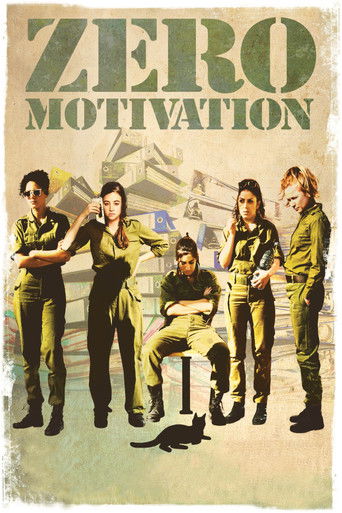
Filmmaker Talya Lavie steps into the spotlight with a dark comedy about everyday life for a unit of young female Israeli soldiers. The human resources office at a remote desert base serves as the setting for this cast of characters, who bide their time pushing paper, battling for the top score in Minesweeper, and counting down the minutes until they can return to civilian life. Amidst their boredom and clashing personalities, issues of commitment—from friendship to love and country—are handled with humor and sharp-edged wit.
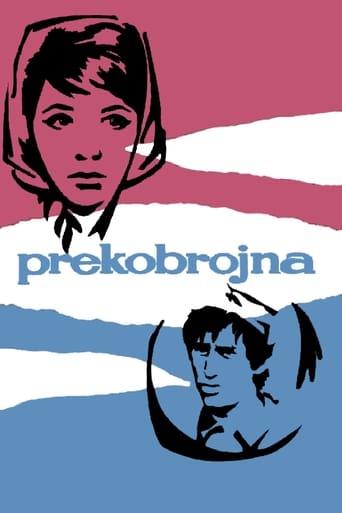
Young farmer Mikajlo while on youth labour action falls in love with a student Nada and infatuated with her, he leaves the peasant brigade and Malena, a girl who as if she were overabundant, followed him to work the labour action. Mikajlo's courtship of Nada provokes laughter and ridicule, so ambitious 'Don Juan' returns to his brigade and the girl.