

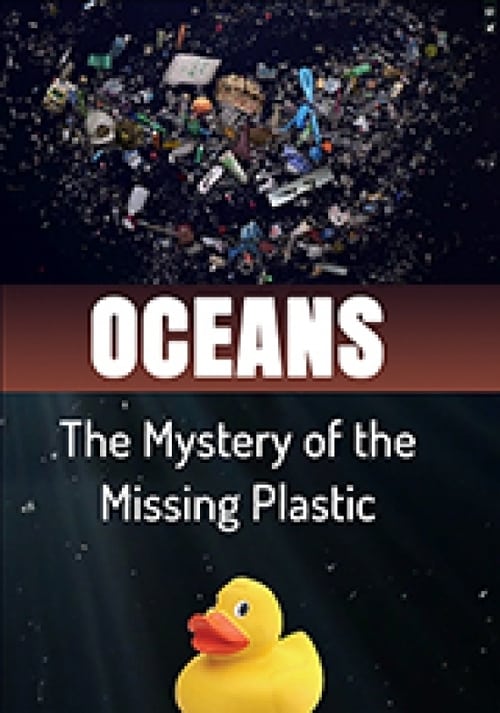
Oceans The Mystery of the Missing Plastic
Documentary
Overview
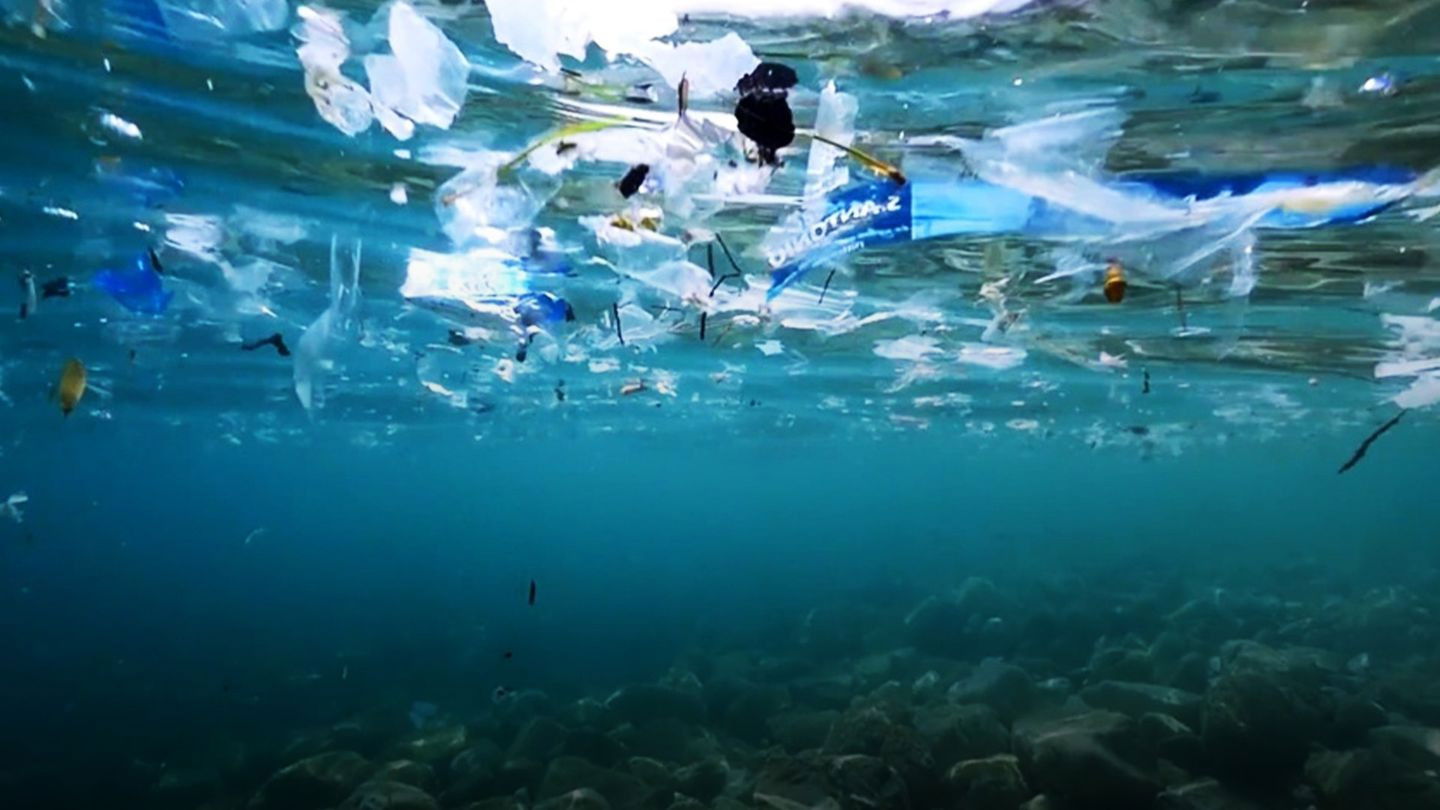
99% of the plastic that should be floating in the oceans is missing. Even accounting for the plastic that washes up on beaches or is trapped in arctic ice, millions of tonnes has simply disappeared. As most plastic never deteriorates, it simply breaks down into smaller and smaller particles that are invisible to the human eye, what happens to this missing ocean plastic is a mystery. In this investigation, scientists embark in search of the micro-plastics. Small, mostly invisible, toxic, they are home to the new ecosystem: the plastisphere. But where are they? Ingested by organisms? Buried under the ocean floor? Degraded by bacteria? And what is the impact of them entering the food chain?


No cast information.
Similar Movies

Cats are the most popular pet in Europe. Around 14 million house pets live in German households alone. But hardly anything is known about the nature of cats - their emotional life has been little studied by science. Until now! Scientists all over the world have begun to explore the secret nature of cats.
Does infinity exist? Can we experience the Infinite? In an animated film (created by artists from 10 countries) the world's most cutting-edge scientists and mathematicians go in search of the infinite and its mind-bending implications for the universe. Eminent mathematicians, particle physicists and cosmologists dive into infinity and its mind-bending implications for the universe.

This short documentary offers a look at the life forms on the Queen Elizabeth Islands within the Arctic Circle. Even in this frigid zone of icebergs and glaciers a surprising variety of wildlife and vegetation is seen. Writings from the logbooks of early explorers provide vivid descriptions of scenes as arresting to them in their century as to today's explorer. Note: Originally produced for the television series Perspective, this film was distributed separately on 16mm for schools and libraries, qualifying it as a standalone documentary.
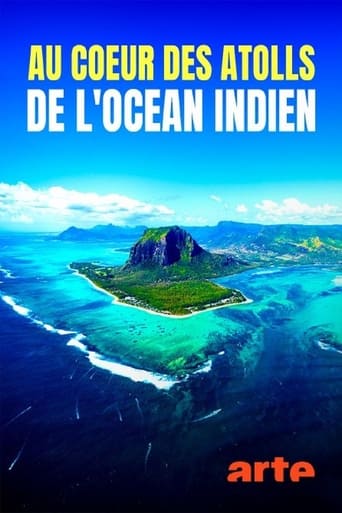
The endless expanses of the Indian Ocean are home to the last natural paradises: Remote atolls surrounded by coral reefs in crystal clear water. Whole regions of this ocean are still unexplored, many reefs are not marked on any map. The departure of the research vessel Agulhas II from the island of La Réunion marks the beginning of one of the greatest scientific adventures of our time. The expedition, initiated by Monaco Explorations with the support of the Prince Albert II of Monaco Foundation, lasted six weeks and led into the Western Indian Ocean along the Mascarene Plateau.
The Sealab project, launched in 1969 off the shore of northern California, was the brainchild of a country doctor turned naval pioneer who dreamed of pushing the limits of ocean exploration like NASA did space exploration. The massive, 300-ton tubular structure was a pressurized underwater habitat, complete with science labs and living quarters for divers who would live and work there on the ocean floor for days or even months at a time. During the height of the Space Race, this daring program also tested the limits of human endurance and revolutionized the way humans explore the ocean.
Atlantis is filmmaker Luc Besson's celebration of the beauty and wonder of the world beneath the sea, expanding upon themes touched on in his film The Big Blue. Combining stunning underwater cinematography and a hypnotic score by Eric Serra, Besson's singular vision defies dialogue or narrative structure to explore ocean life as you've never seen it before. Following the colossal success of The Big Blue, Luc Besson crisscrossed the world's seas and oceans to film the beauty and diversity of marine life: from the giant octopuses of Vancouver to the manta rays of the Pacific (New Caledonia), and the grey sharks of Tahiti. A film with no actors or sets other than the underwater world. A breathtaking view of marine species: sharks, dolphins, manatees, octopuses. An exploration of the seabed in the Bahamas, the Galapagos, Vancouver, and Tahiti.

A fascinating archaeological and scientific investigation on the world's best-selling book. When was the Bible written ? Who wrote it? Under what circumstances ? For what purpose ? These questions have long remained unanswered. With the discovery of the Dead Sea Scrolls in 1947, the thorough study of the texts, the advances in science, and the recent archaeological discoveries, one of the greatest historical mysteries is gradually being unveiled. Meet the most eminent specialists in the Bible who try to unearth brand new information and answer the enigmatic and fundamental question : who wrote the Holy Book ?
This personal documentary is the story of Teresa Marshall, who grew up on a British Columbia ranch. Every child needs a demon, and Teresa took battle against rattlesnakes. In the dry interior of B.C., the south Okanagan and Similkameen valleys form the bio-region known as Canada's "pocket desert." As settlers' dreams of creating an agricultural Eden erase fragile desert lands that support a breathtaking array of wild species, the narrator and her snake-hunting neighbours are forced to examine their environmental attitudes.
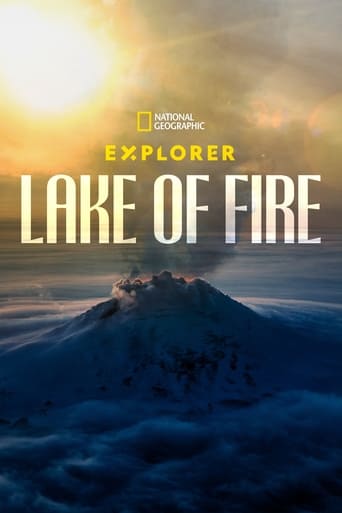
In 2001, satellite imagery captured a mysterious “thermal anomaly” on an unexplored volcano at the ends of the Earth. What lies inside could provide new clues to help predict volcanic eruptions around the globe. But the island is so remote with conditions that are so extreme. No one has ever been able to reach the top to investigate what lies inside.. until now.