

The Projection Has Begun
Documentary
Overview
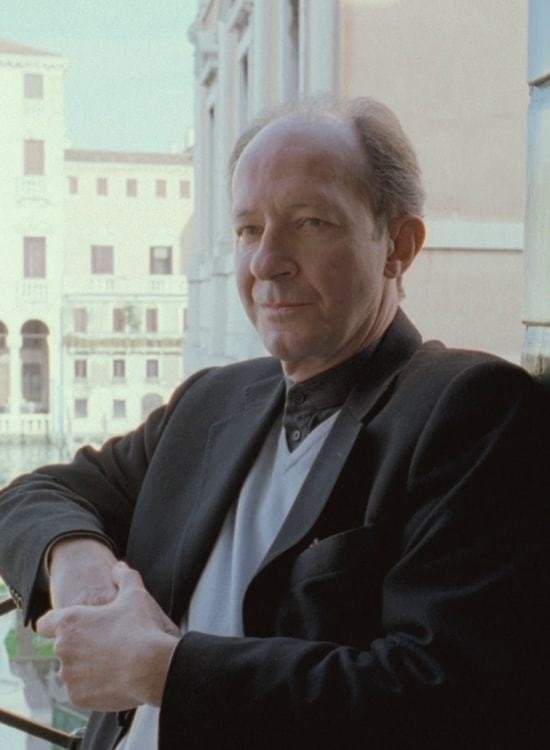
Sancho Panza enters a movie theatre in a provincial city. He is looking for Don Quixote and he finds him sitting off to the side and staring at the screen. The theatre is almost full; the balcony is entirely occupied by noisy children… La proiezione è cominciata (The Projection Has Begun) is an adaptation of The Six Most Beautiful Minutes in the History of Cinema by Giorgio Agamben. It is a portrait in 24 daguerreotypes per second.
Top Cast









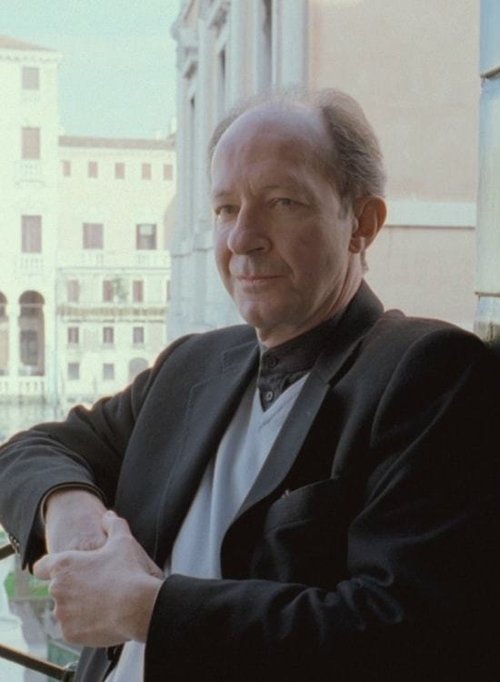
Giorgio Agamben
Giorgio Agamben
Himself
Giorgio Agamben
Himself
Similar Movies
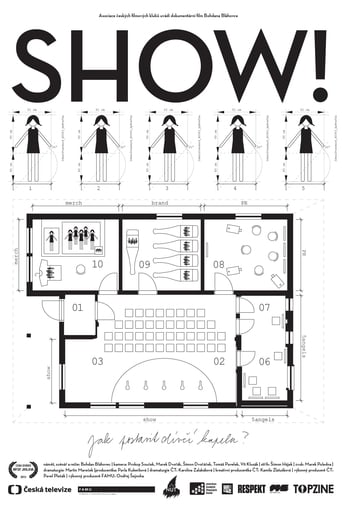
A surprisingly intimate portrait of how the dream of running one’s own business can take on monstrous contours. Managed by the father of one of the singers, over the course of five years the girl band 5Angels had reached the gates of pop fame. But it is a path paved not only with the songs of Michal David, but also with the dogged determination of a man who loses any notion of where his role as manager ends and his role as parent begins. An emotionally moved Karel Gott, five angelic girls, and one overly involved father, thanks to whom the behind-the-scenes pre-Christmas atmosphere melts away just as rapidly as the fat should disappear from the belly. “A singer can’t be a lard bucket!”
Portrait of Augustinas Baltrušaitis, film and theatre director, as well as actor, who fell into obscurity and has now been relegated to the margins of society, as a result of specific political circumstances. Countdown is a film about the limits of memory, the effects of the implacable passage of time, and a hope that surpasses time.
Sylvia Kristel – Paris is a portrait of Sylvia Kristel , best known for her role in the 1970’s erotic cult classic Emmanuelle, as well as a film about the impossibility of memory in relation to biography. Between November 2000 and June 2002 Manon de Boer recorded the stories and memories of Kristel. At each recording session she asked her to speak about a city where Kristel has lived: Paris, Los Angeles, Brussels or Amsterdam; over the two years she spoke on several occasions about the same city. At first glance the collection of stories appears to make up a sort of biography, but over time it shows the impossibility of biography: the impossibility of ‘plotting’ somebody’s life as a coherent narrative.

With his soaring falsetto and magnetic yet understated stage presence, Jimmy Somerville burst onto the 1980s new wave scene, making the world dance to songs rooted in struggle and resilience. From the harsh realities of Glasgow’s working-class neighborhoods to the challenges of growing up gay in a hostile world, and the devastating impact of the AIDS crisis, Somerville transformed pain into anthems of freedom. First with Bronski Beat, then The Communards, and later as a solo artist, he became both rebel and diva—the unmistakable voice of a generation fighting for equality. Through intimate stories from those who have stood by him for four decades, this portrait reveals a rare artist who has never wavered in his convictions.

For the first time in six years, Barbara Morgenstern, pioneer of German-style electronic intimate pop, works on a new album. Her laptop sits on a shoebox, in the privacy of her home she finds first lines and harmonies: “I like to be alone,” one song begins. One by one, musicians join her. Intuitive ideas take shape. A window has opened. Arrangements, rehearsals, recordings follow. Step by step, the music enters public space, images are produced, videos, narratives. Questions arise: New beginning or back to the roots? New Biedermeier or tough political comment? The bigger the band, the riskier the booking. The more crisis-ridden the environment, the more comforting the music-making.