

Nightmare at Ground Zero
Drama
Overview
After the first atom bomb test, scientists realize the bomb was more powerful than they expected - which may have terrible results.



Herbert Anderson
Herbert Anderson
Herbert Anderson
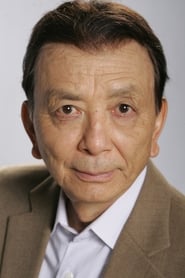
James Hong
James Hong
Soldier
James Hong
Soldier
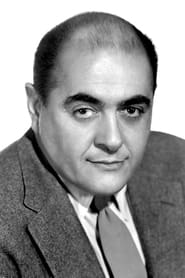
Robert Middleton
Robert Middleton
Narrator
Robert Middleton
Narrator
Jack Warden
Jack Warden
Long
Jack Warden
Long
Barry Sullivan
Barry Sullivan
Daniel Joyce
Barry Sullivan
Daniel Joyce

Carl Benton Reid
Carl Benton Reid
Gen. Tyler
Carl Benton Reid
Gen. Tyler
Ainslie Pryor
Ainslie Pryor
Beloit
Ainslie Pryor
Beloit
Edmon Ryan
Edmon Ryan
Edmon Ryan

H.M. Wynant
H.M. Wynant
H.M. Wynant
Similar Movies
Assigned to oversee the development of the atomic bomb, Gen. Leslie Groves is a stern military man determined to have the project go according to plan. He selects J. Robert Oppenheimer as the key scientist on the top-secret operation, but the two men clash fiercely on a number of issues. Despite their frequent conflicts, Groves and Oppenheimer ultimately push ahead with two bomb designs — the bigger "Fat Man" and the more streamlined "Little Boy."
Hank Marshall is a tough, square-jawed, straitlaced Army engineer and nuclear science expert, assigned to help conduct weapons testing in 1950s America. Hank has become a thorn in the side of the Army, though, for a couple of very different reasons. He is an outspoken opponent of atmospheric testing, though his superiors hold contrary views and want to squelch his concerns...and his reports. The other problem is his wife, Carly. She is voluptuous and volatile, wreaking havoc in his personal life and stirring up intrigue at each new Army base.
An ageing fishing boat, Dai-go Fukuryu Maru ("Lucky Dragon No. 5") sets out from the port of Yaizu in Shizuoka Prefecture. It travels around the Pacific line fishing. While the ship is near Bikini Atoll, the ship's navigator sees a flash. All the crew come up to watch. They realize it is an atomic explosion, but take time to clear their fishing gear. A short time later, grey ash starts to fall on the ship. When the ship returns to port the sailors have been burned brown. They unload the fish, which are then transported away. They visit the local doctor and then go to Tokyo for an examination. It turns out they are all highly radioactive. Their symptoms become worse, and the contaminated fish causes a panic.
Hiroshima is a 1995 Japanese / Canadian film directed by Koreyoshi Kurahara and Roger Spottiswoode about the decision-making processes that led to the dropping of the atomic bombs by the United States on the Japanese cities of Hiroshima and Nagasaki toward the end of World War II. Except as actors, no Americans took part in the production. The three-hour film was made for television and evidently had no theatrical release, but is available on DVD for home viewing. A combination of dramatisation, historical footage, and eyewitness interviews, the film alternates between documentary footage and the dramatic recreations. Both the dramatisations and most of the original footage are presented as sepia-toned images, serving to blur the distinction between them. The languages are English and Japanese, with subtitles, and the actors are largely Canadian and Japanese.
The story involves Rose Chismore's youth. She flashes back and remembers her coming-of-age. Her recollections are sometimes less than sweet, particularly those of her troubled and alcoholic step-father. Her memories of Robin, her first-love, are much happier and she also recalls her colorful Aunt Starr -- who's visit is fun but also detrimental to her family's health. The setting of 1950s Las Vegas' bomb testing is increasingly significant to the development of the story.
French nuclear tests irradiate an iguana into a giant monster that viciously attacks freighter ships in the Pacific Ocean. A team of experts, including Niko Tatopoulos, conclude that the oversized reptile is the culprit. Before long, the giant lizard is loose in Manhattan as the US military races to destroy the monster before it reproduces and it's spawn takes over the world.
April 30, 1962. The Algerian War has been over for two months, but Charles de Gaulle negotiated with the FLN during the Évian Accords to continue nuclear testing in the Sahara Desert. Under the eyes of officials gathered in an observation post located 5 km from the blast site, the Taourirt fissures, releasing a radioactive cloud: this will be known as the Béryl accident.