

Permiso para pensar
Documentary






No cast information.
Similar Movies
In January 1972, during General Lanusse's dictatorship in Argentina, a group of revolutionary activists occupied the National Development Bank, just meters from the Government House, expropriating 450 million pesos (approximately 10 million dollars today) for their cause. This was made possible by Oscar Serrano and Ángel Abus—activists and bank employees—who spent two years preparing what would become the biggest blow to the dictatorship's finances. Forty years later, Oscar and Ángel, along with a group of actors, recreate those events that changed their lives. In this dialogue between generations, the young people transform their perspective on activism and commitment during those years. Narrated through several cinematic layers, Seré Millones (I Will Be Millions) offers an innovative story that blends humor, rigorous historical research, and the epic spirit of the era.
For many years, Buenos Aires, Argentina, was one of the best places in the world for a film buff; but from the mid-sixties onwards, successive authoritarian governments shaped the will of the spectators, dictating what could be seen and what could not, so that the true cinema lovers, in their desire to watch films, had no choice but to embark on the most extraordinary and strange adventures.
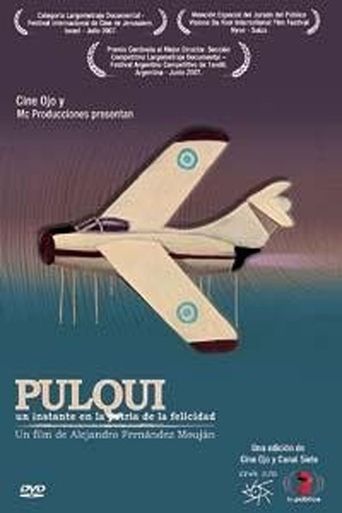
The Pulqui jet was also designed and built in Argentina by 1947. It was the first aircraft of this type to be manufactured in Latin America. The project is the initiative of Juan Domingo Peron, who also wanted an aircraft capable of competing with the Soviets and the Americans. It is thus that the Pulqui has its baptism recognized flight before the MIG -15 and F -86 Sabre, suspiciously similar design to Pulqui. The project was cut short Pulqui the 1955 coup. But in the documentary, the plane Peronist have a second chance from the hand of the artist Daniel Santoro and Michael Biancusso engineer and metallurgist, who reconstructed thus scale to relive an epic Peronist.
A powerful Argentine political film stands on the figure of an outsider intellectual, Sebreli, but manages to transcend it, he becomes a touchstone to go through Argentina and its dilemmas, through this country that is proud of almost everything it should be ashamed of. From national icons like Gardel, Evita, Che, and Maradona the film dialogs with recent Argentine history and it does so with extraordinary energy, supported by a rarely seen use of all kinds of archive material in an almost Dionysian state of sampleadelia. The film arrives to a surprising reflection on nationalism, demagogic governments and delusions of unanimity; problems that are common to emerging societies that cannot find their ways to a freer and more egalitarian society.
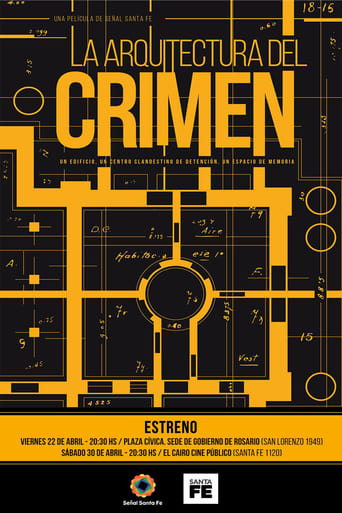
At the end of the last civil-military dictatorship, a camouflage operation took place in the Information Service, an office of the former Rosario Police Headquarters that operated as a clandestine detention center in the heart of the city. This architectural intervention, not recorded in the plans, obscures the survivors' accounts and hides the traces of crimes against humanity. Drawing on images, previously unpublished archives, and survivor testimonies, the documentary explores the scars of political repression and highlights the importance of preserving memorial spaces to ensure the transmission of fundamental events in our contemporary history.
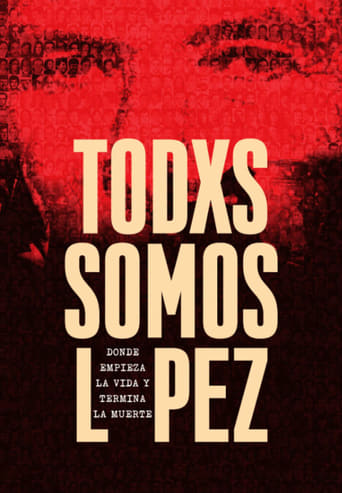
A chronicle on the days without Jorge Julio López, key witness and complainant on the first trial on genocide in Argentina, dated in 2006. López, who had survived through concentration camps on the late seventies argentinian dictatorship, disappeared for the second time the day the court decision meant to condemn his kidnappers was about to be read.

Musical documentary based on the stories of four women who studied to become nurses in the school of the Fundación Eva Perón in 1948, which was one of the institutions that helped pave the way for change for women in Argentina. The testimonies from the protagonists are reenacted in the form of a musical, in a film that combines archival footage and choreography.