

Radio Kobanî
Documentary · War
Overview
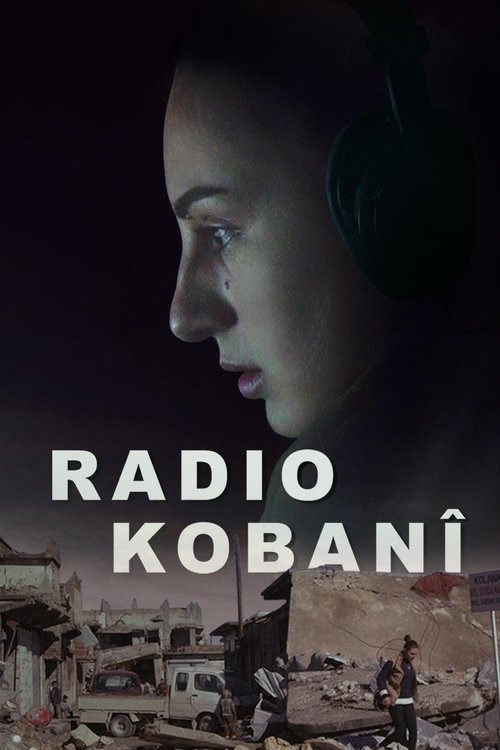
The extraordinary story of a young reporter in war-torn Kobanî.
Top Cast








Dilovan Kîko
Dilovan Kîko
Herself
Dilovan Kîko
Herself
Similar Movies
Gangstresses, a documentary by Harry Davis, tells the story of violence, poverty, and survival in the streets from a female perspective. Over a two-year period, Davis interviews female hustlers, drug dealers, rappers, porn stars, prostitutes, mothers, and daughters. Among them are Champagne, a well-known African American porn star who has a small child; Mama Mayhem, a street hustler; Uneek, a rapper from the Bronx; and Vanessa Del Rio, a famous porn actress. Musicians Lil' Kim, Mary J. Blige, Ice T, and Tupac Shakur also share personal stories of survival. The documentary conducts follow-up research on the women's complicated lives, offering glimpses of both tragic reality and hopeful recovery.
"The Boy Of The Fish" follows Noon, a young boy living in a Syrian refugee camp, who finds solace and a sense of freedom in a whale-shaped doll he names "Bahr." Set against the challenging realities of camp life, Noon’s journey is both a story of resilience and a testament to the boundless imagination of childhood. Through vivid symbolism and a unique soundscape, the film explores themes of loss, hope, and the longing for freedom amidst confinement. Shot entirely on an iPhone due to restrictions in the conflict zone, the film combines raw authenticity with poetic depth to capture the emotional landscape of a young soul navigating adversity.
Built out of “a pile of radio junk,” Bethesda, Maryland’s WHFS was a music fan’s dream of a radio station: the place on the dial to hear music listeners loved and new tunes they soon would, all with an anything-goes mentality and an ear for the sounds of social change. This doc pays loving tribute to free-form radio and WHFS’s influence over FM stations across the US from the 1960s to the 1980s. All good things come to an end, and so did the disc-jockey-driven format that WHFS pioneered and made successful, but its legacy lives on. The station’s DJs relate its history with passion in this film that captures the tenor of an era, abetted by reminiscences of performers including Emmylou Harris, Taj Mahal, Jesse Colin Young, and others whose music found its way to ears and minds eager for something more than the same old Top 40 programming.
The story of a German singer named Willie, who while working in Switzerland, falls in love with a Jewish composer named Robert, whose family is helping people to flee from the Nazis. Robert’s family is skeptical of Willie, thinking she could be a Nazi as she becomes famous for singing the song “Lili Marleen”.
Stuck in a rut, reporter Kim Baker decides to shake things up by leaving her desk job in New York and taking a dangerous assignment in Afghanistan. Far from home and completely out of her comfort zone, a culture-shocked Kim befriends an adventurous reporter Tanya Vanderpoel, a stern Colonel, and a charming photojournalist to help her navigate this crazy new world.
Casimê Celîl was born into a Yezidi Kurdish family in 1908, in a village called Kızılkule, located in Digor, Kars. The village and family life, which he longed to remember throughout his life, ends with the massacre they endured in 1918. During his long road to Erivan, Armenia, he lost all his family members. Left all alone, Casim was placed into an orphanage and was forced to change his name. To remember who he was and where he came from, every morning he repeated the mantra “Navê min Casim e, Ez kurê Celîlim, Ez ji gundê Qizilquleyê Dîgorê me, Ez Kurdim, Kurdê Êzîdî me”, which translates to: “My name is Casim, I am the son of Celîl, I come from the village of Kızılkule in Digor, I am a Kurd, and I am Yezidi”. He clings to every piece of his culture he can find, reads, and saves whatever Kurdish literature or art he comes across. As the year’s pass, Casim finds himself with an impressive collection of Kurdish culture and history.
An old man recounts: I have always worn glasses. Even in the camp, I managed to keep them. We feared the night almost as much as the day. One night, they brought in a newcomer, a bearded man. His drawings over the days had become essential to us. The guards did not understand that only death would prevent him from drawing. All that remains of the camp is this piece of wall, with his last drawing, which he called "Ligne de vie (Lifeline)."