

Of Monsters and Skirts
Documentary
Overview
Libertad, Enriqueta, Maricarmen and Albert evoke the years when their mothers and his aunt stayed in Les Corts jail, times of innocence, hopelessness and distress. Their childhood stories inmmerse us in a world whose main characters are memories, oblivion and the passing of time.
No cast information.
Similar Movies

His teachers, coaches, childhood friends and Barça teammates, together with journalists, writers and prominent figures from the history of football, come together in a restaurant to analyze and pick apart Messi's personality both on and off the field, and to look back at some of the most significant moments in his life. Viewed from Álex de la Iglesia's unique perspective, Messi recreates the player's childhood and teenage years, from his very first steps, with a football always at his feet, through to the decision to leave Rosario for Barcelona, the separation from his family, and the role played in his career by individuals such as Ronaldinho, Rijkaard, Rexach and Guardiola.
Robert E. Lee, born in Virginia in 1807, was deeply influenced by his Southern heritage and the legacy of his family, particularly his father, who served in the American Revolution. Raised by his mother, Lee learned values of self-control and integrity. He graduated second in his class from the United States Military Academy and had a distinguished military career, serving the Union before the Civil War. Despite his opposition to secession, he chose to lead the Confederate Army when Virginia seceded. Lee's military strategies were notable, achieving significant victories, yet he faced ultimate defeat at Gettysburg. After the war, he became president of Washington College, promoting peace and reconciliation while embodying principles of integrity and duty.

For over thirty years, three women have languished in Missouri State prison under unjust sentences for killing their abusive husbands. Denied the opportunity to enter the abuse into evidence, each of the women represents a system broken by outdated and media-sensationalized stereotypes. When a greater understanding of the "battered" syndrome change legal practices in 2000, Missouri's Governor crafts a new law demanding the parole board reevaluate each woman's case.

It is El Salvador, 1989, three years before the end of a brutal civil war that took 75,000 lives. Maria Serrano, wife, mother, and guerrilla leader is on the front lines of the battle for her people and her country. With unprecedented access to FMLN guerrilla camps, the filmmakers dramatically chronicle Maria's daily life in the war.
A bipartisan group of U.S. defense, intelligence, and elected policymakers spanning five presidential administrations participate in an unscripted role-play exercise in which they confront a political coup backed by rogue members of the U.S. military, in the wake of a contested presidential election.
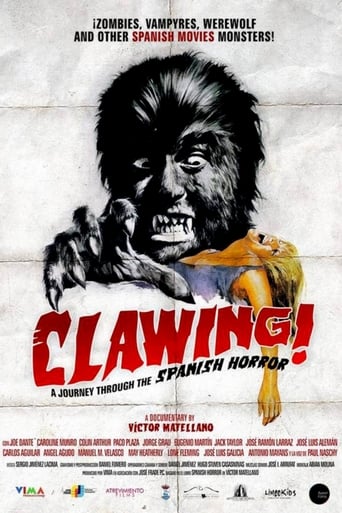
In the late sixties, Spanish cinema began to produce a huge amount of horror genre films: international markets were opened, the production was continuous, a small star-system was created, as well as a solid group of specialized directors. Although foreign trends were imitated, Spanish horror offered a particular approach to sex, blood and violence. It was an extremely unusual artistic movement in Franco's Spain.

An unprejudiced portrait of Spanish folklore and a crude analysis in black and white of its intimate relationship with atavism and superstition, with violence and pain, with blood and death; a story of terror, a journey to the most sinister and ancestral Spain; the one that lived far from the most visited tourist destinations, from the economic miracle and unstoppable progress, relentlessly promoted by the Franco regime during the sixties.
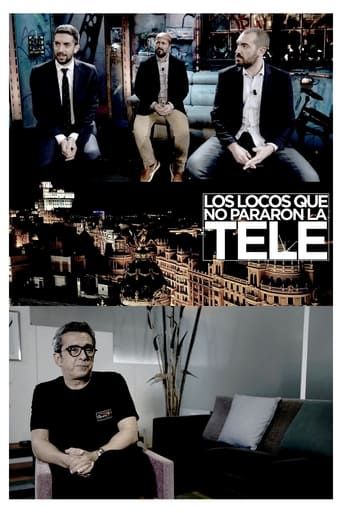
The famous Spanish comedian Andreu Buenafuente, CEO of the production company El Terrat and prestigious TV host, tells how he and his numerous collaborators, both on set and behind the cameras, managed to carry on with their work despite the chaos and the several logistical and human problems caused by the global pandemic that began in early 2020.
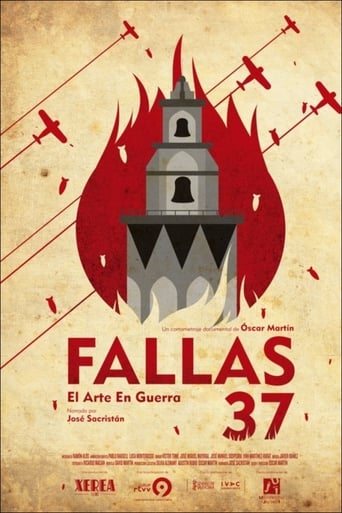
In November 1936, a few months since the beginning of the Spanish Civil War, the government of the Second Republic moves to Valencia. In this situation, several Valencian artists and intellectuals decide to build four fallas — satirical plasterboard sculptures created to be burnt — to mock fascism.