

Spoon
Documentary
Overview
A dialogue is born in a prison between Spoon, an African American poet imprisoned for life, and me. After eight years of conversation, Spoon’s words console me, while my ear is a channel for him to the outside world. The film takes as a starting point the desire to measure the power of language, both his poetry and his activist prose, and to share notions of time.


No cast information.
Similar Movies

In this entrancing documentary on performance artist, photographer and underground filmmaker Jack Smith, photographs and rare clips of Smith's performances and films punctuate interviews with artists, critics, friends and foes to create an engaging portrait of the artist. Widely known for his banned queer erotica film Flaming Creatures, Smith was an innovator and firebrand who influenced artists such as Andy Warhol and John Waters.
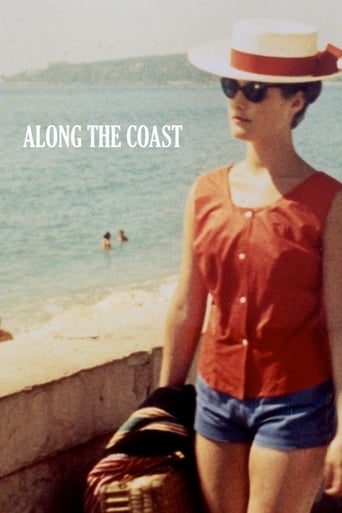
Tongue-in-cheek look at the French Riviera, especially in summer when it overflows with tourists. Reviews its history and famous visitors; displays its faux-exotic buildings, its crowded beaches, its trees and monuments; and, pokes fun at the colors women wear and the vagaries of fashion. The film celebrates the use of "Eden" as a place name, suggesting that paradise comes to the coast after all are gone, perhaps only on a remote island beach.
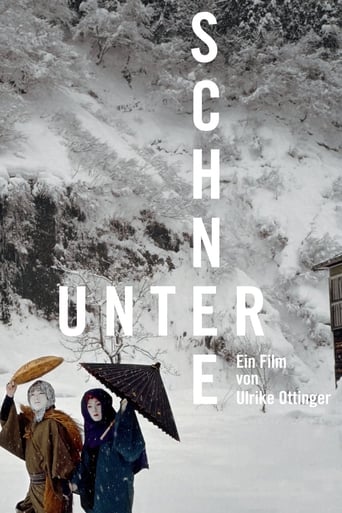
In Echigo, Japan, the snow often lies several feet deep well into May, covering landscapes and villages. Over the centuries, the inhabitants have organised their lives accordingly. In order to record their very distinctive forms of everyday life, their festivals, and religious rituals, Ulrike Ottinger journeyed to the mythical snow country – accompanied by two Kabuki performers. Taking the parts of the students Takeo and Mako, they follow in the footsteps of Bokushi Suzuki, who in the mid-19th century wrote his remarkable book “Snow Country Tales”.
'History is always made in the middle of the night. And when it happens, you are so damned tired, that you couldn't care less,' says Robert Cooper, an EU peace negotiator whose job it is to get Serbia and Kosovo to reach an agreement about peaceful coexistence. National pride and compromise are on everyone's lips, and much is at stake: Kosovo wants to come closer to independence, the Serbs have been promised EU membership if they can reach an agreement, and the EU tries to strengthen its credibility. But how far is each party willing to go? It is the unique characters that make this fascinating film about a delicate political game so vivid and loveable. The stoic, Serbian negotiator has a great passion for rock music, his colleague from Kosovo does not want to miss out on his daily visit to the hairdresser, and Cooper himself has a closet full of ties - one for every conceivable occasion.
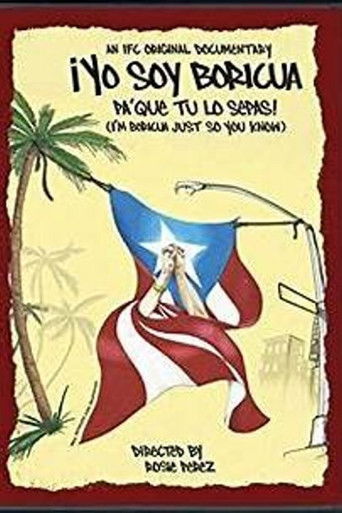
Actress Rosie Perez makes a stunning directorial debut in this heartfelt tribute to Puerto Rican pride. She takes an in-depth look at the complex and often controversial history of Puerto Rican-U.S. relations. By turns shocking and celebratory, this wide-ranging documentary examines such rich themes of the Puerto Rican experience as family, language, and racism, all with careful consideration of historical context.
FAR FROM POLAND is probably the first American non-fiction film (Godmilow calls it a "drama-tary") to explode cinema verite's mythic claim to be the only trustworthy mode of representation for discussing the real world, and in particular, social and political issues, on film. Refused a visa to travel to Poland, "Jillski" (her Polish nickname in the film) has to literally re-invent the documentary to deal with the Polish situation and she does so with a particular eye to deconstructing not only documentary's specific claims to objectivity, but also the bourgeois audience's desire to sit comfortably in their seats, feel compassion, feel themselves part of the solution (not part of the problem) by having felt compassion for the poor oppressed Poles, who, Godmilow would argue, are far more acutely aware of their situation and what forces oppress them than the liberal American folk in the movie house.
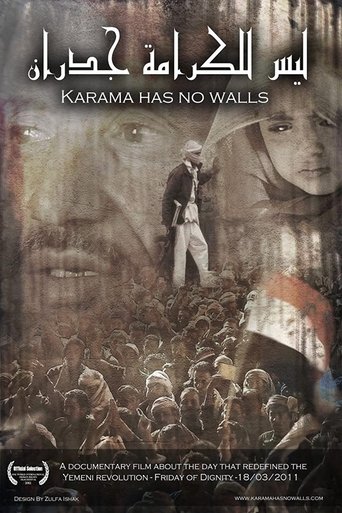
'Karama has no walls' is set amidst Yemen's 2011 uprising. The film illustrates the nature of the Yemeni revolution in stark contrast to the gross violations of human rights that took place on Friday, March 18th 2011. Juma'at El-Karama (Friday of Dignity) marks a turning point in the Yemeni revolution as the tragic events that took place on this day -when pro-government snipers shot dead 53 protestors - shook the nation and propelled hundreds of thousands more to flock to the square in solidarity with their fellow citizens. Through the lenses of two cameramen and the accounts of two fathers, the film retells the story of the people behind the statistics and news reports, encapsulating the tragic events of the day as they unfolded.
During the chaotic final weeks of the Vietnam War, the North Vietnamese Army closes in on Saigon as the panicked South Vietnamese people desperately attempt to escape. On the ground, American soldiers and diplomats confront a moral quandary: whether to obey White House orders to evacuate only U.S. citizens.
Over seven decades, actor and activist George Takei journeyed from a World War II internment camp to the helm of the Starship Enterprise, and then to the daily news feeds of five million Facebook fans. Join George and his husband, Brad, on a wacky and profound trek for life, liberty, and love.