

The Other Line
Documentary
Overview
Druga linija aka The Other Line is a product of many years of research of neo-avant-garde cultural and art scene in Novi Sad, Serbia (late 60s and 70s), which has been marginalized until today. This artistic movement was directly connected not only with important art centers of the former Yugoslavia, but also with existing flows of world art during its brief and productive activities (7e Biennale de Paris, 19th Berlinale). The cultural and artistic emancipation of that time had implied individual freedom of expression and strong reaction to established boundaries. This avant-garde movement had become threat to communist establishment, the authors' work were sabotaged, the films were sealed off, five artists were taken to trial, two were sent in prison. How is it that the retrograde mechanism of shutting down and removing the most creative and representative progressive impulses of our surrounding is still so current to this day?


Karpo Aćimović Godina
Karpo Aćimović Godina
Himself
Karpo Aćimović Godina
Himself
Slavko Bogdanović
Slavko Bogdanović
Himself
Slavko Bogdanović
Himself
Ješa Denegri
Ješa Denegri
Himself
Ješa Denegri
Himself
Čedomir Drča
Čedomir Drča
Himself
Čedomir Drča
Himself
Iztok Plamen Geister
Iztok Plamen Geister
Himself
Iztok Plamen Geister
Himself
Una Jankov
Una Jankov
Herself
Una Jankov
Herself
Vladimir Kopicl
Vladimir Kopicl
Himself
Vladimir Kopicl
Himself
Naško Križnar
Naško Križnar
Himself
Naško Križnar
Himself
Katalin Ladik
Katalin Ladik
Herself
Katalin Ladik
Herself
Božidar Mandić
Božidar Mandić
Himself
Božidar Mandić
Himself
Similar Movies
Conceptual visual artist Ján Mančuška died in 2011. However, in his short 39 years of existence, he managed to create a number of remarkable works, many of which have been exhibited in renowned galleries around the world – including the Centre Pompidou in Paris and MoMA in New York. In his homeland, however, his work reflecting everyday life, social reality or the meaning of language has never achieved comparable fame. Together with the children of an artist who was not afraid to confront the public with the question of the meaning of art, the director embarks on a journey that aims not only to get closer to Mančuška, but also to reveal him in hitherto unrecognised shades, thus filling in the gaps that are increasingly appearing in the context of the fading memory of his personality.
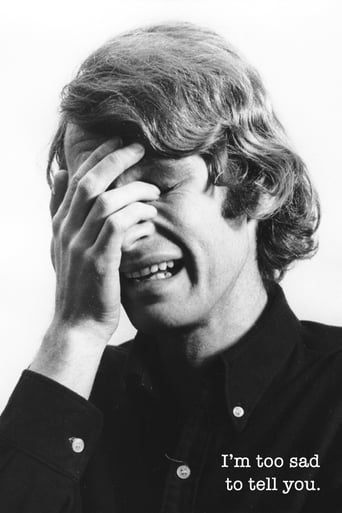
This short film is part of a mixed media artwork of the same name, which also included postcards of Ader crying, sent to friends of his, with the title of the work as a caption. The film was initially ten minutes long, and included Ader rubbing his eyes to produce the tears, but was cut down to three and a half minutes. This shorter version captures Ader at his most anguished. His face is framed closely. There is no introduction or conclusion, no reason given and no relief from the anguish that is presented.
Shot in his garage-studio, the camera records Ader painstakingly hoisting a large brick over his shoulder. His figure is harshly lit by two tangles of light bulbs. He drops the brick, crushing one strand of lights. He again lifts the brick, allowing tension to accrue. The climax inevitable—the brick falls and crushes the second set of lights. Here the film abruptly ends, all illumination extinguished.
A documentary about vivid punk and alternative rock scene of Subotica, the northernmost Serbian city, through the periods of communism, tyranny of the 1990s regime, and economic transition at the beginning of XXI century. Seen through the eyes of its witnesses, these musicians and creative artists deliberately refused the imposed way of behavior, hence staying "invisible" to everyday people.
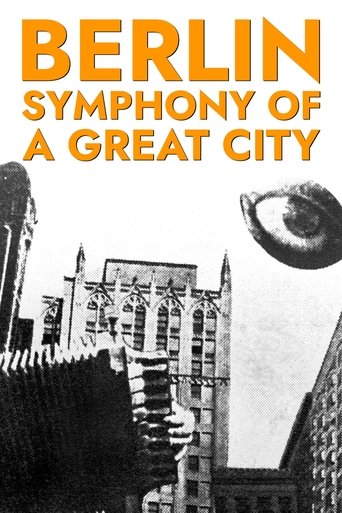
A day in the city of Berlin, which experienced an industrial boom in the 1920s, and still provides an insight into the living and working conditions at that time. Germany had just recovered a little from the worst consequences of the First World War, the great economic crisis was still a few years away and Hitler was not yet an issue at the time.
Thanks to his myriad film roles, Lon Chaney is known as “the man of a thousand faces,” and you could say that the early horror era never beheld a figure more intriguing. Yet because of his numerous transformations, his face never became as iconic as that of, say, Boris Karloff. Accompanied by a soundtrack from Bernhard Lang, this “re-imagination of shots” taken from Chaney´s forty-six surviving films offers a beguiling excursion into the history of film. The director reveals surprising associations, while highlighting the enduring magic of works which are now more or less forgotten.
The documentary tells the story of Uschi, a farmer living free and recluded in the bavarian alps. Shot in epic black and white pictures, Still follows Uschi's life over a ten year period. From an untroubled summer of making cheese through pregnancy and the uncertain future of the parental farm, Matti Bauer portrays Uschi's struggle to keep alive the dream of a way of life that has become rather untypical in this day and age.