

Fukushima
Documentary
Overview
On March 11 2011, after a magnitude 9 earthquake, a giant tsunami destroyed most of the north eastern japanese coast, killing almost 20,000 people.



No cast information.
Similar Movies
"Trinity and Beyond" is an unsettling yet visually fascinating documentary presenting the history of nuclear weapons development and testing between 1945-1963. Narrated by William Shatner and featuring an original score performed by the Moscow Symphony Orchestra, this award-winning documentary reveals previously unreleased and classified government footage from several countries.

Three days before the tsunami hits Khao Lak, Jens Lind and his family travel on after a few weeks in paradise. With him, he has filmed material with people and moments from a place that would soon disappear. In the ten years that have passed, Jens has returned to the beach and the survivors. The documentary "Khao Lak" is a personal observation of a place that was washed away and rebuilt. At the center of the story is the unique little bungalow-place called "Mai's Quiet Zone".
Since 1950, there have been 32 nuclear weapon accidents, known as "Broken Arrows." A Broken Arrow is defined as an unexpected event involving nuclear weapons that result in the accidental launching, firing, detonating, theft or loss of the weapon. To date, six nuclear weapons have been lost and never recovered.Now, recently declassified documents reveal the history and secrecy surrounding the events known as "Broken Arrows". There have been 32 nuclear weapon accidents since 1950. Six of these nuclear weapons have been lost and never recovered. What does this say about our defense system? What does this mean to our threatened environment? What do we do to rectify these monumental "mistakes"? Using spectacular special effects, newly uncovered and recently declassified footage, filmmaker Peter Kuran explores the accidents, incidents and exercises in the secret world of nuclear weapons.
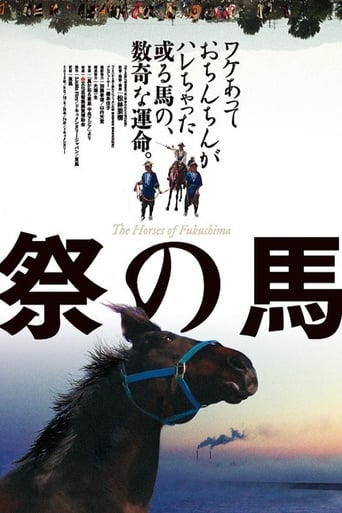
Fukushima's Minami-soma has a ten-centuries-long tradition of holding the Soma Nomaoi ("chasing wild horses") festival to celebrate the horse's great contribution to human society. Following the meltdown of the Fukushima Daiichi Nuclear Power Plant in the wake of the March 11, 2011 earthquake and tsunami, local people were forced to flee the area. Rancher Shinichiro Tanaka returned to find his horses dead or starving, and refused to obey the government's orders to kill them. While many racehorses are slaughtered for horsemeat, his horses had been subjected to radiation and were inedible. Yoju Matsubayashi, whose "Fukushima: Memories of the Lost Landscape" is one of the most impressive documentaries made immediately after the disaster, spent the summer of 2011 helping Tanaka take care of his horses. In documenting their rehabilitation, he has produced a profound meditation on these animals who live as testaments to the tragic bargain human society made with nuclear power.
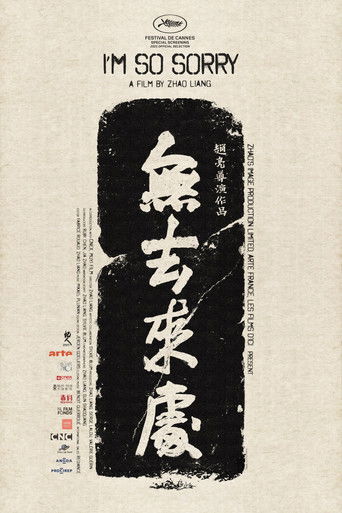
In a quiet forest, a sign warns of radiation hazard. “Is this the past or the future?” muses the masked figure who appears like a kind of ghost in nuclear disaster areas. At a time when nuclear power may be re-emerging as an alternative to fossil fuels, this calmly observed and compelling tour takes us to places that may serve as a warning.
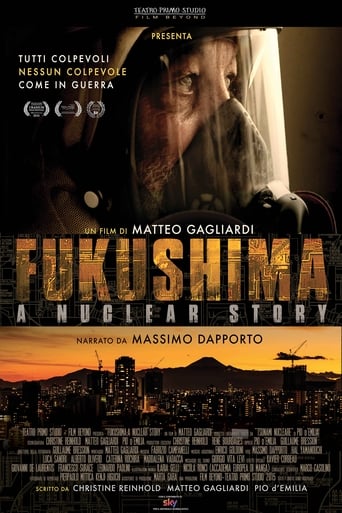
A powerful documentary that sheds some light on what really happened at the Fukushima nuclear power plant after the 2011 earthquake and the tsunami that immediately followed. A powerful documentary - shot from March 11th, 2011 through March 2015 - that sheds some light on what really happened at the Fukushima nuclear power plant after the 2011 earthquake and the tsunami that followed.