

Fyra dagar som skakade Sverige - Midsommarkrisen 1941
Documentary · Drama
Overview
At dawn on June 22, 1941, Germany invaded the Soviet Union. On the same morning, Germany demanded permission from the Swedish government to transport 18,000 German soldiers from Norway to Finland across Sweden by railway. This was a difficult problem for the Swedish government. On one hand remaining friendly with Germany at the height of its power, on the other maintaining a strict neutrality. The Swedish cabinet meet in Stockholm to decide upon the best reply to the German demands.
Top Cast

Ernst-Hugo Järegård
Per-Albin Hansson
Sven Lindberg
Christian Günter

Helge Skoog
Ernst Wigforss
Per Sjöstrand
Gösta Bagge
Lars-Erik Berenett
Erik Boheman
Bertil Norström
Frithiof Domö
Axel Düberg
Ivan Pauli
Ola Lindegren
Karl Schnurre
Carl Billquist
Per Edvin Sköld

Allan Svensson
KG Westman
Stefan Sauk
Signalspanaren
Bengt Bylund
Nyhetsuppläsaren


Ernst-Hugo Järegård
Ernst-Hugo Järegård
Per-Albin Hansson
Ernst-Hugo Järegård
Per-Albin Hansson
Sven Lindberg
Sven Lindberg
Christian Günter
Sven Lindberg
Christian Günter
Helge Skoog
Helge Skoog
Ernst Wigforss
Helge Skoog
Ernst Wigforss
Per Sjöstrand
Per Sjöstrand
Gösta Bagge
Per Sjöstrand
Gösta Bagge
Lars-Erik Berenett
Lars-Erik Berenett
Erik Boheman
Lars-Erik Berenett
Erik Boheman
Bertil Norström
Bertil Norström
Frithiof Domö
Bertil Norström
Frithiof Domö
Axel Düberg
Axel Düberg
Ivan Pauli
Axel Düberg
Ivan Pauli
Ola Lindegren
Ola Lindegren
Karl Schnurre
Ola Lindegren
Karl Schnurre
Carl Billquist
Carl Billquist
Per Edvin Sköld
Carl Billquist
Per Edvin Sköld
Allan Svensson
Allan Svensson
KG Westman
Allan Svensson
KG Westman
Similar Movies
A group of American pilots from Alaska ferry Airacobra fighter planes across the ocean on Lend-lease. The orderly course of life is disrupted when it becomes clear that the American pilots are attractive and charming young women. The feelings of the Russian young men collide into barriers of culture and language resulting in a host of awkward, funny, and sometimes tragic situations.It is the story of Russians, Americans, and natives of the Far North. It is the story of man and woman in war. Love and death are squeezed between the hills as human fates are destroyed and born.
During the Slovak National Uprising, even ordinary people were determined to perform heroic deeds, even though they knew they were exposing themselves to great danger. The heroine of this film, a simple country woman, has a hard time paying for her bravery: she is sentenced to death, postponed for now so that she can nurse her recently born baby. She is even offered salvation if she betrays, but the presence of a member of the Soviet army infuses her with determination and hope. Early Spring belongs to the usual schematic, lifeless staged views of the subject that the communist regime has elevated to the level of sacred matter.
Part of the Canada Carries On series, this short film portrays the First Division of the Canadian Active Service Force in Aldershot, England. Using an intimate letter home as a narrative device, this film reveals how the troops were received, what their living conditions were like, how they would get along with their English allies and how they spent their leisure time.
A Jewish woman named Jettel Redlich flees Nazi Germany with her daughter Regina, to join her husband, Walter, on a farm in Kenya. At first, Jettel refuses to adjust to her new circumstances, bringing with her a set of china dishes and an evening gown. While Regina adapts readily to this new world, forming a strong bond with her father's cook, an African named Owuor.
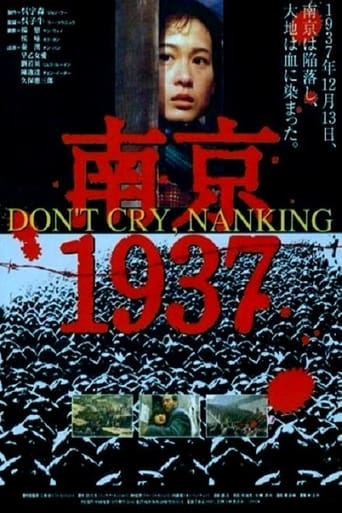
In December 1937, during the Second Japanese-Sino War, a Chinese doctor, his Japanese pregnant wife, their teenage daughter and their young son travel from Shanghai to Nanjing seeking shelter in the Capital during the Japanese invasion. The family faces the Rape of Nanking by the Imperial Japanese Army, with rapes, mass murder of prisoners of war and civilians including women, children and elders, and disrespect of international conventions.
1981: for the first time, contemporary witnesses of the Holocaust speak on German television in the two-part documentary "Witnesses - Testimonies to the Murder of a People" - at prime time on the first channel. Only 36 years after the Second World War, Bremen filmmaker Karl Fruchtmann has created a counter-design to the US drama series "Holocaust". While there are hardly any people left today who can personally recount their experiences of the Holocaust, there were still many contemporary witnesses in the early 1980s for whom the murder of the European Jews was still very present. Karl Fruchtmann interviewed 60 survivors of the Nazi concentration camps in Israel and Poland, the tapes are in the archives of Radio Bremen, almost 80 hours of interviews, a historical legacy! Only a small part of them has been published so far.