

Beautiful Brazil
Documentary
Overview
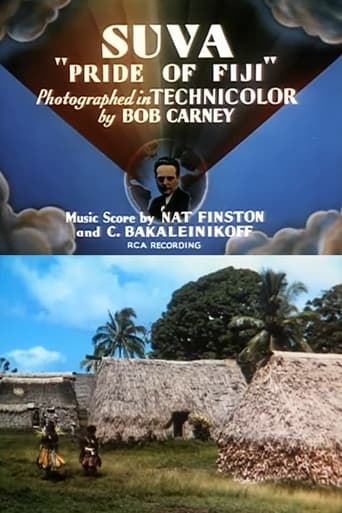
We start in Rio de Janeiro, with the statue of Cristo Redentor on Mount Corcovado, the avenue along the beach, the beauty of an historic city, and the landmark, Sugarloaf. Brazil's 47 million people celebrate racial diversity. From the Copacabana, we travel 40 miles to a resort, Quitandinha, where President Truman spoke. Then it's on to Sao Paulo, a modern, industrial city, and finally to the spectacular waterfalls of Iguazu on the border between Brazil and Argentina.

James A. FitzPatrick
James A. FitzPatrick
Narrator (voice)
James A. FitzPatrick
Narrator (voice)
Similar Movies
An essay film that interweaves meditations on travels with stories of journeys in China across a century: A student expedition into the heart of China in the 1930s, a young traveler's visions of the melancholic landscapes of his homeland, the narratives of movements in early Chinese silent films. Through these fragments of travelogues, the film explores the nature of consciousness in motion and what it means to use archives, images, and cinema as documentations as well as vehicles for travel.
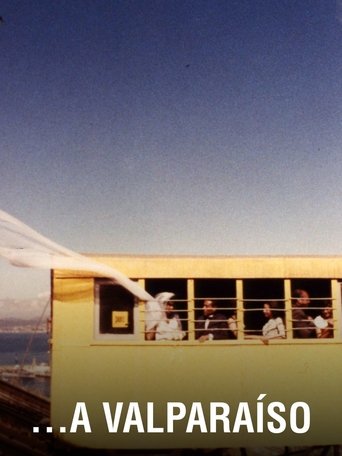
In 1962 Joris Ivens was invited to Chile for teaching and filmmaking. Together with students he made …A Valparaíso, one of his most poetic films. Contrasting the prestigious history of the seaport with the present the film sketches a portrait of the city, built on 42 hills, with its wealth and poverty, its daily life on the streets, the stairs, the rack railways and in the bars. Although the port has lost its importance, the rich past is still present in the impoverished city. The film echoes this ambiguous situation in its dialectical poetic style, interweaving the daily life reality (of 1963) with the history of the city and changing from black and white to colour, finally leaving us with hopeful perspective for the children who are playing on the stairs and hills of this beautiful town.
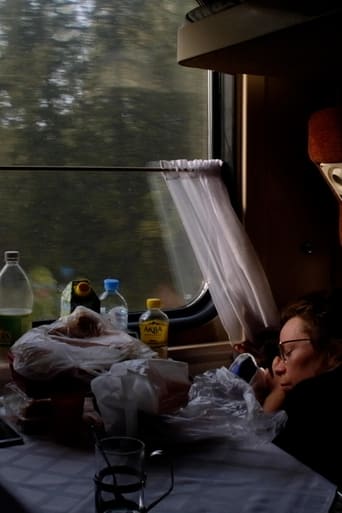
Travel films have an established format with their own conventions, history and baggage. It is a medium that has all too often sought to control, define and dictate perceptions of ”other” places. Comprised of footage shot while travelling on group excursions across Russia in 2019, An Uncountable Number of Threads is an attempt to draw out the ethical restrictions of a travelogue, while questioning how (and why) to make one. At times there is an awkward tourist-gaze, aware of its outsider position. But as a self-reflexive work that considers its own creation, it ultimately unravels, as the artist rationalises themselves out of a particular way of working, inviting the viewer into their uncertainty.
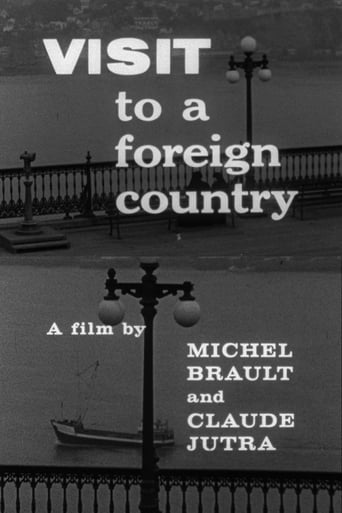
They come in high-powered convertibles, with cameras and curiosity, to look at French Canada and French-Canadians. Their usual objective is Québec City, where they can soak up a bit of French culture without a trip to France. With an eye for humour, VISIT TO A FOREIGN COUNTRY shows the people of Québec taking a look at American tourists who have come to Québec to take a look at them.
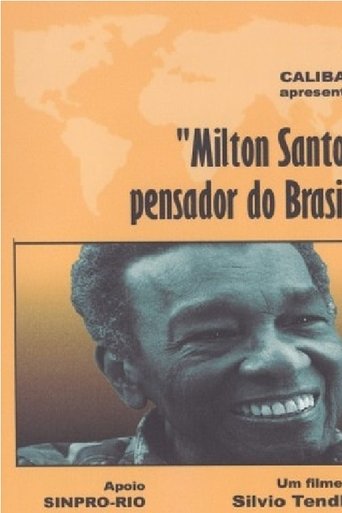
The interview, held on January 4, 2001, was the last given by Professor Milton Santos, who died from cancer on June 24 of the same year. The geographer is gone, but his thoughts remains. Its political and cultural ideals inspire the debate on Brazilian society and the construction of a new world. His statement is a true testimony, a lesson that the world can be better. Based on geography, Milton Santos performs a reading of the contemporary world that reveals the different faces of the phenomenon of globalization. It is in the evidence of contradictions and paradoxes that constitute everyday life that Milton Santos sees the possibilities of building another reality. He innovates when, instead of standing against globalization, proposes and points out ways for another globalization.
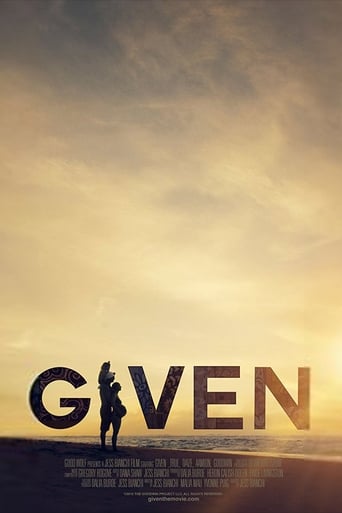
A young family leaves their home on Kauai. It is time to return to the itinerant path from which all things in their uncommon lives come; beginning and ending on a remote dot in the Pacific. They nomadically trace continents to places where waves meet their edges, envoys of aloha. It is what they will learn, what they bring others, what they will pass on to their children in the hyper-expanded classroom, the lab of direct being; a legacy passed from a father to his family.
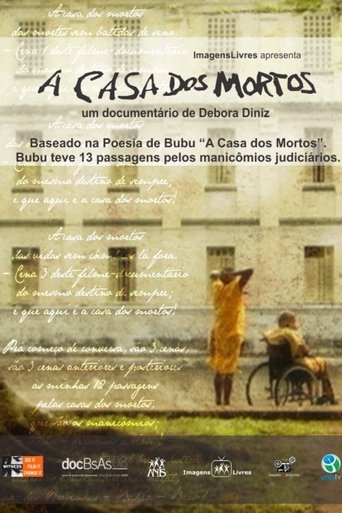
Bubu is a poet who has been committed to state institutions for the insane twelve times. He challenges the meaning of hospital-jails, hybrid institutions which sentence the insane to life imprisonment. The poem "The House of the Dead" was written during the filming of the documentary and reveals the forgotten deaths that occur in these judicial asylums. There are three stories in three acts of death. Jaime, Antonio, and Almerindo are anonymous men, considered dangers to society, whose punishment is the tragedy of suicide, the unending cycle of being committed to the asylum, or surviving life imprisonment in the house of the dead. Bubu is the narrator of his own life and also of his own destiny-death in the asylum.