

Mash SF
Documentary
Overview
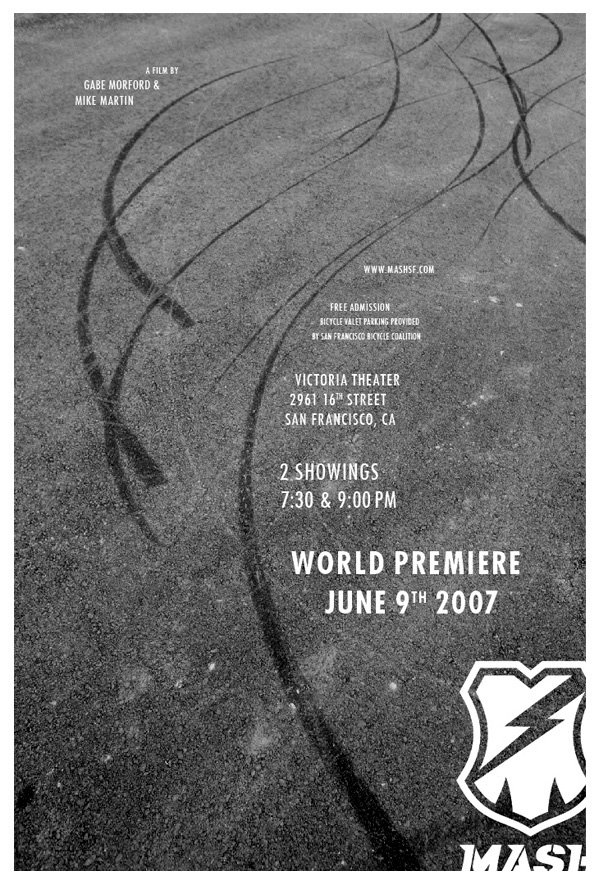
Mash is a testament to the efficacy of the frame, wheels, cockpit, and drive-train that carry us through SF's labyrinth of lanes, alleys, and everything in between. This video recognizes those who have inspired us with their unique presence in the streets, who have created an accelerated style of riding bikes built for the track but tailored for daily abuse. The synthesis of this video sprang from a desire to show the world how these locals take ownership of San Franciscos dense landscape and display an incredible amount of focus, fluidity, and grace in the process.




No cast information.
Similar Movies

Captures the spirit and essence of the great San Francisco Human Be-In of January 14, 1967. Ten thousand people imbued with peace, love and euphoria. Set to hard rock such as only San Francisco blues can produce. BE-IN contains Allen Ginsberg, Lawrence Ferlinghetti, Timothy Leary, Michael McClure, Lenore Kandel and Buddha. Music by Blue Cheer.
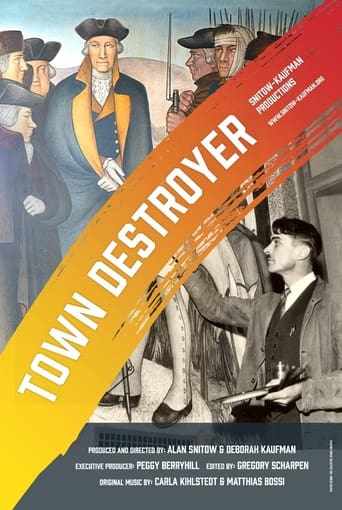
Controversy erupts over a New-Deal-era mural of the namesake of San Francisco’s George Washington High School. The thirteen-panel artwork "The Life of Washington" by Victor Arnautoff offers a view of the Founding Father both celebratory and critical, referencing his involvements in slavery and Native American genocide.

Pedal is a fast-paced documentary film about surviving in the streets of New York City as a bicycle messenger. It features messengers from all walks of life as they battle traffic in a race to make their next delivery on time. Directed by Sutherland and produced by Ana Lombardo, Pedal the documentary lets viewers live the spectacle of the delivery itself. It premiered in 2001 at the South by Southwest film festival, and was later acquired by the Sundance channel, where it aired until 2004.

"A Million Smiles" is a documentary film showcasing the Baseball Without Borders Foundation based in San Francisco, CA for nearly 30 years. Baseball Without Borders Foundation brings joy to children throughout the world through a love of America’s favorite pastime, baseball. They provide new and used baseball and softball equipment to children of all ages and they donate all equipment free of charge. Donations have been made to children in 52 countries since 1995. Baseball Without Borders has no paid staff. 100% of donated funds help to promote friendship, recipients' native cultures and connection with the less fortunate of our world. This is the first film in Baseball Without Borders history. This film focuses on bringing awareness to the culture and children of Yucatán while giving viewers a sense of the impact that Baseball Without Borders has been creating for more than 27 years as it carries out its mission to weave joy through the world by offering the gift of baseball.

Nearing the end of his life, Adolph Gasser looks back on a seventy-year career as a world-class camera repairman, WWII veteran, inventor, and best friend of nature photographer Ansel Adams, contributing developer of the first Nikon camera and a sales/rental/camera repair store owner who empowered other prominent Bay Area visual artists and inventors to succeed. As eminent domain, the internet and changing technologies threaten everything he has built, he struggles to find a way to keep moving forward. Inspired by his unique stories and abilities, filmmaker and professor John C. Aliano follows him over the course of several years and reflects on his own career trajectory.

This movie chronicles the life and times of R. Crumb. Robert Crumb is the cartoonist/artist who drew Keep On Truckin', Fritz the Cat, and played a major pioneering role in the genesis of underground comix. Through interviews with his mother, two brothers, wife, ex-wife and ex-girlfriends, as well as selections from his vast quantity of graphic art, we are treated to a darkly comic ride through one man's subconscious mind.

"I especially hope to inspire young women, because I often feel like so much emphasis is put on how beautiful you are, and how thin you are, and not a lot of emphasis is put on what you can do and how smart you are. I'd like to change the emphasis of what's important when looking at a woman." Filmed in San Francisco in 2000, Margaret Kilgallen (1967-2001) discusses the female figures she incorporated into many of her paintings and graffiti tags. Loosely based on women she discovered while listening to folk records, watching buck dance videos, or reading about the history of swimming, Kilgallen painted her heroines to inspire others and to change how society looks at women. Three of Kilgallen's heroines—Matokie Slaughter, Algia Mae Hinton, and Fanny Durack—are shown and heard through archival recordings. Kilgallen is shown tagging train cars with her husband, artist Barry McGee, in a Bay Area rail yard and painting in her studio at UC Berkeley (source: Art21).