

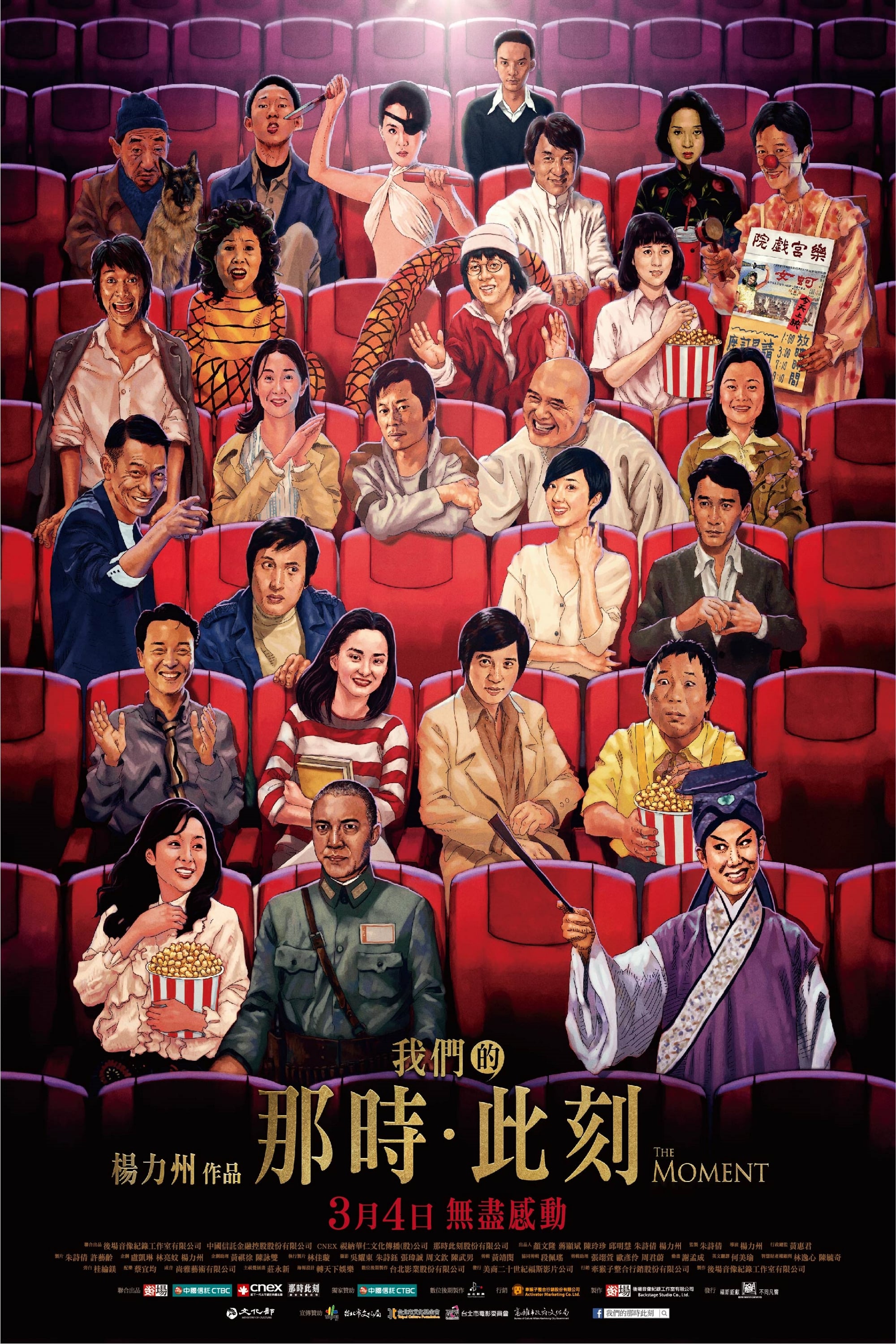
The Moment: Fifty Years of Golden Horse
Documentary
Overview
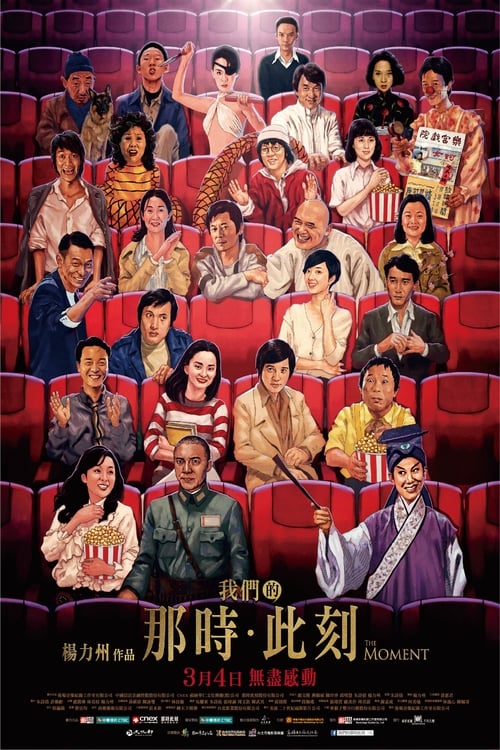
In 2013, the Golden Horse Film Festival celebrated its 50th anniversary. The ministry of Culture commissioned director Yang Li-chou to make a documentary about the history of Golden Horse. What is unique to this film is that it's not an ode to celebrities but about the role cinema plays in ordinary people's lives. It's a love letter to cinema, filmmakers and audiences.




Gwei Lun-Mei
Gwei Lun-Mei
Self - Narrator
Gwei Lun-Mei
Self - Narrator
Ivy Ling Po
Ivy Ling Po
Self
Ivy Ling Po
Self
Jackie Chan
Jackie Chan
Self
Jackie Chan
Self
Charlie Chin Chiang-Lin
Charlie Chin Chiang-Lin
Self
Charlie Chin Chiang-Lin
Self
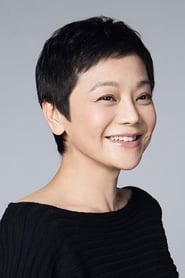
Sylvia Chang
Sylvia Chang
Self
Sylvia Chang
Self

Vicky Zhao Wei
Vicky Zhao Wei
Self
Vicky Zhao Wei
Self
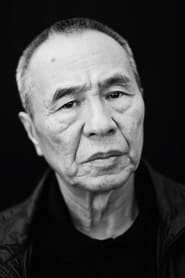
Hou Hsiao-hsien
Hou Hsiao-hsien
Self
Hou Hsiao-hsien
Self

Stanley Kwan Kam-Pang
Stanley Kwan Kam-Pang
Self
Stanley Kwan Kam-Pang
Self
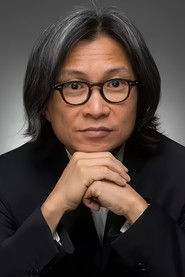
Peter Chan Ho-Sun
Peter Chan Ho-Sun
Self
Peter Chan Ho-Sun
Self
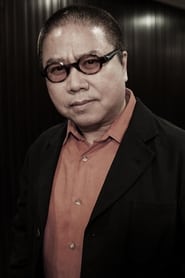
Fruit Chan
Fruit Chan
Self
Fruit Chan
Self
Similar Movies
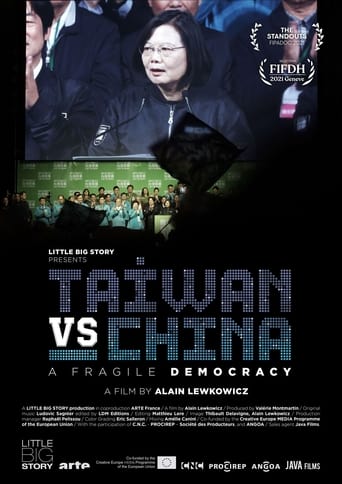
One Country, Two Systems? No Way! say the youth of Taiwan. But China under President Xi Jinping wants more than ever to bring the island of Taiwan back into the fold, just like Hong Kong. Can the burgeoning democracy on China’s doorstep, driven by digital technology, resist the Middle Kingdom’s advances? To China Taiwan is a breakaway province that must return to the fold. To its 24 million inhabitants it is a sovereign state with its own constitution and democratically elected leaders. Now that Hong Kong has been brought into line, Taiwan remains determined to stand up as a vibrant, young democracy. But it won't be easy. Since the Sunflower Movement in 2014 when the young came out to prevent an economic agreement with China, citizen groups have been fighting for the transparency of institutions.
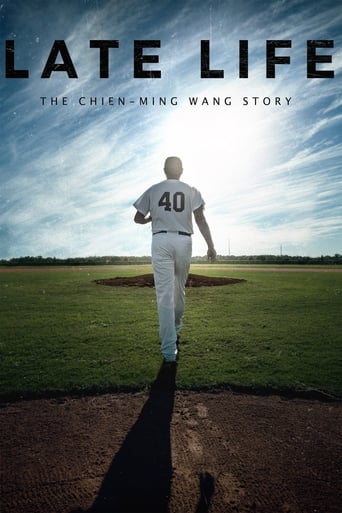
The first and only Taiwanese player for the New York Yankees, Chien-Ming Wang held many titles: American League Wins Leader, World Series Champion, Olympian, Time 100 Most Influential, and The Pride of Taiwan. He had it all - until a 2008 injury forever altered the course of his career. Late Life: The Chien-Ming Wang Story - named after the late sinking action on his signature pitch - follows the rise and fall of the international icon as he fights his way back into the Major Leagues through endless rehab programs and lengthy stints away from home, carrying the weight of the world on his battered shoulder. A poignant and intimate account of Wang’s steadfast quest, Late Life tells the story of a man who is unwilling to give up and unable to let go.
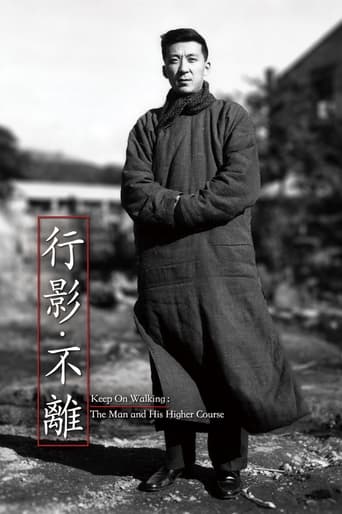
In Taiwan, director Lee Hsing's films have become a reflection of society and a collective memory of many. His dedication to film not only launched the careers of many movie stars and crew, but was also the foundation of the prestigious Golden Horse Awards. This documentary offers Lee Hsing's personal perspective on family, films, fate and beliefs, giving us a glimpse of the glory and rebirth of Taiwanese cinema.
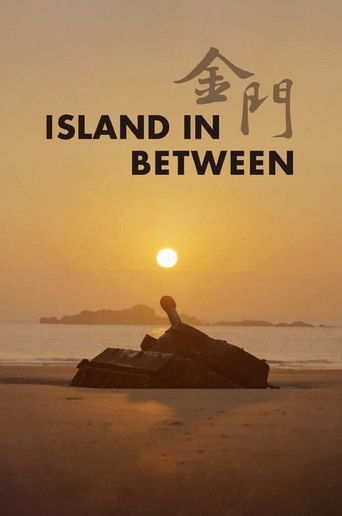
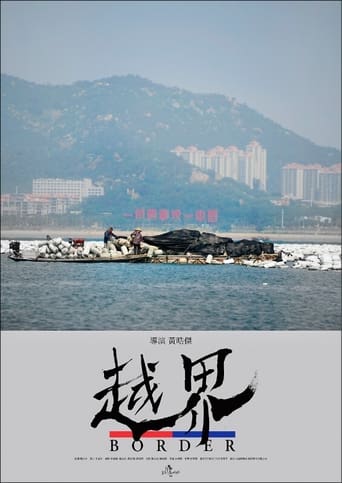
In the middle of the strait between Kinmen and Xiamen, China, there are patches of sea filled with floating styrofoam and endless sand pilfering across the border. Huge business opportunities, and even greater land reclamations have scarred the beauty of the original rural landscapes for the sake of “ The Chinese Dream"—a dream that places economic achievements above all else.
Richly illustrated with film clips and interviews, OUR TIME, OUR STORY tells the still-evolving story of the Taiwanese "new wave," from its rise in the early 1980s, as the island was democratizing after decades under martial law, through growing international recognition and domestic debate in the 1990s. Spearheaded in its early years by such filmmakers as Edward Yang, Ko I-cheng, Hou Hsiao-hsien and Wan Jen, the movement revitalized Taiwan cinema through low-budget experiments that emphasized personal stories, political reflection and stylistic invention. Said filmmakers, writers and actors like Wu Nien-jen and Sylvia Chang, even "second wave" directors Tsai Ming-liang and Lin Cheng-sheng provide fond reminiscences and retrospective insights in this compelling account of one of the most distinctive national cinemas of the last quarter-century.