

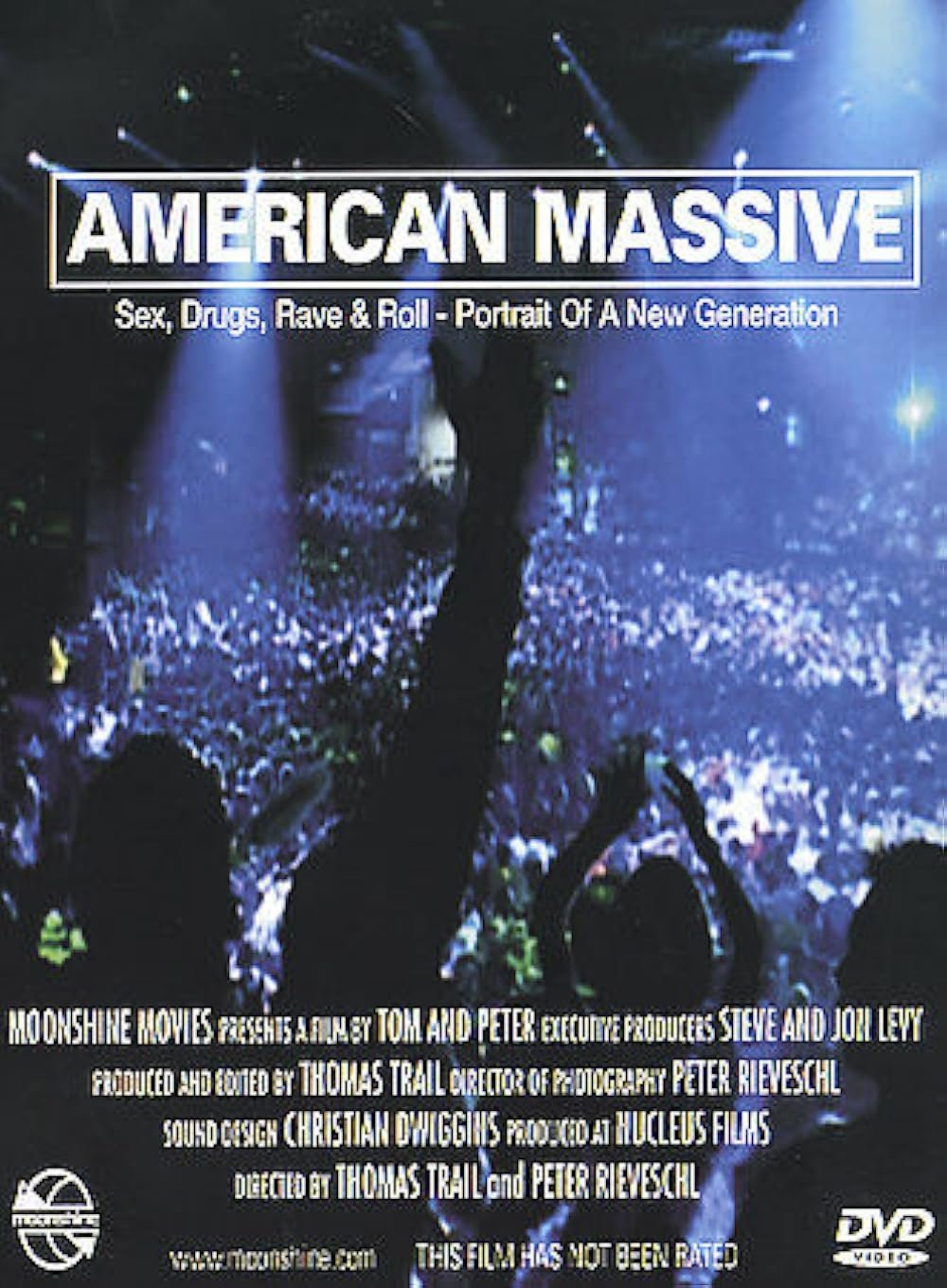
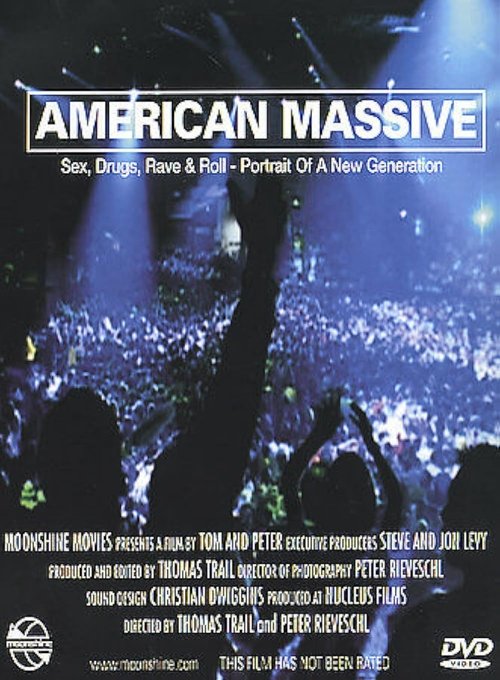
American Massive
Music · Documentary
Overview
Shot on the Moonshine Overamerica 2000 tour, American Massive shows the rave scene from the participants' perspective: the DJs, the promoters, the artists, and the kids. 24 Cities, 13,000 miles in 32 days with some of the America's biggest names in electronic music, including AK1200, Christopher Lawrence, Carl Cox, Cirrus, D:Fuse, Dara, Micro, Frankie Bones and Keoki. American Massive is a documentary about the rave culture. Included are interviews with the people who attend the parties and the behind-the-scenes workers, as well as interviews and music from electronic music artists AK1200, Carl Cox, Christopher Lawrence, Dara, Frankie Bones, Keoki, and more. ~ Perry Seibert, Rovi




Frankie Bones
Frankie Bones
Self
Frankie Bones
Self
Keoki
Keoki
Self
Keoki
Self
Carl Cox
Carl Cox
Self
Carl Cox
Self

Ferry Corsten
Ferry Corsten
Self
Ferry Corsten
Self
Similar Movies
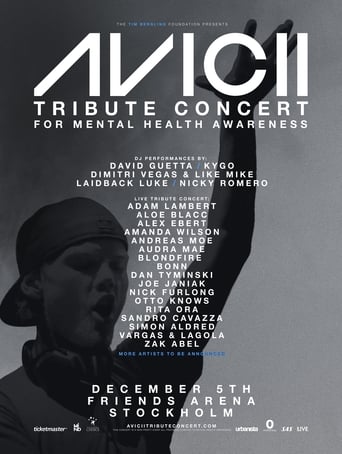
A number of different DJs who are all close friends until Tim will play during the evening: David Guetta, Kygo, Dimitri Vegas & Like Mike. During the live concert, the singers who participated in Avicii's biggest songs - artists such as Aloe Blacc, Rita Ora, Adam Lambert and Sandro Cavazza, and others - will perform Avicii's origins simultaneously with a 30-man band.

The film follows the inception of the movement, a meeting between ravers and the new age travellers during Thatcher's last days in power, and the explosive years that followed, leading up the infamous Castlemorton free festival in 1992 - the largest ever illegal rave, which provoked the drastic change of the laws of trespass with the notorious introduction of the Criminal Justice Act in 1994.
Rave Culture is one of Britain’s great cultural exports, but after its first wave in the late eighties and early nineties, it was soon forced into the underground by stringent new laws and superclubs. But forward 25 years into in the midst of a nationwide purge on the nation’s nightlife, where nearly half of all British clubs have shut down in the last decade, and a new kind of scene has emerged. Clive Martin investigates this 21st century version of Rave, where young people break into disused spaces with the help of bolt-cutters and complicated squatting laws, to suck on balloons and go hard into the early morning. But with the police using increasingly extreme tactics to clamp down on these parties, and more than one fatality causing nationwide media panic, can the scene survive?
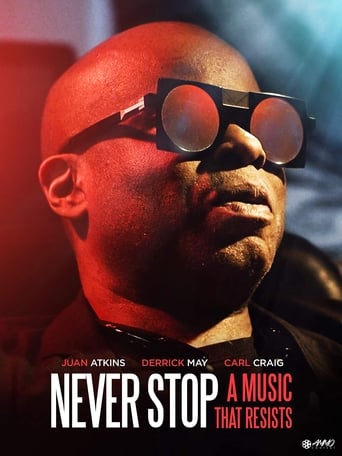
Featuring the pioneers of techno music Juan Atkins, Derrick May, Carl Craig, and Jeff Mills, Never Stop takes us into the fascinating universe of techno labels in Detroit. This film highlights the deep roots of the creation, more than thirty years ago, by each of the African-American pioneers of techno music, of their own record labels.
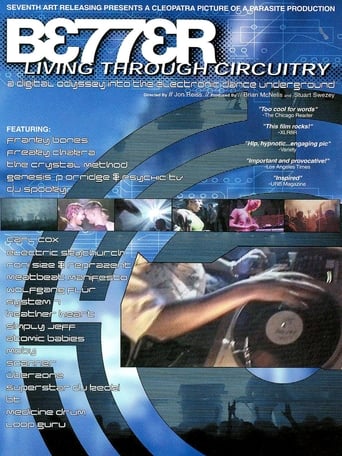
A documentary about rave culture and the Electronic Dance movement of the '90s. It is the first such full-length documentary on the topic. It was produced by Cleopatra Pictures and Entertainment Group, presided by Cleopatra Records founder Brian Perera. The film features interviews with BT, The Crystal Method, Electric Skychurch, Genesis P-Orridge, Frankie Bones, DJ Spooky, Roni Size, and DJ Keoki.

Why wouldn't you? Is there any reason not to? We've got so much at our disposal, so, why don't you? Won't you tell me? Won't you please tell me? To have you down is simply unacceptable. Just look at this; or this; at all these hallmarks to guide you and convey to you the prime ways to feel lovely. Just follow them and you'll be set. So, I ask you again... Don't you feel lovely today?
Drum & Bass: The Movement explores how a unique UK club culture rose from an underground movement to become a global phenomenon infiltrating and influencing disciplines from mainstream pop music to video games. From dubplates to mainstream crossovers, to the labels, the tracks and the clubs that shaped the game, Drum & Bass: The Movement is a snapshot of jungle drum & bass history and how it’s always been much more than a genre of dance music: it’s a lifestyle. The movement continues...
In the final days of the yuppie decade, the summer of ’89 saw a new type of youth rebellion rip through the cultural landscape, with thousands of young people dancing at illegal Acid House parties in fields and aircraft hangars around the M25. Set against the backdrop of ten years of Thatcherism, it was a benign form of revolution, dubbed the Second Summer of Love – all the ravers wanted was the freedom to party… The rave scene, along with the drug Ecstasy, broke down social barriers and even football hooligans were ‘loved up’, solving a problem the government had never managed to crack. But lurid tabloid headlines and cat-and-mouse games with the police eventually turned the dream sour, as the gangster element moved in at the end of the summer.