

Crimson Mask
Documentary
Overview
Crimson Mask is a documentary film by Marco Eisenbarth, that follows German 'Ultra Violence Wrestler' Thumbtack Jack a.k.a. Alexander Bedranowsky in and outside of the wrestling ring. Being much more than a simple career review, the film gives a deep insight beyond the mask of this seemingly violent and insane character that is Thumbtack Jack, who mutilates his opponents with thumbtacks, barbed wire, syringes and even fire. Crimson Mask shows the man on the other side. From his career high in the USA to his feud with arch enemy Drake Younger all the way to his very last 'Death-Match' against long time friend and mentor 'Hate', the filmmaker never leaves Thumbtack Jack's side. But then fate strikes and changes Alexander Bedranowsky's life forever...







Alexander Bedranowksy
Alexander Bedranowksy
Himself / "Thumbtack Jack"
Alexander Bedranowksy
Himself / "Thumbtack Jack"
Dylan Keith Summers
Dylan Keith Summers
Himself / "Necro Butcher"
Dylan Keith Summers
Himself / "Necro Butcher"

Chris Spradlin
Chris Spradlin
Himself / "Chris Hero"
Chris Spradlin
Himself / "Chris Hero"
Drake Wuertz
Drake Wuertz
Himself / "Drake Younger"
Drake Wuertz
Himself / "Drake Younger"
Similar Movies
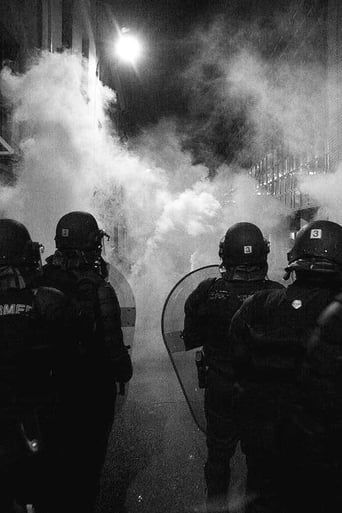
The left-leaning anti-fascist movement—or Antifa—has been around for decades, popping up in North America and Europe in response to rising white nationalist or fascist sentiments. Now, Antifa has made a resurgence in the US, where members clad in masks and nondescript black clothing physically confront groups of white supremacists and neo-Nazis who've started organizing in cities around the country.

This documentary is a sad sight of the reality of child abuse victims who now live in public shelters in Brazil, with stories told by themselves. Children and adolescents who are now in shelters were victims of violence. Most were the victim of the own family and others never knew theirs. The years are passing and the childhood and adolescence of them also ...
Rob Grant and Mike Kovac receive a disturbing fan video inspired by their previous horror movie Mon Ami, motivating them to investigate the responsibility of filmmakers in portraying violence in movies. In their pursuit of the truth they are unwittingly introduced to the real world of violent criminals and their victims.
Somewhere in Myanmar is a forest rich in amber and controlled by the Kachin Independence Army (KIA). Most of its inhabitants work in a mine, digging the earth night and days in the hope of finding the precious ore that will get them out of poverty. But on top of the excruciating hardship of the work, they also have to fear an attack from the army.
In 2011, Maine State Prison launched a pioneering reform program to scale back its use of solitary confinement. Bafta and Emmy-winning film-maker Dan Edge and his co-director Lauren Mucciolo were given unprecedented access to the solitary unit - and filmed there for more than three years. The result is an extraordinary and harrowing portrait of life in solitary - and a unique document of a radical and risky experiment to reform a prison. The US is the world leader in solitary confinement. More than 80,000 American prisoners live in isolation, some have been there for years, even decades. Solitary is proven to cause mental illness, it is expensive, and it is condemned by many as torture. And yet for decades, it has been one of the central planks of the American criminal justice system.

Piel dolor (Skin Pain) explains how power is structurally sustained in violence. Its nature and the relationships it establishes in society are based more on the imposition and use of force than on building consensus, dialogue, and respect for diversity. In that sense, power is a behavior that seeks dominance through force and man as a gender, becomes an instrument of violence that is exercised against the weakest. Extinguishing the socially constructed violence means eliminating the current power and its historical sustenance, questioning the source of origin, religion, ideology, the system and its values. Is that utopia possible?