

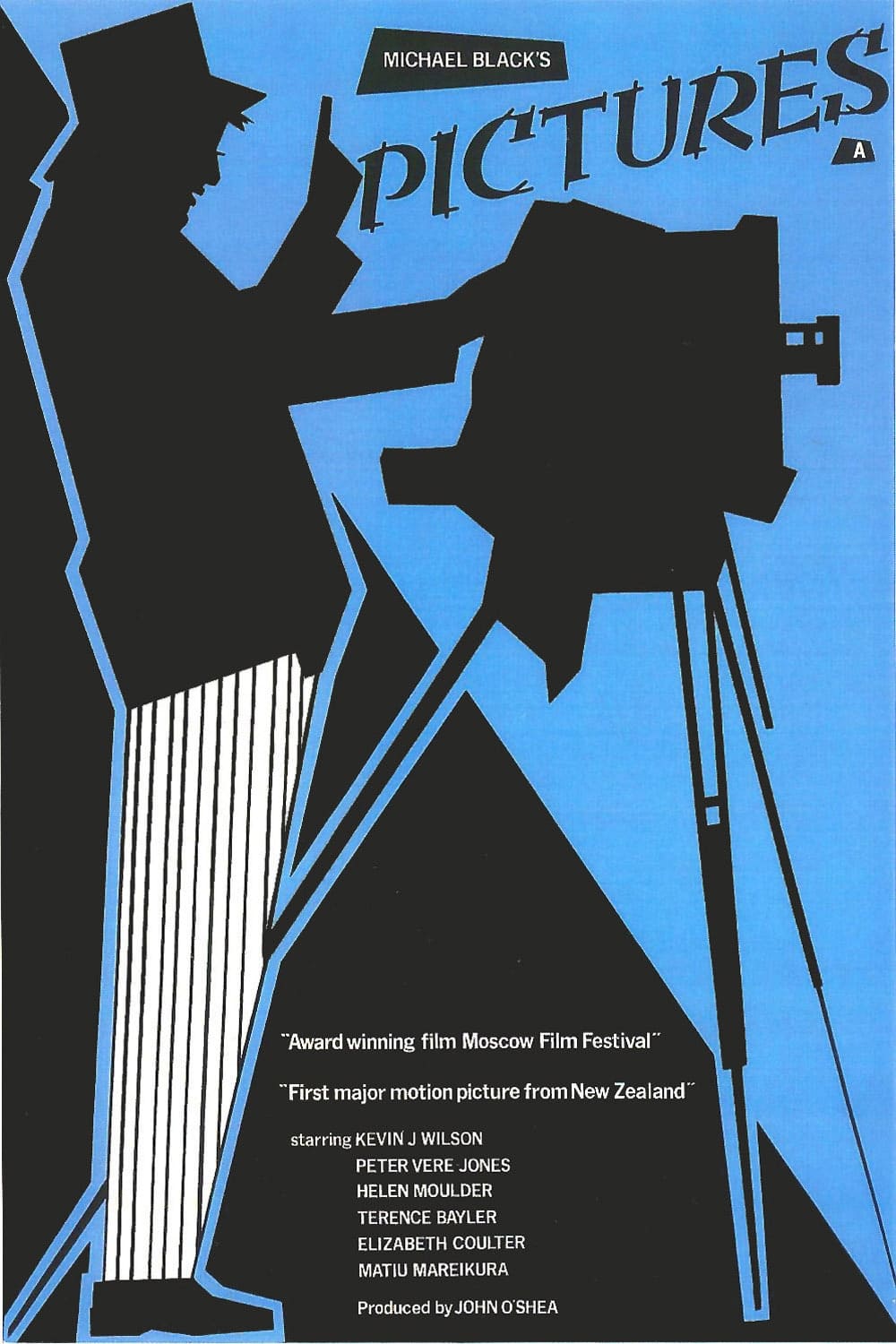
Pictures
Drama · History
Overview
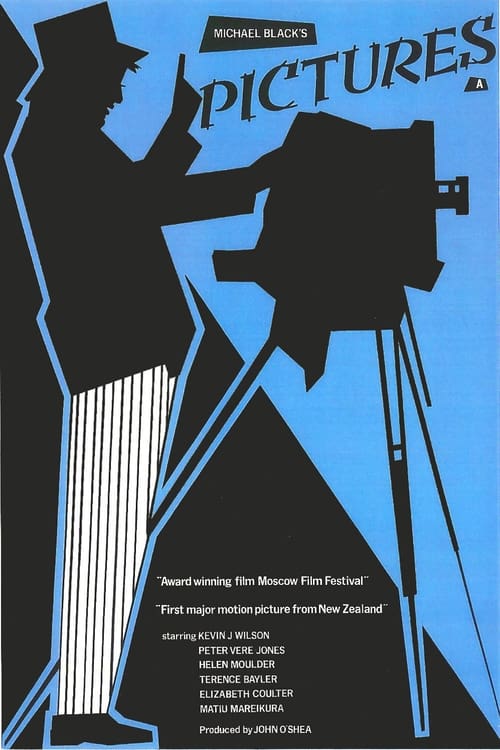
Walter Burton's realistic photographs depicting poor treatment of Maori prisoners are rejected by late 19th century government officials. Walter is condemned to making a living from everyday studio work, the frustration of which is apparently quite sufficient to make him a drunk. His brother Alfred is happy to take the photos that the officials want and therefore gets the commissions. Alfred's photos are well received, but when Walter shows his own photos, toughs are sent around to smash up his plates.

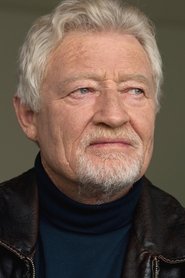
Kevin J. Wilson
Kevin J. Wilson
Alfred Burton
Kevin J. Wilson
Alfred Burton
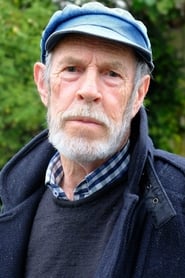
Peter Vere-Jones
Peter Vere-Jones
Walter Burton
Peter Vere-Jones
Walter Burton
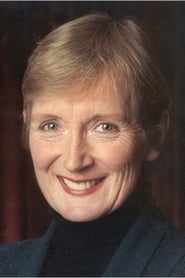
Helen Moulder
Helen Moulder
Lydia Burton
Helen Moulder
Lydia Burton
Elizabeth Coulter
Elizabeth Coulter
Helen Burton
Elizabeth Coulter
Helen Burton
Terence Bayler
Terence Bayler
John Rochfort
Terence Bayler
John Rochfort
Matiu Mareikura
Matiu Mareikura
Ngatai
Matiu Mareikura
Ngatai
Ken Blackburn
Ken Blackburn
James Gilchrist
Ken Blackburn
James Gilchrist

John Callen
John Callen
Casey
John Callen
Casey
John Callen
John Callen
Payton
John Callen
Payton
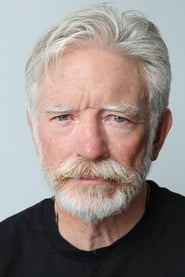
Peter Hayden
Peter Hayden
Algy
Peter Hayden
Algy
Similar Movies
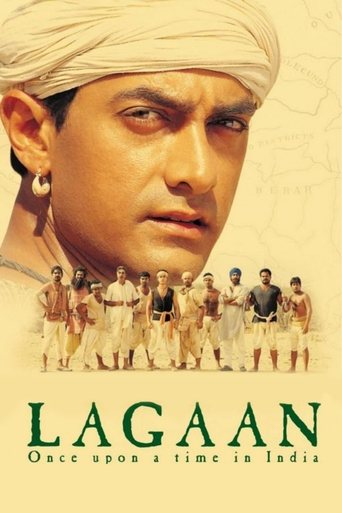
The year is 1893 and India is under British occupation. In a small village, the tyrannical Captain Russell has imposed an unprecedented land tax on its citizens. Outraged, Bhuvan, a rebellious farmer, rallies the villagers to publicly oppose the tax. Russell offers a novel way to settle the dispute: he challenges Bhuvan and his men to a game of cricket, a sport completely foreign to India. If Bhuvan and his men can defeat Russell's team, the tax will be repealed.
Jack the Ripper was a prince, a pauper, a mason, a madman... A host of more and more bizarre theories have surrounded the unexplained killings in Whitechapel since they hit the headlines in 1888. This film dispels the grisly fiction, revealing for the first time the true contents of the police and Home Office files on the case, drawing on the expertise of historians and of those who have encountered today's killers - on the street or behind bars.
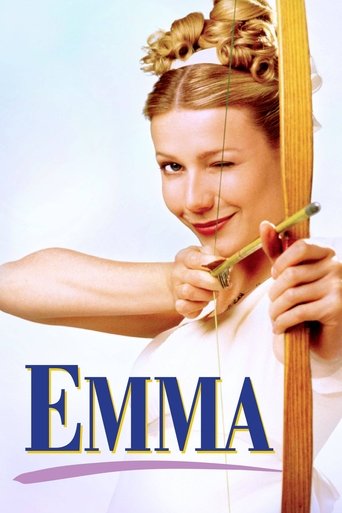
Emma Woodhouse is a congenial young lady who delights in meddling in other people’s affairs. She is perpetually trying to unite men and women who are utterly wrong for each other. Despite her interest in romance, Emma is clueless about her own feelings, and her relationship with gentle Mr. Knightley.

Krotoa, a feisty, bright, 11-year-old girl is removed from her close-knit Khoi tribe to serve Jan van Riebeeck, her uncle’s trading partner and the first Governor of the Cape Colony. She is brought into the first Fort established by the Dutch East India Company in 1652. There she grows into a visionary young woman who assimilates the Dutch language and culture so well that she rises to become an influential translator but ends up being rejected by her own people as she tries to bridge the gap between the two cultures about to collide.
In 1920s Ireland young doctor Damien O'Donovan prepares to depart for a new job in a London hospital. As he says his goodbyes at a friend's farm, British Black and Tans arrive, and a young man is killed. Damien joins his brother Teddy in the Irish Republican Army, but political events are soon set in motion that tear the brothers apart.
An exhaustive explanation of how the military occupation of an invaded territory occurs and its consequences, using as a paradigmatic example the recent history of Israel and the Palestinian territories, the West Bank and the Gaza Strip, from 1967, when the Six-Day War took place, to the present day; an account by filmmaker Avi Mograbi enriched by the testimonies of Israeli army veterans.
Algeria, summer 1962, eight hundred thousand French people left their native land in a tragic exodus. But 200,000 of them decided to attempt the adventure of independent Algeria. Over the following decades, political developments would push many of these pieds-noirs into exile towards France. But some never left. Germaine, Adrien, Cécile, Guy, Jean-Paul, Marie-France, Denis and Félix, Algerians of European origin, are among them. Some have Algerian nationality, others do not. Some speak Arabic, others do not. They are the last witnesses to the little-known history of these Europeans who remained out of loyalty to an ideal, a taste for adventure and an unconditional love for a land where they were born, despite all the ups and downs that the free Algeria in full construction had to go through.