


Jacques Lacan: La Psychanalyse 1 & 2
Documentary
Overview
In "psychanalyse", a two part documentary, the psychoanalyst Jacques Lacan answers to questions submitted by his son-in-law Jacques-Alain Miller under the direction of Benoit Jacquot. The Office de Radiodiffusion Television Francaise (ORTF, the french public TV) broadcast this program. This documentary and its text became famous because this is the only televisual experience practiced by Lacan. A fair amount is made of the fact that Lacan was renowned for his powers of seduction and what effect this had on transference in the clinical setting. According to some of the interviewees, he could be irresistibly seductive, so much so that some thought him "monster".







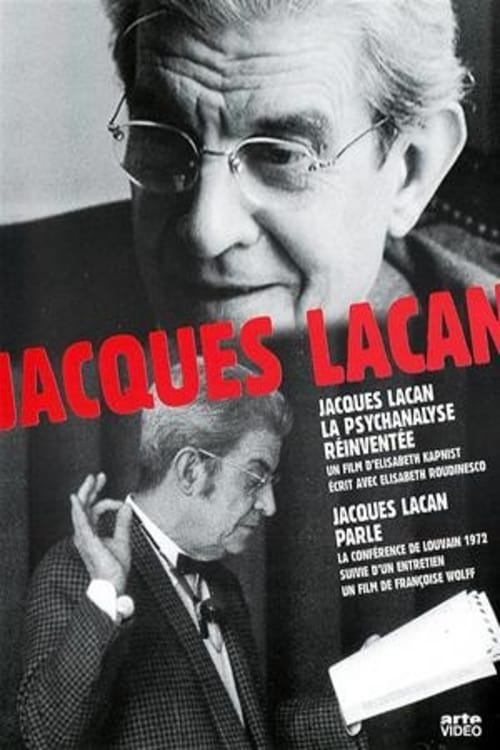
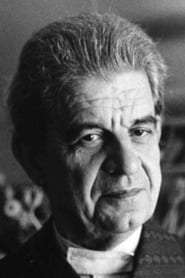
Jacques Lacan
Jacques Lacan
Jacques Lacan
Jacques-Alain Miller
Jacques-Alain Miller
Jacques-Alain Miller
Similar Movies
This compelling film represents a rare record of an original genius. In Jung on Film, the pioneering psychologist tells us about his collaboration with Sigmund Freud, about the insights he gained from listening to his patients' dreams, and about the fascinating turns his own life has taken. Dr. Richard I. Evans, a Presidential Medal of Freedom nominee, interviews Jung, giving us a unique understanding of Jung's many complex theories, while depicting Jung as a sensitive and highly personable human being.
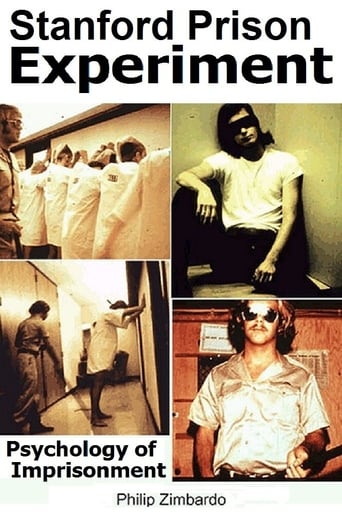
The Stanford prison experiment was a landmark psychological study of the human response to captivity, in particular, to the real world circumstances of prison life, and the effects of imposed social roles on behaviour. It was conducted in 1971 by a team of researchers led by Philip Zimbardo of Stanford University.

For a series of programs made for TV Fnac, Philippe Grandrieux meets different people who tell us, each in their own point of view, a story of images. After Paul Virilio (The World is an image) and before Jean-Louis Schaeffet, Le Trou noir (AKA The Black Hole) gives us the enlightened reflections of psychanalyst Juan David Nasio about real and reality.
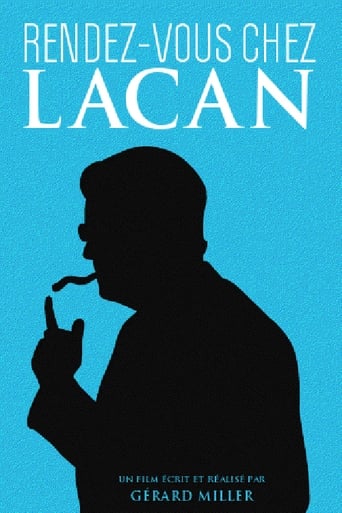
Do you know Lacan, which many consider as the greatest psychoanalyst since Freud? Beyond the myth, the legends and sometimes, the curses, this film by Gérard Miller allows us to discover his work and his personality, through the testimony of his patients, his students, and also his relatives. Born with the XXth century into an upper-middle-class Catholic family, a psychiatrist by training, with an encyclopaedic knowledge of culture, a friend of Picasso, Levi-Strauss and Sartre, Lacan was a great theoretician, an outstanding practitioner, and he remains the most modern, the most challenging and even the most sulphurous of psychoanalysts. The director Gerard Miller met Lacan thanks to his brother, Jacques-Alain, the most faithful of his students, who married his daughter Judith. Their close and intense relationship makes this film exceptional.
Psychoanalysis in El Barrio shows the experience of Latino psychoanalysts in the United States bringing psychoanalysis to Latino communities. It features interviews with ten Latino analysts (whose heritage is from a variety of Latino cultures) as well as students. It uniquely shows some of those communities in Philadelphia, New York City, and Texas and Interviews Latinos in the street on their thoughts about therapy. And it discusses issues of culture, bias, language and transference that occur for Latino analysts and their patients. The video challenges psychoanalysts to understand the culture and economic circumstances of Latinos in the United States and to bring psychoanalytically informed therapy to them. It Is a consequence of conferences held by the Institute for Psychoanalytic Training and Research (IPTAR) and the Clinical Psychology Department of The New School.
A documentary about Jacques Lacan and his influence on the main tendencies of modern psychoanalysis. It begins with a series of interviews with psychoanalysts who knew Lacan, and then presents an overview of Lacanian theory and practice that explores what actually happens in psychoanalysis.
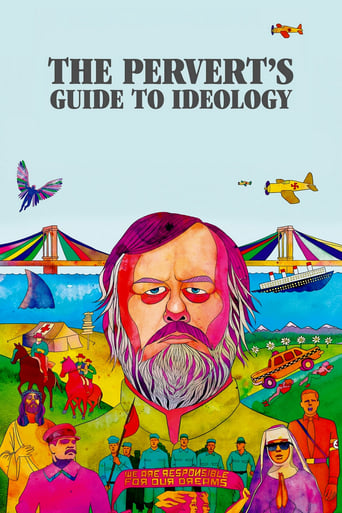
A journey into the labyrinthine heart of ideology, which shapes and justifies both collective and personal beliefs and practices: with an infectious zeal and voracious appetite for popular culture, Slovenian philosopher and psychoanalyst Slavoj Žižek analyzes several of the most important films in the history of cinema to explain how cinematic narrative helps to reinforce prevailing ethics and political ideas.