

Fascism in Colour
Documentary · History
Overview
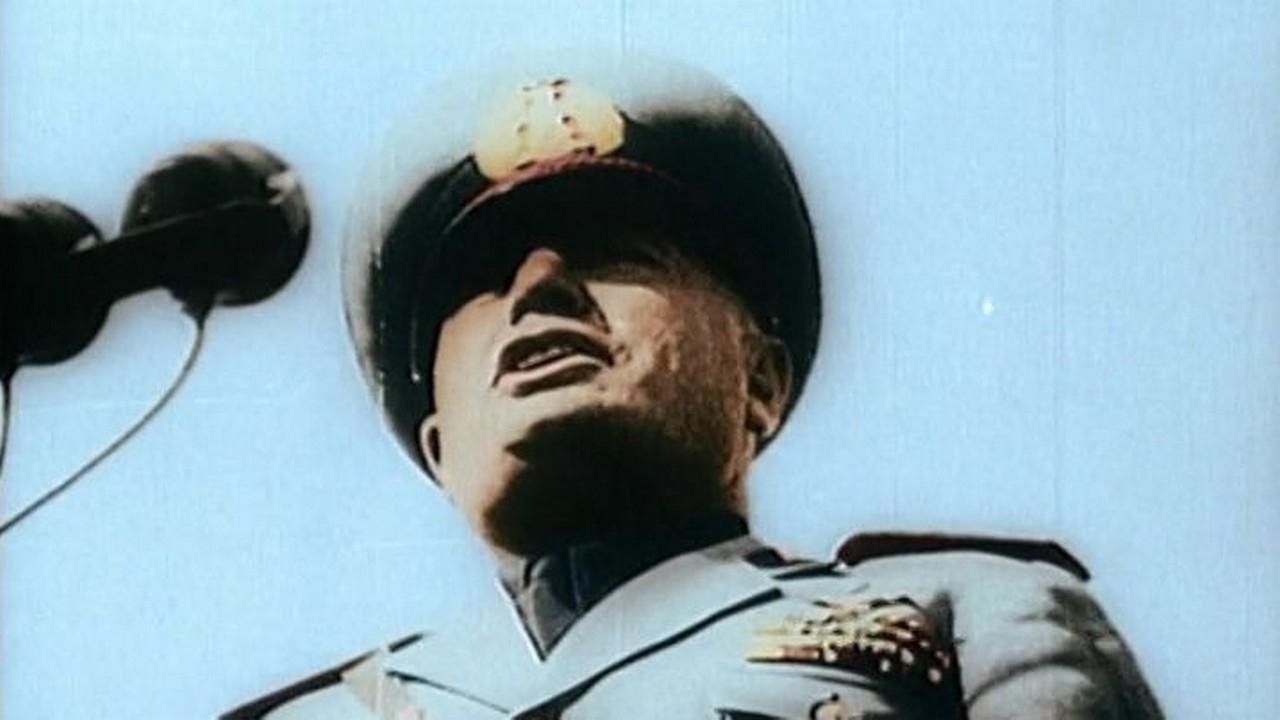
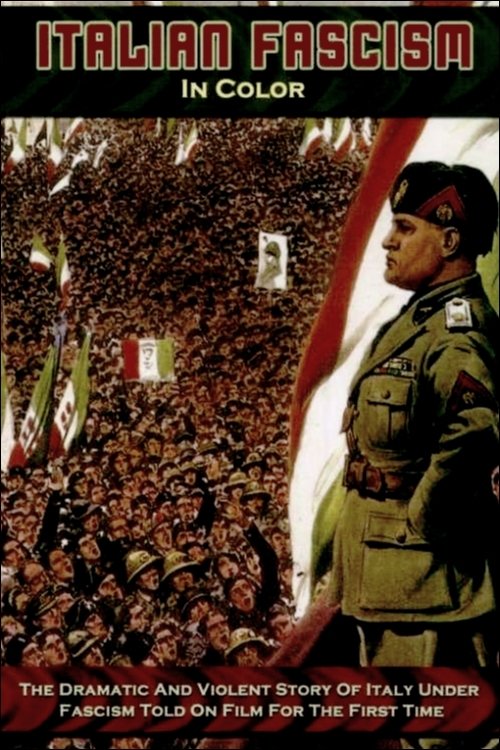
After the World War I, Mussolini's perspective on life is severely altered; once a willful socialist reformer, now obsessed with the idea of power, he founds the National Fascist Party in 1921 and assumes political power in 1922, becoming the Duce, dictator of Italy. His success encourages Hitler to take power in Germany in 1933, opening the dark road to World War II. (Originally released as a two-part miniseries. Includes colorized archival footage.)
Top Cast
Bill Paterson
Narrator (voice)
Stefano Fregni
Ettore Ovazza
Adrian Lyttleton
Self
Alexander Stille
Self
Emilio Gentile
Self
John Pollard
Self
Robert Mallett
Self
Roy Domenico
Self
Stanley G. Payne
Self
Adolf Hitler
Self (archive footage)
Benito Mussolini
Self (archive footage)
Edda Ciano Mussolini
Self (archive footage)




Bill Paterson
Bill Paterson
Narrator (voice)
Bill Paterson
Narrator (voice)
Stefano Fregni
Stefano Fregni
Ettore Ovazza
Stefano Fregni
Ettore Ovazza
Adrian Lyttleton
Adrian Lyttleton
Self
Adrian Lyttleton
Self
Alexander Stille
Alexander Stille
Self
Alexander Stille
Self
Emilio Gentile
Emilio Gentile
Self
Emilio Gentile
Self
John Pollard
John Pollard
Self
John Pollard
Self
Robert Mallett
Robert Mallett
Self
Robert Mallett
Self
Roy Domenico
Roy Domenico
Self
Roy Domenico
Self
Stanley G. Payne
Stanley G. Payne
Self
Stanley G. Payne
Self
Adolf Hitler
Adolf Hitler
Self (archive footage)
Adolf Hitler
Self (archive footage)
Similar Movies
1981: for the first time, contemporary witnesses of the Holocaust speak on German television in the two-part documentary "Witnesses - Testimonies to the Murder of a People" - at prime time on the first channel. Only 36 years after the Second World War, Bremen filmmaker Karl Fruchtmann has created a counter-design to the US drama series "Holocaust". While there are hardly any people left today who can personally recount their experiences of the Holocaust, there were still many contemporary witnesses in the early 1980s for whom the murder of the European Jews was still very present. Karl Fruchtmann interviewed 60 survivors of the Nazi concentration camps in Israel and Poland, the tapes are in the archives of Radio Bremen, almost 80 hours of interviews, a historical legacy! Only a small part of them has been published so far.
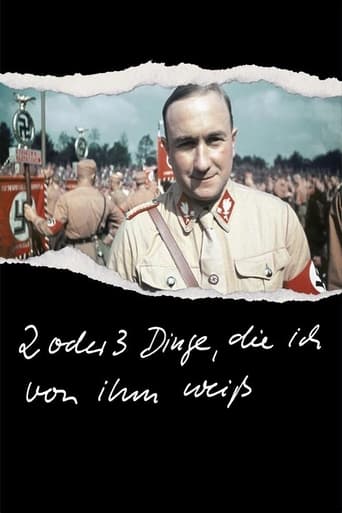
What would your family reminiscences about dad sound like if he had been an early supporter of Hitler’s, a leader of the notorious SA and the Third Reich’s minister in charge of Slovakia, including its Final Solution? Executed as a war criminal in 1947, Hanns Ludin left behind a grieving widow and six young children, the youngest of whom became a filmmaker. It's a fascinating, maddening, sometimes even humorous look at what the director calls "a typical German story." (Film Forum)
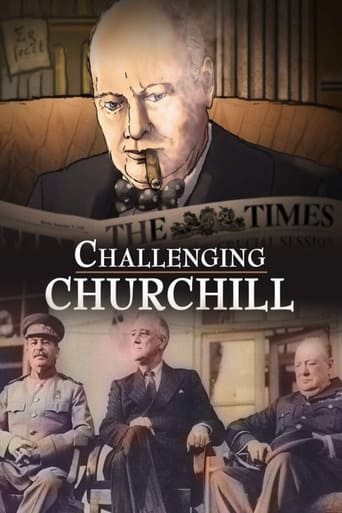
Churchill, a name typically associated with braveness and altruism. Recently found evidence from Soviet and British sources however brings up questions about Churchill's doings in the conferences of Tehran, Yalta and Potsdam. Why did he agree to give Stalin large parts of Poland? The story of two world leaders in times of war - it is also the story of Poland.

This timely, bold set of one-on-one interviews presents two of the most venerable figures from the American Left—renowned historian Howard Zinn and linguist and philosopher Noam Chomsky—each reflecting upon his own life and political beliefs. At the age of 88, Howard Zinn reflects upon the Civil Rights and anti–Vietnam War movements, political empires, history, art, activism, and his political stance. Setting forth his personal views, Noam Chomsky explains the evolution of his libertarian socialist ideals, his vision for a future postcapitalist society, the Enlightenment, the state and empire, and the future of the planet.
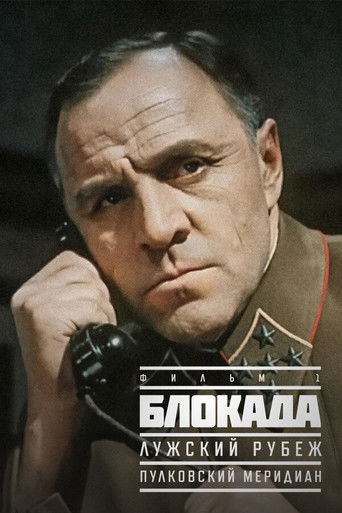
Autumn 1941. German tank troops are making another attempt to break through to the Uritsk and Pulkovo Heights. During heavy fighting, Soviet troops managed to stop the offensive of fascist tanks one and a half kilometers south of the Pulkovo Observatory. The 900 days of the blockade and the incredible courage of the Soviet people were approaching ...