

Un monsieur qui a mangé du taureau
Overview
In 1907, the Gaumont Films company in France made a slapstick comedy (silent, of course) with a title that would translate from the French as 'A gentleman who ate some bull'. Eugene Deslow got hold of that film and added an introduction plus a soundtrack, the latter consisting of commentary narrated by the single-named actor Bétove.

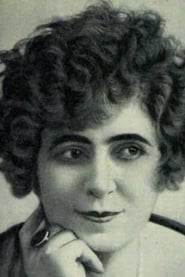
Renée Carl
Renée Carl
Renée Carl
Ricardo Torres Bombita
Ricardo Torres Bombita
Ricardo Torres Bombita
Similar Movies
Sylvia Kristel – Paris is a portrait of Sylvia Kristel , best known for her role in the 1970’s erotic cult classic Emmanuelle, as well as a film about the impossibility of memory in relation to biography. Between November 2000 and June 2002 Manon de Boer recorded the stories and memories of Kristel. At each recording session she asked her to speak about a city where Kristel has lived: Paris, Los Angeles, Brussels or Amsterdam; over the two years she spoke on several occasions about the same city. At first glance the collection of stories appears to make up a sort of biography, but over time it shows the impossibility of biography: the impossibility of ‘plotting’ somebody’s life as a coherent narrative.
Writes Kobayashi, "In 1972 I started a series of participatory performances where the first person performs an ambiguous action in front of a recording camera; the next person watches the recorded footage and imitates the action in front of a recording camera; the third person repeats the same procedure using the second person's video recording, and so on. Within the repetition of recording and action, the original gesture is transformed by the participants' misunderstanding, interpretation, and memory."
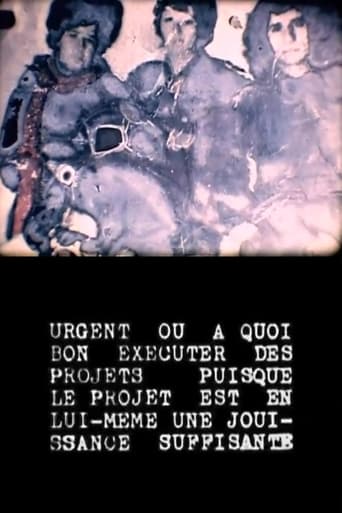
Gérard Courant applies the Lettrist editing techniques of Isidore Isou to footage of late 70's pop culture. Courant posits that his cinema offers an aggressive détournement to the French mainstream, reifying a Duchampian view of film: "I believe in impossible movies and works without meaning... I believe in the anti-movie. I believe in the non-movie. I believe in Urgent... My first full length movie that is so anti-everything that I sometimes wonder if it really does exist!"
Black Hole Radio is an installation that consists of taped confessions of callers of the New York City Phone Confession Line and video images. The Phone Confession Line is based on anonymous callers ringing to confess on things they had done or thought like adultery, theft, murder or regrets. Thereafter anybody could call and listen to the confessions. Although making a confession was free, listening to a confession costs money. After Cohen got his hands on the confessions, he used them as an audio heartbeat to accompany video-images of every day life in New York City he had taken over the years. This installation is a portrait of the city with its dark secrets, hushed voices and nocturnal images. In this way Cohen tries to bring across an experience to the viewer that relies on absence, waiting and the effort to hear something in the dark.

Trance dances and out of body projection. In front of the camera, Parvaneh Navaï becomes a mediator who enters in contact with and immerses into the energies of Nature, while her own energy radiates and echos in the forest ("selva"). The camera amplifies and expands her presence, transforming the forest into an imaginary space. The camera becomes a painter's brush.
The Death of 'Superman Lives': What Happened? feature film documents the process of development of the ill fated "Superman Lives" movie, that was to be directed by Tim Burton and star Nicolas Cage as the man of steel himself, Superman. The project went through years of development before the plug was pulled, and this documentary interviews the major filmmakers: Kevin Smith, Tim Burton, Jon Peters, Dan Gilroy, Colleen Atwood, Lorenzo di Bonaventura and many many more.
The story means to develop through an uncovering of layers - strata. As writer Krumbachova stated: "With nature as a prison, an impassable barrier ... where every action is physically and psychically limited by the environment ... people are reduced to fragments of basic instinct and intelligence." Promoted as a psychological thriller, Strata provides little tension nor any real climax. The characters are ideas - not believably real.