

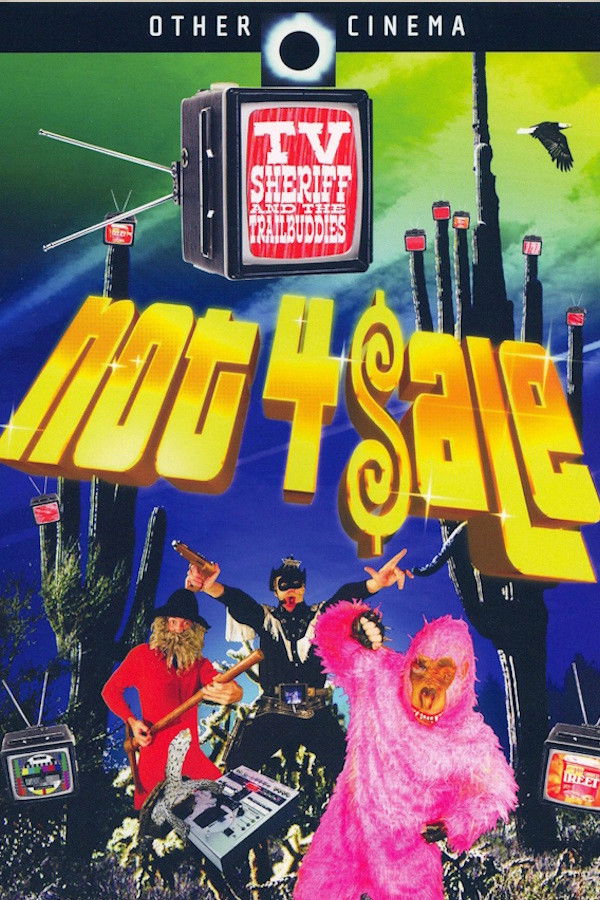
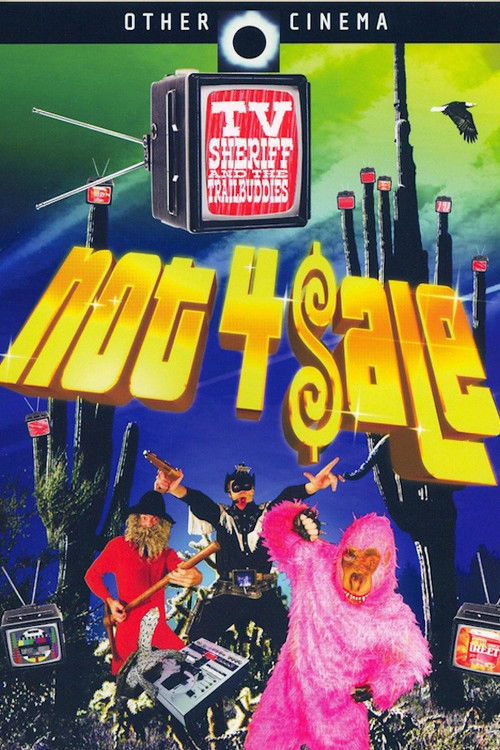
TV Sheriff and The Trailbuddies: Not 4 $ale
Comedy · Music
Overview
Emerging from the LA underground in year 2000, a self-proclaimed "video band" called TV Sheriff & The Trailbuddies hit the scene with their twisted take on performance art and VJ remixing. They have since taken their unique act to venues worldwide, providing animated commentary on the state of mind control in the USA. The Trailbuddies focus on the banality of television, creating rhythmic collages from appropriated clips of the most absurd broadcast moments. And besides their virtuoso sampling, the madcap ensemble creates original—and hilarious!—karaoke-style melodies on mass-media manipulation. Behind TV Sheriff & The Trailbuddies is the ingenious, Emmy-award-nominated Davy Force, an exceptional combination of brilliant director and hands-on computer artist. His recent projects include music videos for Devo, animated commercials for Bandai and the show open for Tim & Eric's Awesome Show Great Job.
Top Cast


Dave Foss
Dave Foss
TV Sheriff
Dave Foss
TV Sheriff
Similar Movies

"Using the same, three times repeating dialogue – dramatic conversation between man and woman – Jerzy Skolimowski from Poland, Slovak director Peter Solan and Czech director Zbynìk Brynych shot three different stories. The result was an extraordinary experiment in the world cinema, which we can call an insight in the relationships of men and women of different age groups, an analysis of love and marriage of those who are at the beginning, in the middle or going towards the end of their life."
This documentary is a journey into our own fascination, a collection of portraits of folk musicians living in New England, and a study of the ground on which their music is founded. We listen to them as they tell their stories and play their music. First and foremost, Behind a Hill is a tribute to these musicians and a rare peep into the house parties and basement jams of New England, in the northwestern corner of the USA, with the vain hope attached that maybe you, the viewer, will grow as fond of the music as we have. When we first encountered these musicians, we were overwhelmed by the quality of their musical output. We were entranced by the melodies, harmonies, rhythms, and tempos and every other element that constitutes a song (or, as is often the case, a piece of abstract drone music, heavy feedback, or someone banging a steel pipe against a bag of dirt while chanting in a yet undiscovered language, or...).
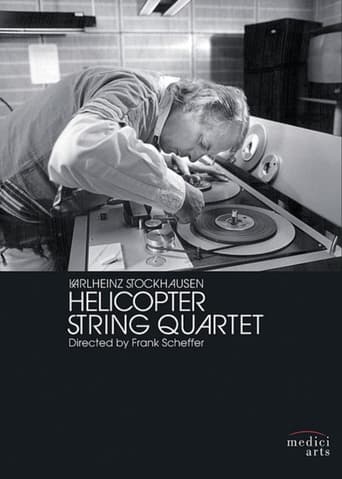
One morning, the late Karlheinz Stockhausen awoke from a dream that told him to take to the sky. Stockhausen envisioned four helicopters swirling in the clouds, with each of a quartet’s members tucked inside his own chopper, communicating through headsets, stringing away in sync to the rotor-blade motors. He immediately set forth to make that dream a reality. In 1995, Dutch film director Scheffer followed Stockhausen in the days leading up to the premiere performance of his Helicopter String Quartet in Amsterdam. The resulting film offers a rare glimpse of Stockhausen as he patiently dictates every agonizingly detailed measure to the Arditti Quartet.
In an effort to cure her smoking habit a middle-aged woman discovers that she can communicate with her long lost son while watching a Halloween safety program on TV. After suffering a nervous breakdown, her husband, a used car salesman, is revitalized when he travels back in time to drive the first car he ever sold. Seventeen years later a powerful canned food manufacturer crashes the same car into a toaster truck while endorsing a brand of yams on live TV. At the funeral his clergyman experiences a crisis of faith when he and a lifelike Mexican continue their search for a married couple who have befriended an insect who enjoys drinking lime soda. They later meet a young man whose bizarre murder scheme involves four innocent members of an experimental rock band who have all given up smoking.

From radical turntablism (Otomo Yoshihide) to laptop music innovation (Numb), via classical instrument hijacking (Sakamoto Hiromichi), Tokyo's avant-garde music scene is internationally known for its boldness. While introducing some of the greatest musicians of this scene, "We Don't Care About Music Anyway..." offers a kaleidoscopic view of Tokyo, confronting music and noise, sound and image, reality and representation, documentary and fiction.
Produced in 1993, The Grand Delusion is one of our most completely realized works. In addition to taking the usual form of a Tape-beatles release (a CD), The Grand Delusion was also delivered in the form of an ‘expanded cinema’ presentation involving three-screen motion picture projections and sound. The screen space for this production is intended to be three times the width of the normal 3 to 4 "Edison" aspect ratio of 16mm. The presentation only uses the full width intermittently, so transitions from one form to the next has been translated here by means of a video effect. As a live performance presentation, The Grand Delusion has been screened in dozens of venues across North America and Europe.

Trance dances and out of body projection. In front of the camera, Parvaneh Navaï becomes a mediator who enters in contact with and immerses into the energies of Nature, while her own energy radiates and echos in the forest ("selva"). The camera amplifies and expands her presence, transforming the forest into an imaginary space. The camera becomes a painter's brush.