

The Legend of Cool Disco Dan
Documentary
Overview
"The Legend of Cool 'Disco' Dan" is the story of black Washington DC told from the perspective of Cool "Disco" Dan starting with his birth during the civil rights era and follows his life parallel with the rise of Go-Go music through the 1980s (which is the unheard but yet dominant urban music of DC) and also local DC politics with Marion Barry's rise and fall. Despite ending up homeless Cool "Disco" Dan used graffiti to escape the social problems D.C. had in the 1980s when things turned violent and became known as the Murder Capital of the United States. Cool "Disco" Dan ends up as a cult character of DC and his name becomes a symbol of survival during DC's most trying years.




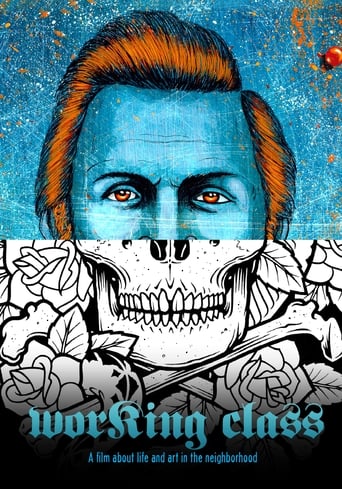

Cool 'Disco' Dan
Cool 'Disco' Dan
Himself
Cool 'Disco' Dan
Himself
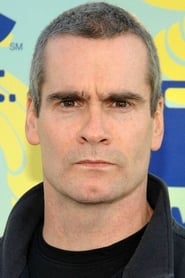
Henry Rollins
Henry Rollins
Narrator
Henry Rollins
Narrator
Marion Barry
Marion Barry
Himself
Marion Barry
Himself

Chuck Brown
Chuck Brown
Himself
Chuck Brown
Himself
Gregory 'Sugar Bear' Elliott
Gregory 'Sugar Bear' Elliott
Himself
Gregory 'Sugar Bear' Elliott
Himself
Big Tony Fisher
Big Tony Fisher
Himself
Big Tony Fisher
Himself
Paul Hendrickson
Paul Hendrickson
Himself
Paul Hendrickson
Himself
Andre 'Whiteboy' Johnson
Andre 'Whiteboy' Johnson
Himself
Andre 'Whiteboy' Johnson
Himself

Seth Hurwitz
Seth Hurwitz
Himself
Seth Hurwitz
Himself
DC Scorpio
DC Scorpio
Himself
DC Scorpio
Himself
Similar Movies
Cocaine has always gotten a bad rap, and for a reason. It is a drug used by the rich and the poor legally and illegally, Mexican cartels fought over it with Colombia once associated with the brutal cocaine wars, and a source of tension between the American and Mexican borders on the people who are illicitly bringing in cocaine from one side of the border to another and will do anything to do it. So it can be surprising at times to the viewer throughout the course of the documentary special, that it was never always like this.
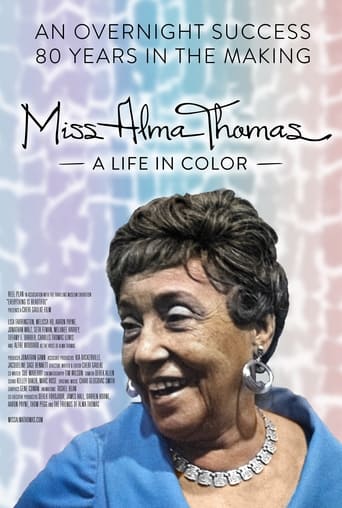
Alma W. Thomas lived a life of firsts: the first Fine Arts graduate of Howard University (1924), the first Black woman to mount a retrospective at the Whitney Museum of American Art (1972), and the first Black woman to have her paintings exhibited in the White House (2009). Yet she did not receive national attention until she was 80.
Street art, creativity and revolution collide in this beautifully shot film about art’s ability to create change. The story opens on the politically charged Thailand/Burma border at the first school teaching street art as a form of non-violent struggle. The film follows two young girls (Romi & Yi-Yi) who have escaped 50 years of civil war in Burma to pursue an arts education in Thailand. Under the threat of imprisonment and torture, the girls use spray paint and stencils to create images in public spaces to let people know the truth behind Burma's transition toward "artificial democracy." Eighty-two hundred miles away, artist Shepard Fairey is painting a 30’ mural of a Burmese monk for the same reasons and in support of the students' struggle in Burma. As these stories are inter-cut, the film connects these seemingly unrelated characters around the concept of using art as a weapon for change.

"I especially hope to inspire young women, because I often feel like so much emphasis is put on how beautiful you are, and how thin you are, and not a lot of emphasis is put on what you can do and how smart you are. I'd like to change the emphasis of what's important when looking at a woman." Filmed in San Francisco in 2000, Margaret Kilgallen (1967-2001) discusses the female figures she incorporated into many of her paintings and graffiti tags. Loosely based on women she discovered while listening to folk records, watching buck dance videos, or reading about the history of swimming, Kilgallen painted her heroines to inspire others and to change how society looks at women. Three of Kilgallen's heroines—Matokie Slaughter, Algia Mae Hinton, and Fanny Durack—are shown and heard through archival recordings. Kilgallen is shown tagging train cars with her husband, artist Barry McGee, in a Bay Area rail yard and painting in her studio at UC Berkeley (source: Art21).
Documentary written and presented by scientist Richard Dawkins, in which he seeks to expose "those areas of belief that exist without scientific proof, yet manage to hold the nation under their spell", including mediumship, psychokinesis, acupuncture, and other forms of alternative medicine.
“I am a hypochondriac”, admits Rosa Von Praunheim, the icon of the gay movement, right at the beginning at the film. The director, who turned seventy in 2012, is afraid of cancer, and he actually suffers from glaucoma, with osteoarthritis in his big toe. Von Praunheim is interested in alternative medicine and goes on a foray into the scene.
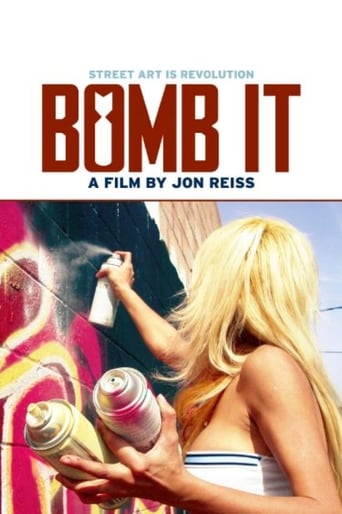
Through interviews and guerilla footage of graffiti writers in action on five continents, the documentary tells the story of graffiti from its origins in prehistoric cave paintings thru its notorious explosion in New York City during the 70’s and 80’s, then follows the flames as they paint the globe.
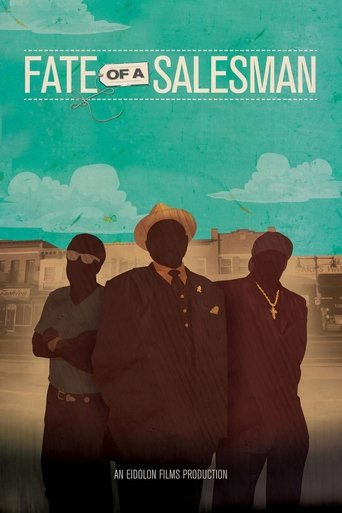
Fate of a Salesman is an intimate portrait of a way of life on the verge of disappearing. In its 60th year of business, Men's Fashion Center in Washington, DC has come to represent identity, legacy and redemption for salesmen Willie and Steve and owner Jerry. But business has crawled to a halt in the face of a tough economy and changing neighborhood, pushing the store to the verge of closure. Set amidst racks of pin-striped suits and feathered hats- the clothing of a bygone era- the men struggle to redefine themselves as the place with which they have long identified begins to vanish.