

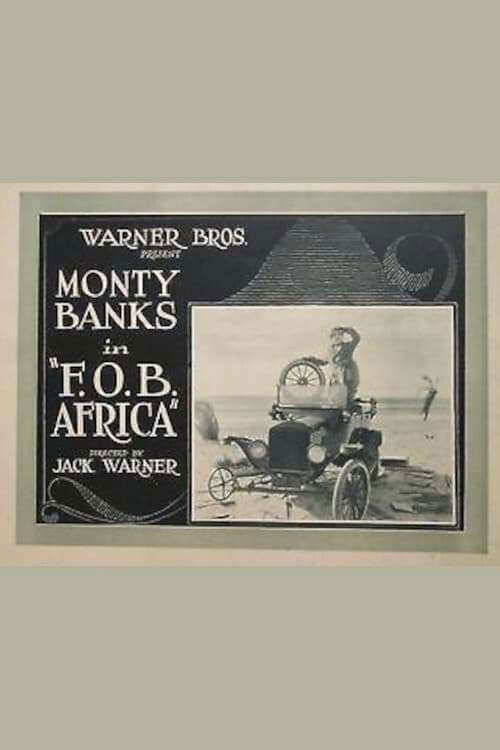
Africa F.O.B.
Comedy
Overview
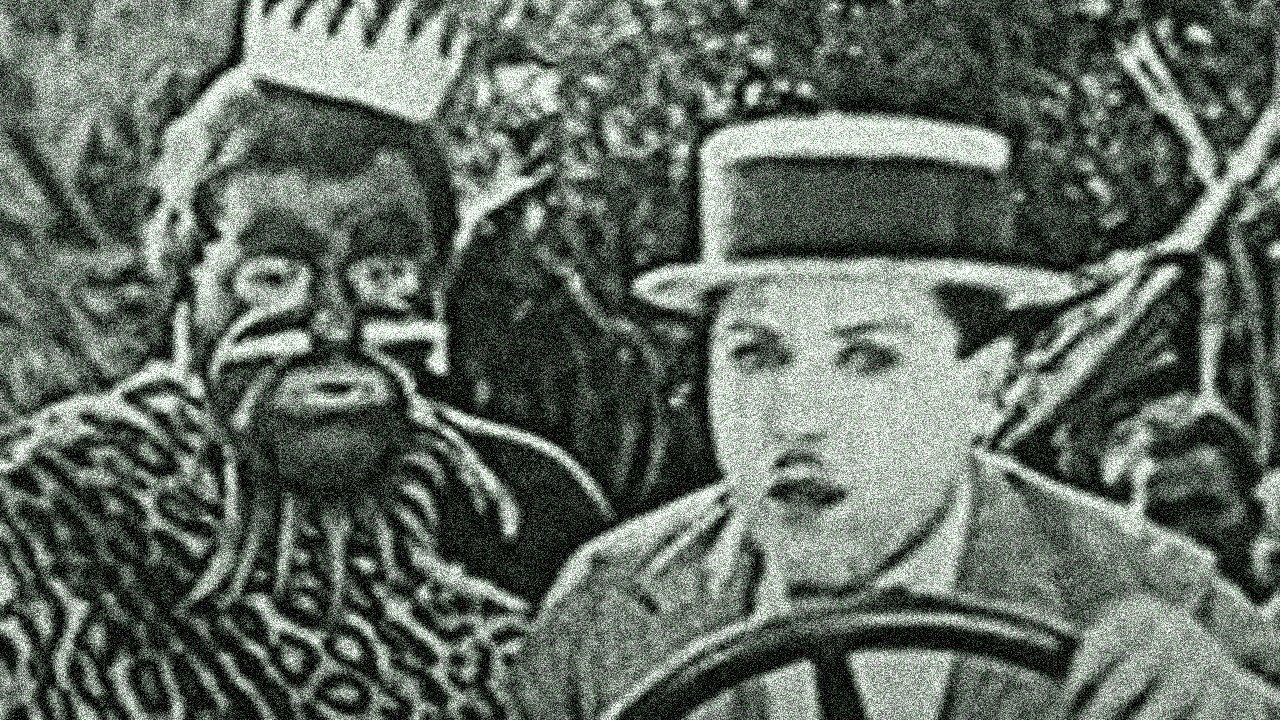
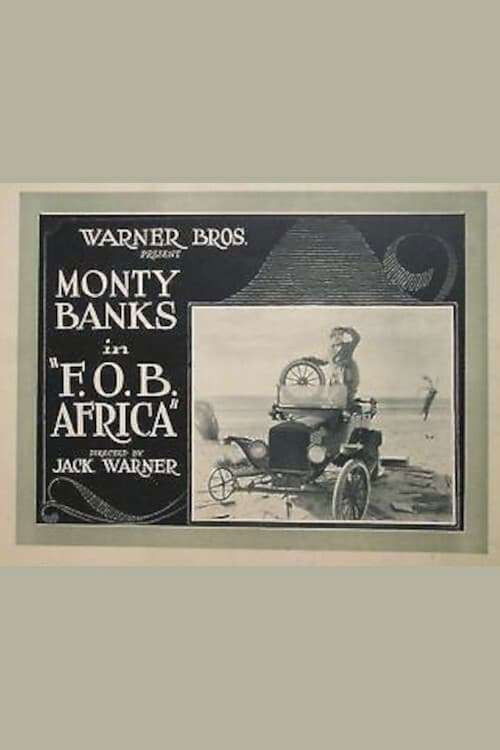
Monty Banks becomes a car salesman and is shifted to Africa to sell one to King Obogeegee.


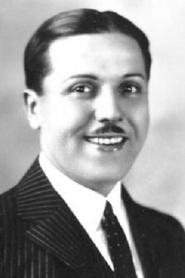
Monty Banks
Monty Banks
Monty Banks, the Stranger
Monty Banks
Monty Banks, the Stranger
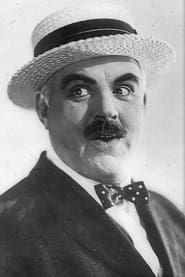
William Blaisdell
William Blaisdell
King Obogeegee of Puskudnick
William Blaisdell
King Obogeegee of Puskudnick
Thelma Worth
Thelma Worth
The Missionary's Daughter
Thelma Worth
The Missionary's Daughter
Similar Movies
Donald Duck goes to a museum of modern inventions. After getting in without paying, he meets a robot butler who takes Donald's hat every time he sees him. Donald is very annoyed by this and magically fixes himself a new hat every time this happens and strolls on. Ignoring the sign not to touch it, Donald starts playing with a wrapping machine and ends up being wrapped himself. He also encounters and tries out a robot nursemaid and a fully automatic barber chair. They both don't do him much good.
Mammy features Al Jolson as the star of a travelling minstrel show, appearing in cities and towns across the U.S. Jolson falls in love with an actress in the troupe (Lois Moran), but she loves another (Lowell Sherman). Sherman is shot onstage as part of a comedy bit, and it is assumed that Jolson is guilty of putting the bullet in the gun.
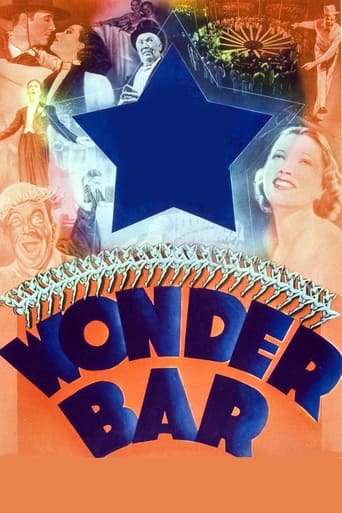
Harry and Inez are a dance team at the Wonder Bar. Inez loves Harry, but he is in love with Liane, the wife of a wealthy business man. Al Wonder and the conductor/singer Tommy are in love with Inez. When Inez finds out that Harry wants to leave Paris and is going to the USA with Liane, she kills him.
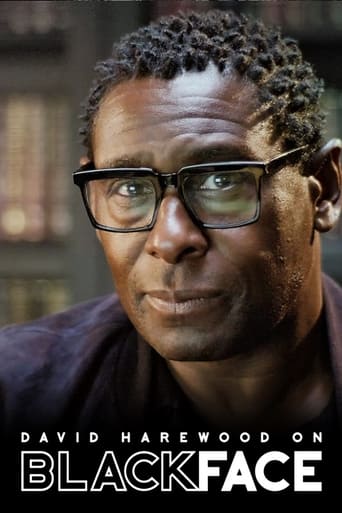
At its peak, The Black and White Minstrel Show was watched by a Saturday night audience of more than 20 million people. David Harewood goes on a mission to understand the roots of this strange, intensely problematic cultural form: where did the show come from, and what made it popular for so long? With the help of historians, actors and musicians, David uncovers how, at its core, blackface minstrelsy was simply an attempt to make racism into an art form - and can be traced back to a name and a date.
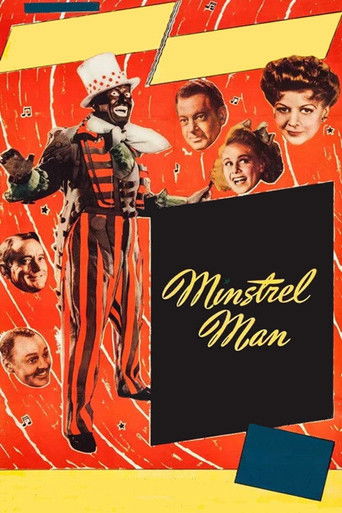
Unusually elaborate for a PRC film, Minstrel Man is a lively musical drama built around the talents of veteran vaudevillian Benny Fields. The star is cast as Dixie Boy Johnson, who rises from the ranks of minstrel shows to become a top Broadway attraction. On the opening night of his greatest stage triumph, Dixie Boy's wife dies in childbirth. Profoundly shaken, he walks out of the show, leaving the baby to be raised by his showbiz pals Mae and Lasses White (Gladys George, Roscoe Karns). The kid grows up to be an attractive young woman named Caroline (Judy Clark), who follows in her dad's footsteps by billing herself as-that's right-Dixie Girl Johnson. This leads to a tearful reunion between Caroline and the father she'd long assumed to be dead. If Minstrel Man seems at times to be a dress rehearsal for Columbia's The Jolson Story (1946), it shouldn't surprising: the PRC film was directed by Joseph H. Lewis, who went on to helm Jolson Story's musical highlights.
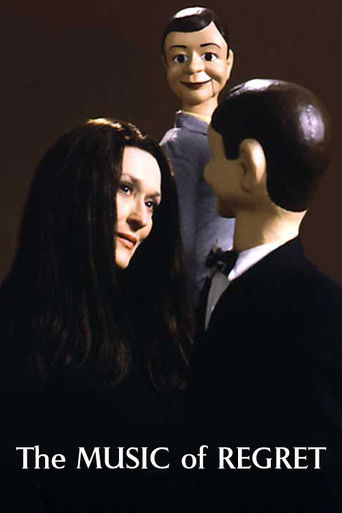
Simmons, best-known for her photographs of miniature rooms populated by dolls and of oversized objects—such as a house, birthday cake, and pistol—balanced on female legs, both human and fake, brings these characters to life in a three-act mini-musical. The film is inspired by three distinct periods of Simmons’s photographic work: vintage hand puppets, ventriloquist dummies and walking objects enact tales of ambition, disappointment, love, loss, and regret. Working with composer Michael Rohaytn ("Personal Velocity") and cameraman Ed Lachman ("The Virgin Suicides" and "Far From Heaven"), Simmons’s puppets come to life in miniature domestic scenes that echo real life.
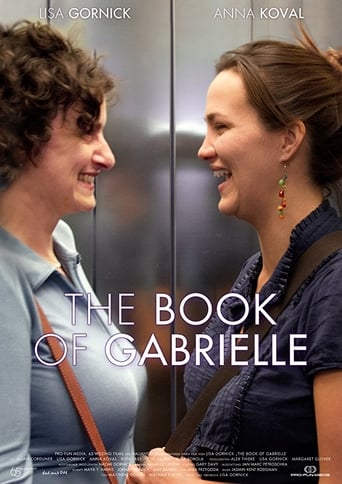
Gabrielle is writing an illustrated guide book on sex called 'How To Do It.' At a book signing she meets Saul, an established male writer who is straight. She both loves and hates his work which has seeped into her secular Jewish life from childhood. The more Gabrielle tells him about her book the more he wants to know about her life; the relationship with her younger girlfriend Olivia and her determination to "stop using my penis in sex". As her book takes form, is Saul jealous or desirous? Their friendship is tested as is Gabrielle's relationship with Olivia. The film muses on how we write, how we draw. And the nature of "story" and what it makes us do.