

Is It True What They Say About Ann?
Documentary
Overview
The most controversial political commentator of our day, and the author of three New York Times bestsellers, Coulter has a mad-cap mouth and an allergy to political correctness. But who is the woman behind the stinging barb and the quick wit? And what does she really believe when you strip off the rhetoric? This film takes you behind the bombast through original interviews with the woman Al Franken calls the reigning diva of the hysterical right—and who George magazine selected as one of the twenty most fascinating women in politics.



Molly Elston
Molly Elston
Narrator (voice)
Molly Elston
Narrator (voice)

Ann Coulter
Ann Coulter
Self
Ann Coulter
Self
Similar Movies
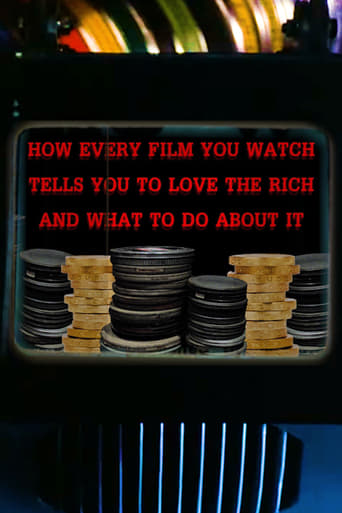
"How Every Film You Watch Tells You To Love The Rich and What To Do About It" explores the representations of wealth in cinema. It looks into how most beloved characters are subtly more well-off than they should be, how criticisms of the system are crushed, how the rich have become the average in the world of the cinema. And it shows how these stories distort the view of the real world, and are used against you by politicians.
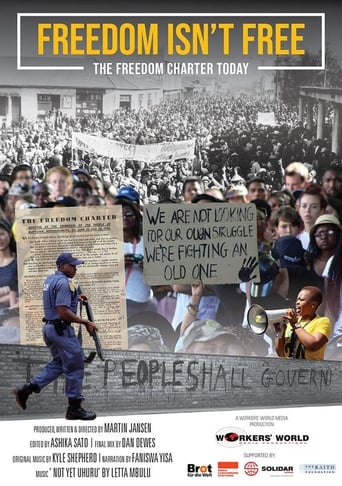
Since its adoption in June 1955 by the Congress movement, the Freedom Charter has been the key political document that acted as a beacon and source of inspiration in the liberation struggle against Apartheid. It was reputedly the main source that informed democratic South Africa’s liberal constitution and a constant reference point for the ruling African National Congress (ANC) and rival political parties that it spawned since 1994, all claiming the Freedom Charter’s legacy. Freedom Isn’t Free assesses the history and role of the charter, especially in relation to key political and socio-economic aspects of developments in South Africa up to the present period. It includes rare archival footage with interviews of a cross-section of outspoken influential South Africans.

Under the leadership of Xi Jinping, China is on its way to becoming the leading world power of the 21st century. What goals is the mysterious autocrat, who was deeply influenced by Maoism in his youth, pursuing? What drives him? In terms of domestic policy, Xi is striving for the "perfect dictatorship"; in terms of foreign policy, he wants to rewrite the international rules.
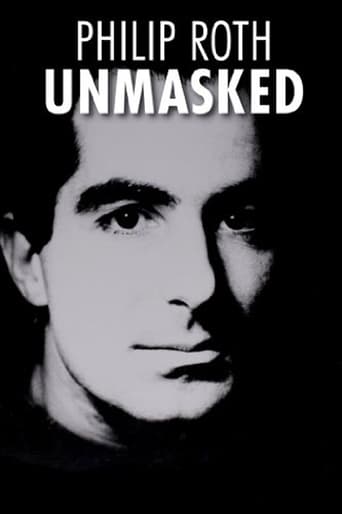
Philip Roth, arguably America’s greatest living novelist, turns 80 on March 19. In 1959, his collection of short stories, Goodbye, Columbus, put him on the map, and 10 years later his hilarious, ribald best-seller, Portnoy’s Complaint, gave rise to the first of many Roth-related controversies in which Judaism, sex, the role of women, and the parent-child relationship would take center stage. In candid interviews, the Pulitzer Prize-winner discusses his distinctly unliterary upbringing in Newark, NJ, his admiration for Saul Bellow and Bernard Malamud, and how Zuckerman may or may not be his alter-ego. Nathan Englander, Mia Farrow, Jonathan Franzen, and Martin Garbus are among those who talk about the man and his writing. Franzen in particular praises Roth for “how brave he must have been to have methodically offended everybody and to have exposed parts of himself no one had ever exposed before.”
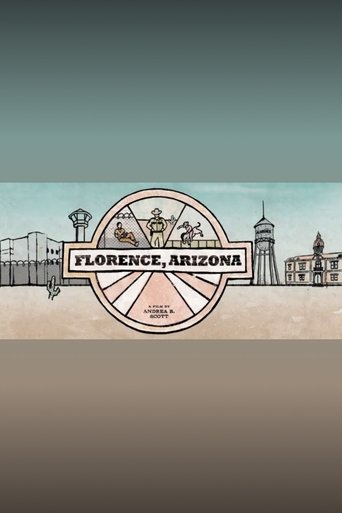
Welcome to Florence, Arizona: a cowboy town with a prison problem. Just 8,500 residents call the tiny community home—but over 17,000 inmates live there, housed in nine jails spread out over a sprawling industrial prison complex. The economic fate of the town’s inhabitants is inextricably linked with the prisons—and the townspeople are not necessarily happy about it. Director Andrea B. Scott follows four colorful characters whose lives are tied up with the prisons, including the town’s aspiring mayor, a retired correctional officer and speed shooter, a barber who longs for the town’s free-spirited cowboy days, and troubled teen Marcus, whose parents met through their prison careers. “Florence, Arizona” is a richly drawn, humorous look at a singular small town whose Wild West roots are still very much alive in its outlaw identity today. -TCFF database
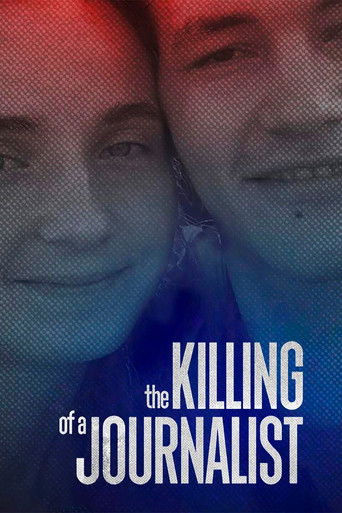
A young investigative journalist and his fiancée are brutally murdered in their home in Slovakia. Their deaths inspire the biggest protests in Slovakia since the fall of communism. The story takes an unexpected turn when a source leaks the secret murder case file to the murdered journalist’s colleagues. It includes the computers and encrypted communications of the assassination’s alleged mastermind, a businessman closely connected to the country’s ruling party. Trawling these encrypted messages, journalists discover that their country has been captured by corrupt oligarchs, judges, and law enforcement officials. A reckoning awaits.
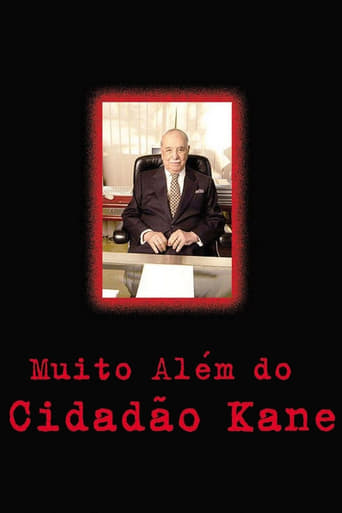
Beyond Citizen Kane (1993) is a British documentary film directed by Simon Hartog, produced by John Ellis, and broadcast on Channel 4. It details the dominant position of the Rede Globo media group in the Brazilian society, discussing the group's influence, power, and political connections. Globo's president and founder Roberto Marinho came in for particular criticism, being compared with fictional newspaper tycoon Charles Foster Kane, created by Orson Welles for the 1941 film Citizen Kane. According to the documentary, Marinho's media group engages in the same Kane wholesale manipulation of news to influence the public opinion.