

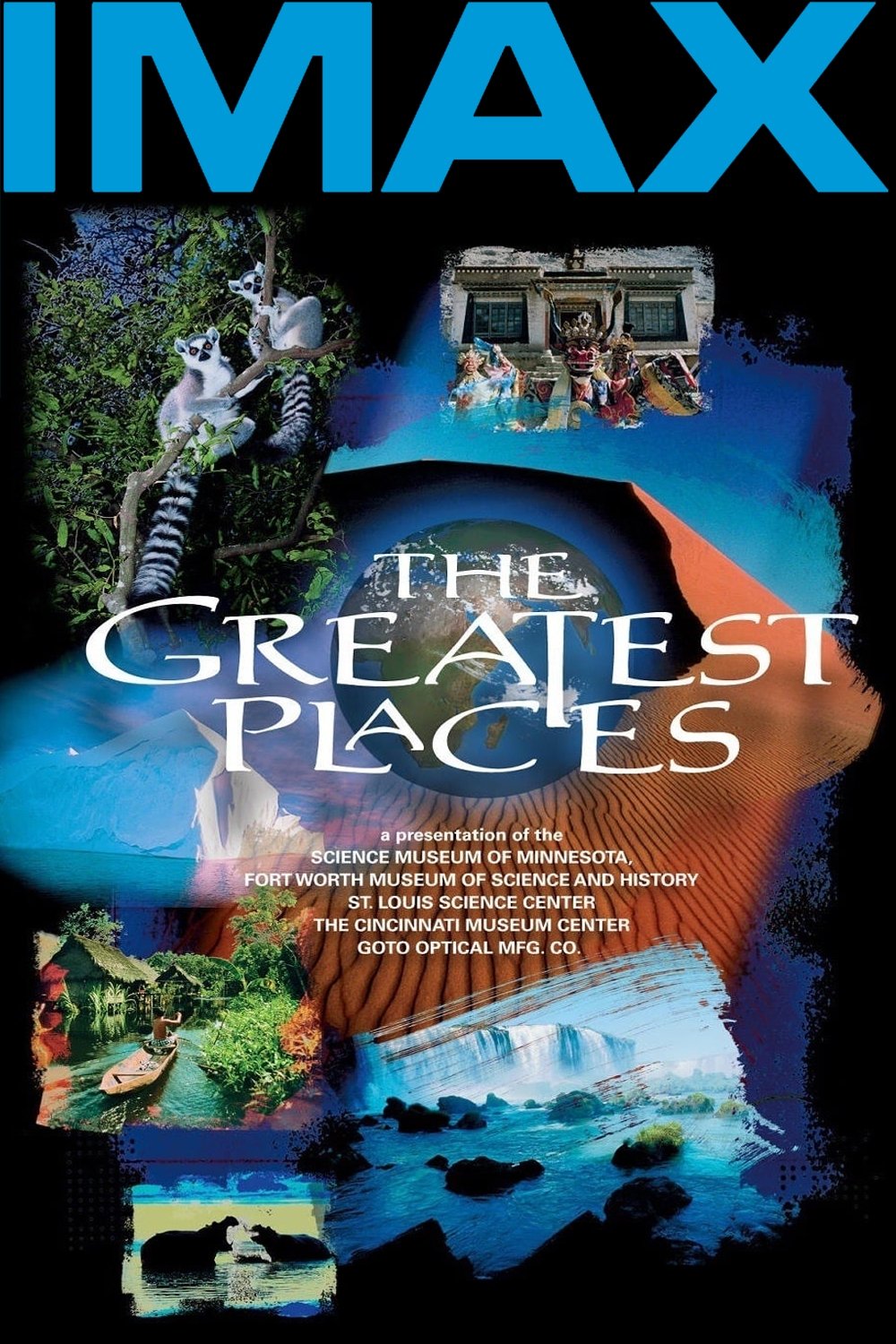
The Greatest Places
Documentary
Overview
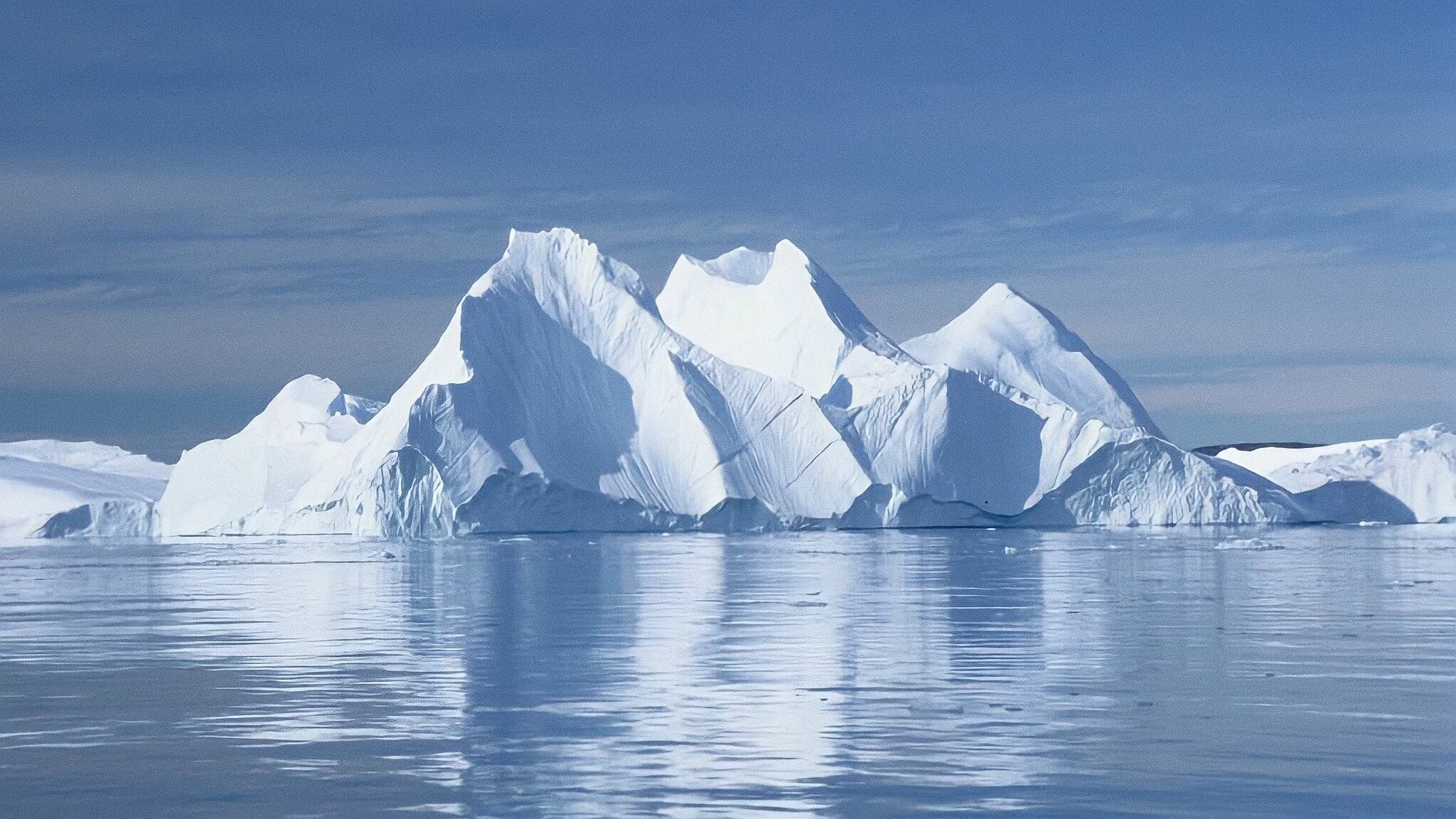
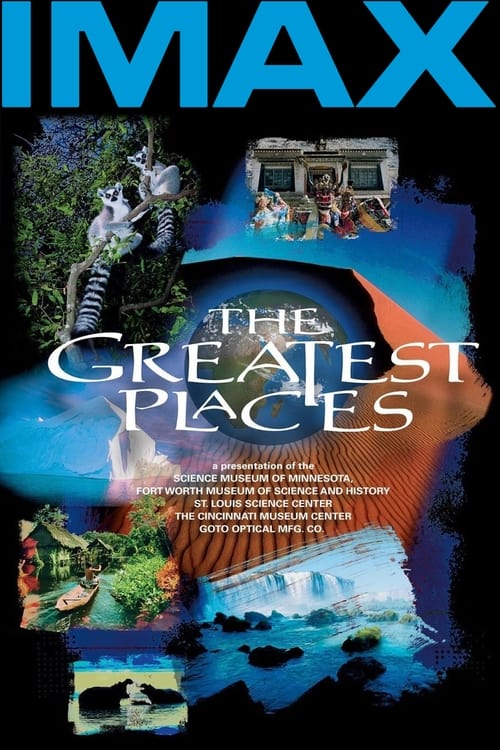
A journey to seven of the most geographically dynamic locations on earth. The film features spectacular land forms, diverse wildlife and the people and cultures indigenous to these places. Distinct geographic places include the great island of Madagascar, home to unique limestone pinnacles and the playful lemur; and the greatest desert—the Namib—home of the largest sand dunes in the world that tower majestically over its western border, the Atlantic Ocean. Other locations featured are the great icecap of Greenland, Iguazu Falls in Brazil, the Okavango Delta in Botswana, the Chang Tang Plateau in Tibet, and the Amazon River in South America.
Top Cast



Avery Brooks
Avery Brooks
Narrator (voice)
Avery Brooks
Narrator (voice)
Similar Movies

The film tells a story of Kosynka, a pregnant mare, and her owner, a battered old man. Kosynka leads the “horse walker,” designed to train young horse to walk steadily and at a pace. Set to a soundtrack of Bach and Russian folk music, this film is another example of a parable-like narrative, which became more popular in Soviet documentary in the early 1970s.
24 hours at the Berlin traffic accident standby service. The frequency of accidents on the streets of the capital of the German Democratic Republic (GDR) becomes apparent, including inappropriate and increased speed, pedestrian errors, failure to give way and driving under the influence of alcohol. Major Busse, the head of the Berlin Traffic Accident Investigation Unit, raises the question of whether the GDR has developed its own kind of driving. The camera provides interesting insights into the carelessness and aggressiveness of road users, which can lead to serious injuries and deaths
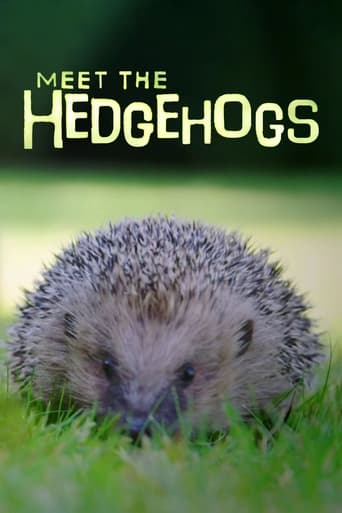
Steve Backshall visits a hedgehog rescue centre in Surrey founded by Brian May. He meets the dedicated staff and discovering the stories behind some of the animals being treated, helps to release a successfully treated hedgehog back into the wild, and offers advice on how to make a garden into a welcoming environment for the creatures.
This poetic core in youngsters is also touched in Stanukina's less known Your very personal poetry (Свои, совсем особые стихи, 1982), a wonderful film about a poetry class. It is here that one recalls Kogan's admiration of Lyalya's emotional documentary skills. And it is here that one recalls Kosakovsky's depiction of Lyalya as a person of extraordinarily prosperous feelings, sensitive and energetic, childish and female, shrill and quiet. The young poets are marvellously sneaky, respectfully adoring and creatively playing with - maybe even deconstructing - "Aleksandr Sergeevich", Mr. Pushkin, Russia's exclusive trade mark of high culture and literature.
A fascinating pictorial document: On an old, cluttered work ship, a man is helped on with a bulky, old fashioned diving suit. It's a complicated process, many layers and sections are carefully applied. He goes over the side. Some men row out to what looks like a wrecked barge and set dynamite. Then the diver returns and now laughs and acknowledges the camera. The other men, now safely away, blow up the barge.